The Usual Suspects’ Smartest Moment Is Just One Line Long
A line that foreshadowed The Usual Suspects’ climax.

The Usual Suspects (1995)
Some one-liners are like life lessons. They’re short, sweet, and pass by you like a whiff of cool breeze, enlightening you only at the right moment, when you’re ready for it. For instance, “Keep your friends close and enemies closer,” delivered by Al Pacino as Michael Corleone in The Godfather II (1974), is not just mafia sass but an invaluable life lesson.
Another quote that is perfectly in sync with this sentiment is from Bryan Singer’s The Usual Suspects, delivered by Kevin Spacey as Roger “Verbal” Kint. While the quote embodies elusion and enigma, perfectly encapsulating the near-mythical spirit of the narrative’s antagonist, Keyser Söze, it also explores deeper realities of life and psychology.
In this article, we’re examining how “The greatest trick the Devil ever pulled was convincing the world he didn’t exist” is a life truth packed in pure wit and panache.
The Story and Themes
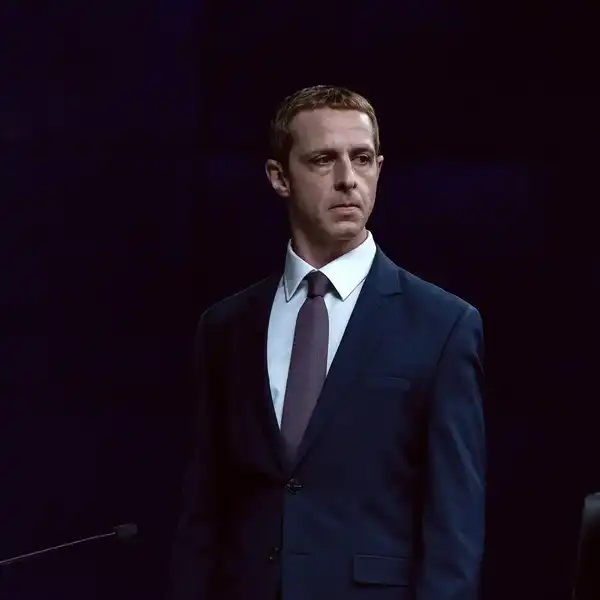
Revolving around central themes of deception, myth, identity, and manipulation, The Usual Suspects centers on the interrogation of Kint, a small-time criminal and the sole survivor of a pier shoot-out. The police are running an intense investigation to track down a mysterious (read: anonymous) crime-lord, Keyser Söze. However, at the end of the film, it is revealed that Kint is Söze and had meticulously concocted an entire story to deceive the authorities to escape justice.
The Scene
The scene opens in a simple conversation, where Kint is talking to Officer Dave Kujan (Chazz Palminteri), narrating the lore that he has heard about Söze. Kint explains how Söze has been running his crime empire from the shadows, existing only as a myth. Nobody has seen him or can even identify anybody working for him, which is why the fear is even more gripping. Kint says, “The greatest trick the Devil ever pulled was convincing the world he didn’t exist.”
He continues to narrate how Söze is a literal embodiment of psychopathic brutality, citing the incident when he murdered his wife and kids, just to prove a point to the Hungarians, who were trying to blackmail him into surrendering his rising drug business. Later, he takes brutal revenge on their entire gang, slaughtering them and their kin, and then disappears. Since then, he’s been a myth: a legend of violence that’s been passed down through criminals. When Kujan asks him if he believes in Keysér Söze, Kint says, “Keaton always said, 'I don't believe in God, but I’m afraid of him.’ Well, I believe in God and the only thing that scares me is Keyser Söze.”
Examining The Underlying Essence Of the Quote
The Usual Suspect depicts how storytelling is strong enough to alter realities, even if momentarily. In fact, Kint is doing just that in this scene. His entire narrative is focused on establishing Söze as an enigma and an embodiment of evil, basing his danger quotient on his unpredictability. Every word he speaks hooks you further into his story.
Kint draws a direct parallelism between Söze and the Devil. The fact that we have an image of God but no definitive image of the Devil is definitely something to think about. Quite surely, the ruler of the dark lives in the dark. With the story that follows next, Kint goes on to describe Söze as someone who had the will to do everything his opponent wouldn’t for victory, establishing him as highly unpredictable and therefore dangerous.
- YouTube www.youtube.com
Movies like Jaws and Jurassic Park are a testament to the fact that sometimes the fear of the unknown can be bigger than the fear of the known. While there is still some screentime for the primary horror in the two movies, The Usual Suspects presents Söze as an anonymous force of destruction that is waiting around the corner, ready to unleash its wrath. Somehow, he is everything that you would expect the Devil to be.
Just like the Devil, Söze’s anonymity is his biggest strength. It’s quite simple: in the world of crime, the less people know about you and your business, the more you’ll thrive (strictly if you’re into an illegal business like Söze). By the end of the movie, Kint proves how he was right. The mystery behind the real identity of Keyser Söze becomes the shield of protection for Kint, saving him from going to jail. It is the same anonymity that makes space for Kint to not only fabricate an entire story but also use it for his own protection, as he lies to top detectives without batting an eyelid. If you’ve watched Catch Me If You Can, it is the same reason why Leonardo DiCaprio’s Frank Abagnale Jr. is able to escape capture when detective Carl Hanratty raids the hotel to arrest him. The examples are endless—you get the drill.
There’s another iconic antagonist who’s a firm believer in anonymity when it comes to running his drug business. Hint: it’s a character from a series. If you've guessed him, let us know in the comments below.