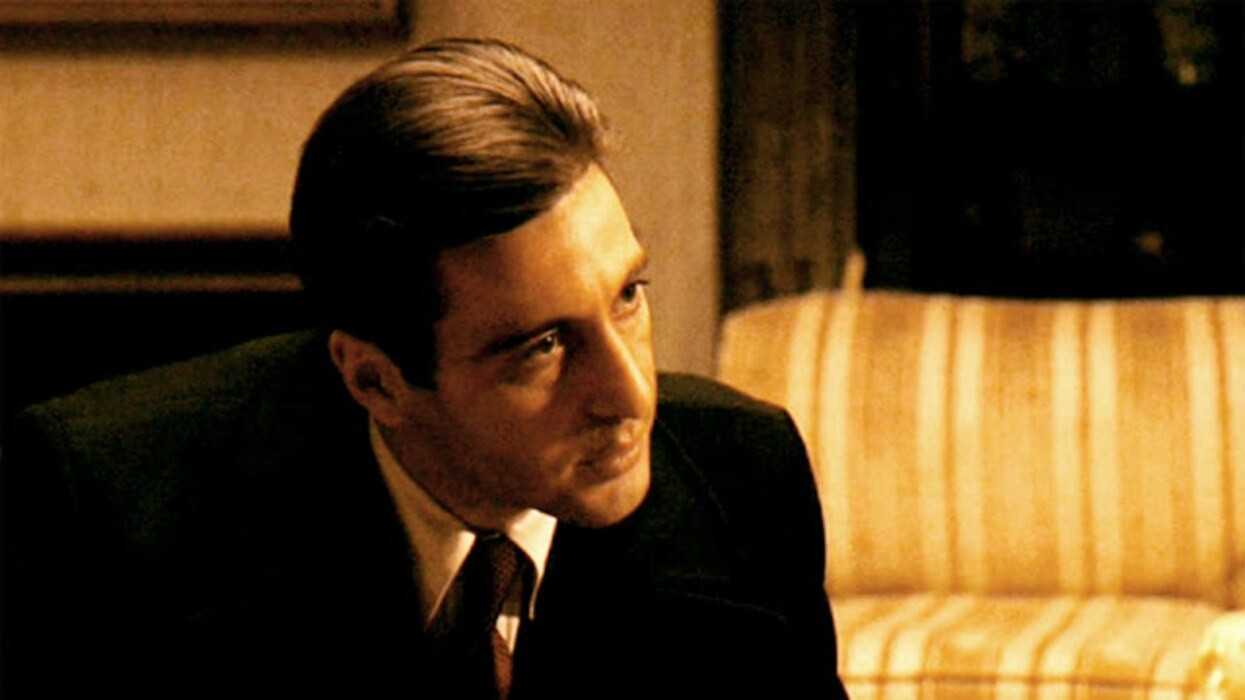
In The Godfather Part II (1974), Michael Corleone (Al Pacino) sits in quiet calculation, his words sharper than any blade:
“My father taught me many things here — he taught me in this room. He taught me: keep your friends close, but your enemies closer.”
It’s a simple line, but it lands like a blueprint for survival. Within the film’s world of betrayal, shifting loyalties, and power struggles, this single piece of advice becomes Michael’s guiding principle.
What’s fascinating is how a line written for a crime drama escaped the screen and embedded itself in the language of strategy. Over the decades, it has been quoted in boardrooms, war rooms, and even self-help books. Leaders, executives, and everyday people have all invoked Michael’s cold wisdom as if it were a proverb.
But was it invented in 1974? Not quite. The film gave the idea its most memorable form, but the roots stretch back to Sun Tzu, Machiavelli, and centuries of real-world power politics.
This is the story of how Michael Corleone’s cinematic lesson became the ultimate strategy quote.
- YouTube www.youtube.com
The Godfather’s Legacy: How a Movie Line Became a Strategy Gospel
The Scene That Defined a Philosophy
The line arrives at a pivotal moment in The Godfather Part II. Michael, already deep in the shadows of his father’s empire, understands that his greatest threats aren’t only external rivals—they’re the people who sit at his own table. In the context of the film, it sets the stage for Michael’s tactical maneuvering against Hyman Roth (Lee Strasberg) and the betrayal within his own family.
Francis Ford Coppola and screenwriter Mario Puzo designed the dialogue as a thesis for Michael’s entire character arc: power maintained through watchfulness, proximity, and control.
From Fiction to Real-World Doctrine
What makes the line extraordinary is how seamlessly it migrated into real-world strategy. Suddenly, Michael’s words weren’t confined to mobsters and mafiosi; they were being echoed by corporate executives managing competitors and politicians outmaneuvering rivals.
Its phrasing made an old idea digestible and practical. Unlike the dense language of Sun Tzu or Machiavelli, The Godfather Part II distilled the lesson into words anyone could recall and use. That’s the power of cinema: turning a centuries-old principle into a cultural catchphrase.
Ancient Roots: The Strategy Behind the Quote
Sun Tzu’s The Art of War
The underlying logic of Michael’s line has been around for millennia. Sun Tzu’s The Art of War famously advises: “If you know the enemy and know yourself, you need not fear the result of a hundred battles.”
The lesson is clear—victory comes from understanding your opponent as intimately as yourself. While not identical in wording, the principle resonates with Michael’s advice: proximity breeds knowledge, and knowledge means leverage.
Machiavelli’s The Prince
Fast forward to Renaissance Italy, and Niccolò Machiavelli put forward his own take on the same principle. In The Prince, he argued that rulers must manage both allies and enemies through cunning, proximity, and manipulation.
Machiavelli emphasized appearances: controlling perception while quietly keeping adversaries within reach. Michael’s line in The Godfather Part II mirrors this same spirit of cold pragmatism, dressed in the language of family loyalty.
Historical Examples
History is littered with leaders who practiced this philosophy long before Michael Corleone made it famous. Julius Caesar knew the dangers of betrayal and famously kept his rivals close until daggers proved otherwise. Otto von Bismarck used alliances with adversaries to maintain power in a fractured Europe.
These figures remind us that Michael’s line goes beyond being just a Hollywood invention. It emerges as a restatement of how survival has always worked at the highest levels of power.
Modern Applications: The Quote in Today’s World
Business & Corporate Strategy
In the corporate world, keeping an eye on your competition is practically doctrine. Companies like Apple and Samsung constantly monitor each other, not just to outdo, but to anticipate moves. Executives often build partnerships with rivals for mutual benefit, even while plotting to dominate them in the marketplace.
That’s “friends close, enemies closer” in action.
Political Maneuvering
Politics runs on similar logic. Diplomats often host adversaries at the same tables where alliances are forged. Cold War history is full of backchannel talks between rivals who smiled for photos while spying on one another.
Even today, international relations rely on this delicate balance—shaking hands with enemies while studying their every move.
Psychological & Social Dynamics
Beyond boardrooms and politics, the strategy works at a human level too. Keeping adversaries close reduces unpredictability. It lets you manage the threat instead of being blindsided by it.
Psychologists argue that proximity breeds both trust and control—two levers that can disarm even the sharpest opponent. Michael Corleone may have been ruthless, but his logic still applies in everyday conflicts, whether at work or in social circles.
The Dark Side: Risks & Ethical Dilemmas
Paranoia vs. Pragmatism
Of course, there’s a flip side. Keeping enemies closer can also blur into paranoia. Michael Corleone embodies this downfall. His obsession with control isolates him, erodes his relationships, and traps him in a cycle of distrust.
Vigilance becomes suffocating when it crosses into obsession—a warning as much as a strategy.
Moral Boundaries
Then comes the ethical dilemma. Is it manipulative by default? Can it ever be a clean strategy? While Machiavelli might shrug, modern leaders have to wrestle with how far is too far.
Using this approach ethically means balancing caution with fairness—because treating everyone like an enemy risks destroying trust even with actual friends.
How to Apply “Friends Close, Enemies Closer” Wisely
 Al Pacino as Michael Corleone in 'The Godfather'Credit: Paramount Pictures
The line endures because it’s practical—but only when applied with care. Knowing your adversaries, staying alert to rivals, and anticipating challenges is invaluable in leadership, negotiation, or even creative work.
But proximity shouldn’t come at the cost of integrity or sanity. The real trick is knowing when the strategy serves you and when it traps you. Used wisely, it sharpens awareness; abused, it corrodes trust and stability.
A Timeless Lesson in Strategy
Michael Corleone’s line in The Godfather Part II may not have invented the concept, but it perfected its phrasing. From Sun Tzu’s battlefields to Machiavelli’s courts to modern boardrooms, the idea of keeping enemies within reach has always been about control, foresight, and survival.
What Coppola and Puzo did was give the world a phrase so concise that it could live beyond the film—part warning, part weapon. The brilliance of the quote lies in its duality: it’s both wisdom and cynicism, depending on how you use it.
And maybe that’s the final lesson—strategy, like power, is never just about the move you make, but the cost you’re willing to pay for it.
- Read and Download 'The Godfather' Script ›
- Francis Ford Coppola's 'Godfather Notebook' is the Development Bible of Our Dreams ›
- 6 Secrets of 'The Godfather' Production from Coppola and the Cast ›
- Vito and Michael Corleone’s 3 Defining Scenes in The Godfather ›
- The Godfather Line That Changed Movie Dialogue Forever ›
- The Story Behind the “Act Like a Man” Slap in ‘The Godfather’ ›
- Unpacking Don Vito’s “Code of Manhood” in ‘The Godfather’ ›