3 Wide Shots From Classic Westerns Used 3 Different Ways
The epic wide shot is actually incredibly versatile in the Western genre.
'The Searchers'
We've been going a little crazy with all the westerns lately, and for good reason. It's one of those versatile genres out there.
Most people think it's all horses, guns, and sweeping landscapes, but I wanted to show you how three different directors used the basic wide shot for three very different reasons.
Let's dive in.
1. The Searchers (1956) – Emotional Exclusion
- YouTube www.youtube.com
We begin with one of the most famous shots in the history of all of cinema. If you haven't seen The Searchers, I don't know what to tell you. It lives up to all the hype; it has all the elements of a western, but it's also a great critique of America.
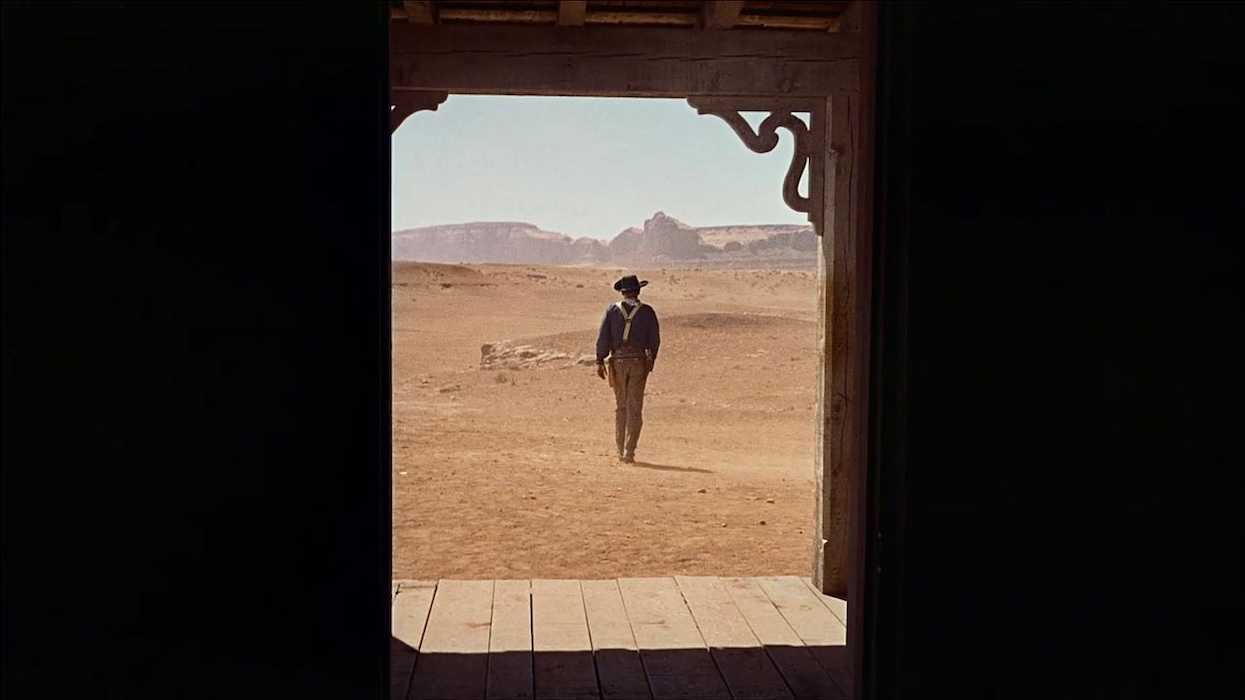
John Ford’s iconic doorway shot shows how a wide perspective can create a sense of internal depth and emotional boundaries within a single frame.
He does this by creating...
A Frame-Within-A-Frame
DP Winton C. Hoch silhouettes the dark interior of the Jorgensen home, framing Ethan Edwards (John Wayne) standing outside in the bright, harsh glare of Monument Valley.
This man is alone, in his comfort space of the Wild West. He's isolated, not tamed by the indoor world.
What happens when he comes inside?
Now, there's a boring version of this shot that's just the landscape, but framing this wide shot this way sets up all these emotions.
The dark rectangle separates the warmth of domestic life from the unyielding frontier.
For filmmakers, this is a sign that a wide shot doesn't have to feel open or even sprawling. This movie uses a visual barrier inside the wide lens (a doorway) to emphasize a character’s inability to belong.
2. Once Upon a Time in the West (1968) - Mythmaking
- YouTube www.youtube.com
Sergio Leone and DP Tonino Delli Colli revolutionized the Spaghetti Western by contrasting ultra-tight close-ups with extreme wide shots that transform characters into tiny figures within a mythic backdrop.
I could have picked shots from any of their movies, but I really want more people to sit and watch this one, to really study it.
It's a masterpiece!
Spatial Architecture
Okay, so the technique here is basically going wide, but also focusing you in on one harrowing hanging, too.
Leone uses wide Techniscope lenses to lock human bodies into man-made structures in the foreground and then these vast mountains in the distance.
So it's sort of a mix of a traditional extreme wide. He wants you to appreciate the isolation of the landscape, but there's also an intimacy to the hanging that's very eerie.
In Leone's world, characters are trapped inside this lonely landscape; they live and die inside it. The wide composition highlights the inevitability of violence. It's saying that no matter where you go out here in this great wild world, if you live in the Wild West, your life may be taken by it.
You can do this too!
Use extreme wide shots to reframe conflict. Shrink your actors relative to their environment; shift the story's tone from personal drama to environmental fate.
3. High Noon (1952) – Psychological Isolation
- YouTube www.youtube.com
One of the coolest movies I've ever seen is Fred Zinnemann’s High Noon. The whole movie is told in real time, from the moment we hear about a gang coming to town for a showdown. It's this absolutely intense deconstruction of what bravery means and maybe Gary Cooper's best performance.
In this movie, there's this epic crane shot that is deployed dynamically to reveal the protagonist's complete abandonment by his community.
It's one man, walking alone, hoping for the best. Preparing for the worst.
Upward Camera Movement
Crane shots have been in Hollywood since the early days, and craning into a wide shot was not invented by this movie, but look how it is emotionally deployed.
The upward camera movement really emphasizes the theme of a guy who has been abandoned by everyone who said they had his back.
Marshal Will Kane (Gary Cooper) walks into the deserted street to face the Miller gang, and no one joins him for this last stand.
We start in Kane's POV, but the rising wide shot pulls the audience out of that perspective and into a god's-eye view of a visual payoff we've only had an inkling of.
No one is coming to help him.
This change in perspective kind of tricks the audience, and one continuous move into a wide is a big reveal that also gives us this sense of dread as the clock strikes high noon.
Summing It Up
You can find shots like this in other genres, but I just love how Westerns use them to reframe what we think and evoke different emotions in the audience.
There are a ton of lessons hidden in these shots, and I hope you find ways to learn from them and use them when you need to switch up your shot list.
Now, go out and make something!