How Westerns Influenced Modern Visual Storytelling
We owe a lot to this genre which now mostly lives on television.
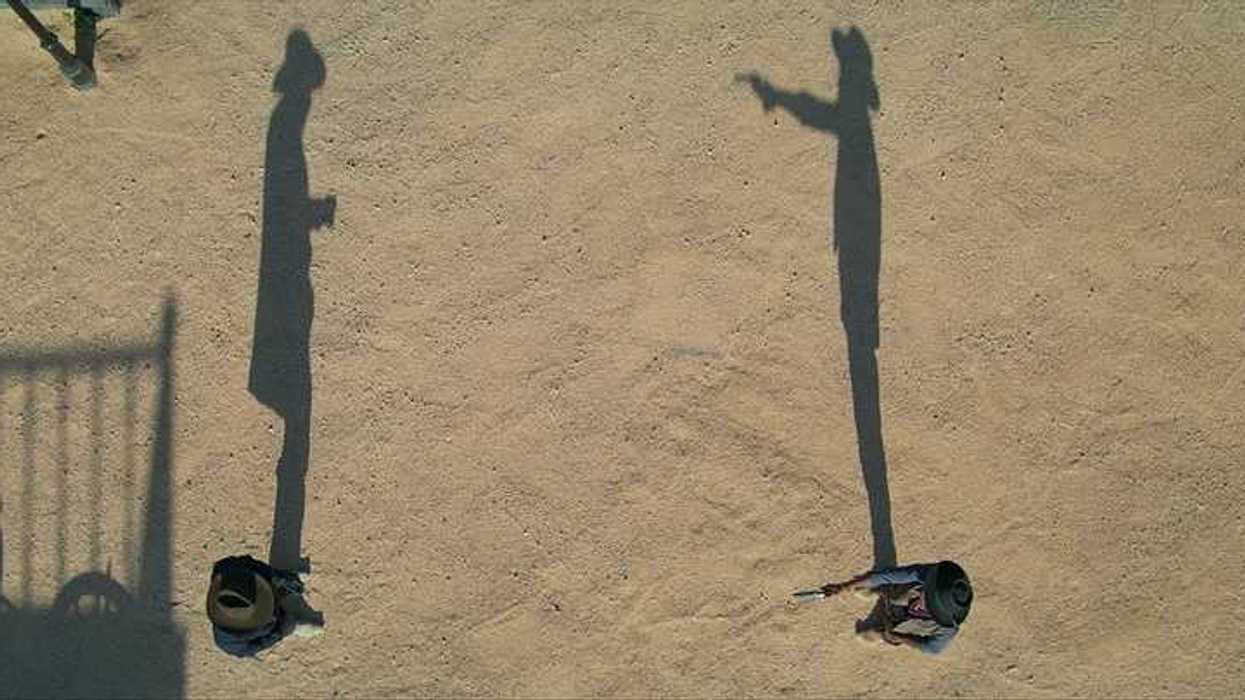
'The Harder They Fall'
Back in the early days of Hollywood, the Western was the most popular genre. It was a safe bet for making money, but it also became a place where directors and cinematographers could experiment with different visuals within the safety of a money-making venture.
So when you're watching a modern Marvel movie or something else, and they cut to a wide shot, a close-up, or a day-for-night, you should thank a Western.
Now, there were people experiencing all over the world, and a lot of our modern influences come from a homogenization of film language over the first 50 years of movies, but this is a post about how the Western greatly influences all of that.
Let's dive in.
- YouTubewww.youtube.com
Landscape as Character
This is the big one, and while you may have early movies that did this kind of thing, it was cemented into Hollywood by the Western.
Before John Ford dragged a crew out to Monument Valley for Stagecoach (1939), cinema was made on sound stages where the sun was a light and the moon a source card.
Getting out of the booth and into the real world gave each location a personality.
Ford understood that the environment could carry as much emotional and narrative weight as any line of dialogue, so he made sure to use it ot highlight themes of isolation, adventure, and even endless possibilities.
This also gave us some visual shorthand for the man vs. nature conflict.
I like to think the Extreme Wide Shot evolved from those western vistas, too.
And what about internal framing?
Think about the famous opening and closing shots of The Searchers (1956), where we see John Wayne through a dark doorway looking out into the sun-drenched desert, which instantly communicates that he is an outsider doomed to roam the wilderness.
The Spaghetti Western Cut
It's not just the way Westerns influenced cinematography, but they also helped with editing. What's funny is that editing got shaken up not by American Westerns, but by the Spaghetti Westerns.
Sergio Leone gave us maybe the most influential editing ever in The Good, the Bad and the Ugly (1966). He threw out classical continuity editing during the cemetery standoff and used something much more musical.
We cut to a rising beat as the score took us to new heights of tension.
Another thing Leone mastered was the extreme close-up (ECU).
In that standoff, we saw shots of guns, eyes, hands, and whip pans and movements shot in close range. The interspersed editing between wide shots that establish spatial positioning and extreme close-ups that build intensity changed Hollywood forever.
We've seen pretty much every modern action director use this exact mathematical acceleration of shot length to build anticipation before an explosion of action.
The Cowboy Shot (American Shot)
This shot was so ubiquitous in Westerns that it was named after them. It's the shot that's basically a medium-wide shot cropped right below the hip, so we can see the gun.
Film historians call it the "Cowboy Shot" (Plan Américain).
Early filmmakers needed a shot wide enough to capture a character’s face and torso, yet low enough to keep their holstered gun in frame during a confrontation.
We got the physical threat, and we got most of the whole actor, maybe him on his horse or standing in the middle of a town.
Today, superhero films use the exact same framing to keep a character's face visible while showing off their belt-mounted gadgets or their insignia.
And who knows which genre will evolve to use it next.
Summing It All Up
The Western forced directors to solve fundamental visual problems that ultimately shaped all the movies that came after them.
So, the next time you frame a scene, ask yourself how you'd do it if you were shooting a Western.
Let me know what you think in the comments.