Writing for films is a process that isn’t as simple as it may seem. Having to do constant revisions and ending up with multiple drafts is a common thing. This may be why many screenplays never see the light of day, especially if you are new at this and lack patience. Trust me, you need some serious patience for this. And sometimes, even if you are good at it, you still end up spending a hell lot of time and effort on a single screenplay.
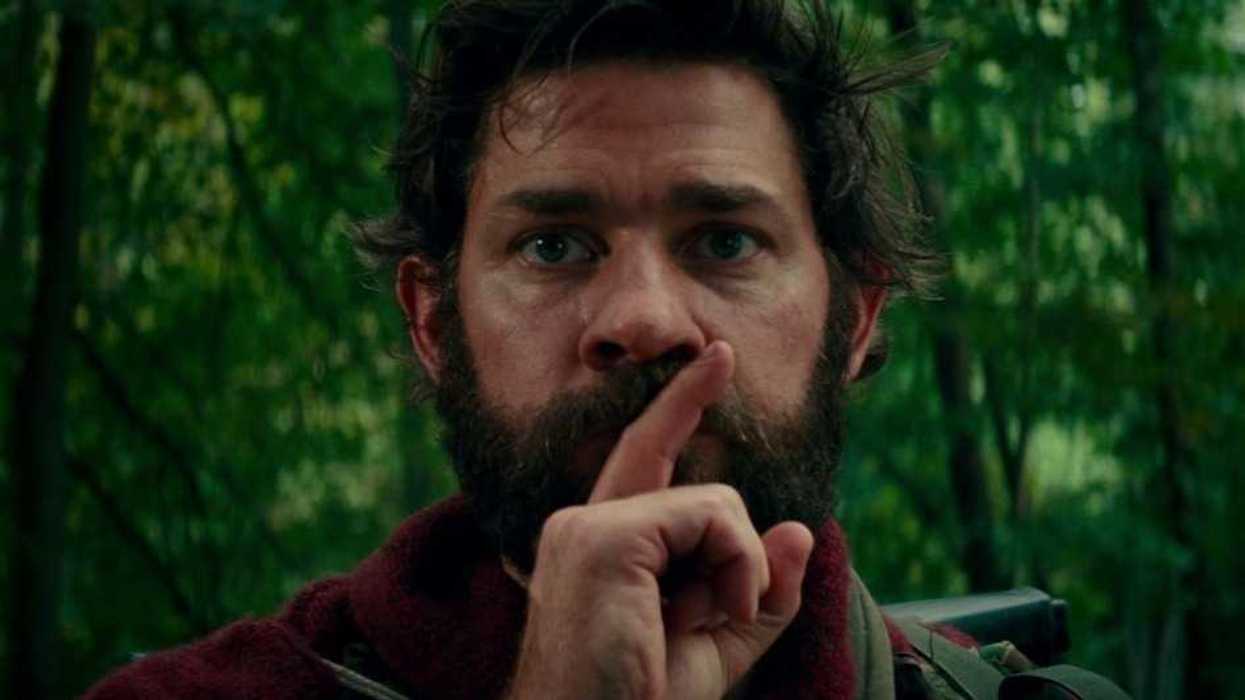
That happened with the writer/director duo, Bryan Woods and Scott Beck, while working on A Quiet Place (2018), directed by John Krasinski. While the prospect may seem simple at first glance, it gets complicated with one rule: keep quiet.
How difficult could it be? There are practically just four characters, and they are not supposed to talk. Actions speak louder than words, innit?
That’s the catch. For actions (and visuals) to do all the talking, writing has to be stripped down to the bones. And if you do that, every weak idea shows up immediately. In this situation, the writing has to work twice as hard. Without dialogue as a safety net, every action either earns its place or exposes a flaw.
So, what was the problem with this movie’s writing? Why did they keep failing? And how did they finally manage to work out the issues? Let’s see.
The Script Was Broken Before It Was Silent
The Duo’s Career Before A Quiet Place
Woods and Beck’s earlier films were more or less a mashup of concepts and genres. For example, they pitched ideas like “Texas Chainsaw Massacre (1974) meets Sideways (2004), which ultimately felt like a hollow gimmick. These ideas lacked an individualistic essence that would make the audience care about the characters.
A Quiet Place: Early Drafts
They carried forward the same outlook into their early drafts for A Quiet Place. Their approach leaned more in the direction of a traditional monster movie. The characters talked a lot more, their backstories were made too clear, and not much was left to the audience’s imagination; the rules of living in the movie’s world were explained in words rather than demonstrated. All this blunted the movie’s tension.
Every time a character “explained” the threat, the threat lost its urgency. Dialogues worked towards solving the problems instead of creating them. In short, the more they explained, the more they made things clear, the more the story lost its horror/thriller appeal.
Constructing Silence as the Narrative Engine
The Origin of the Idea
The roots of A Quiet Place are in a non-verbal communication class that Bryan Woods and Scott Beck attended during their university years. They were fascinated by the idea of telling a story only through gestures, expressions, and actions. They incorporated a horror setting into the mix, which ultimately led to the idea of a traumatized family living literally “quietly” on a farm trying to avoid being noticed by violent, sightless aliens.
The Challenge Emerges
The idea sounded exciting, but when they actually started working on the story, they realized it wasn’t quite simple. The challenge was in its technicality. Despite its “quiet” setting, the early drafts depended a lot on words for exposition. Removing spoken words meant replacing them with powerful, self-explanatory visuals. Their key motivation (and necessity) was the principle “show, don’t tell,” but it would actually mean something only if what they showed was good enough to keep the audience interested for an hour and a half.
 'A Quiet Place'Credit: Paramount Pictures
Finding Inspiration for (and Streamlining) Horror
Real-Life Experiences
One of the film’s most famous scenes is where heavily pregnant Evelyn (Emily Blunt), while alone in the farmhouse, goes into labor and is forced to deliver the baby by herself in a bathtub. The inspiration for this scene came from Bryan Woods’ relative, who had to deliver the baby herself in the bathtub while she was alone at home, and nobody was reachable. Such integration of real-life moments into writing ensured a grounded and emotionally weighty storyline.
Stabilizing and Unifying Influence: John Krasinski
Having two minds working on a single concept can (often) lead to a bit of confusion and a little disconnect between plotlines. When Krasinski came on board as the director and a co-writer, the script found a single guiding perspective. Krasinski focused on consistency, emotional grounding, and rule discipline.
And it’s this discipline that finally led the movie to success. The writers came to believe that one needs to finish the script regardless of whether it’s good or bad. Because otherwise, you are perpetually stuck in the trauma of having to go through the hard, complicated process. Giving it closure is productive because it lets you move on and eventually forget the pain.
Conclusion
The way to a perfect (or even workable) script goes through several terrible ones. This story proves that failure is just data, which you need to use to troubleshoot and move ahead. They managed to turn a college class idea into a global phenomenon because they refused to take the easy way out through dialogue. Sometimes you have to bear the pain, but it’s worth it.
- 13 Chilling Horror Films Based on Real Events ›
- 8 Haunted House Movies That Will Haunt You Forever ›
- 9 Funny Zombie Movies That’ll Leave You Dying of Laughter ›
- Try the Screenwriting Workout Used by the Writers of 'A Quiet Place ... ›
- 'A Quiet Place': How Lifelong Friends Crafted a Silent Script That ... ›
- Listen Closely: Taking 'A Quiet Place' From Script to Screen | No ... ›