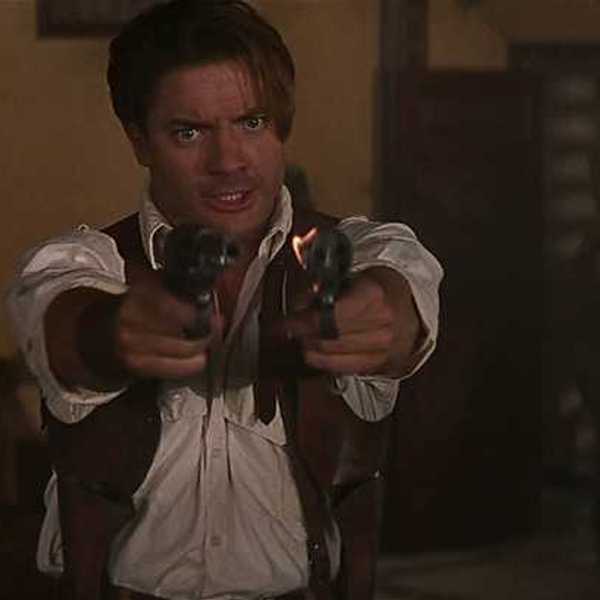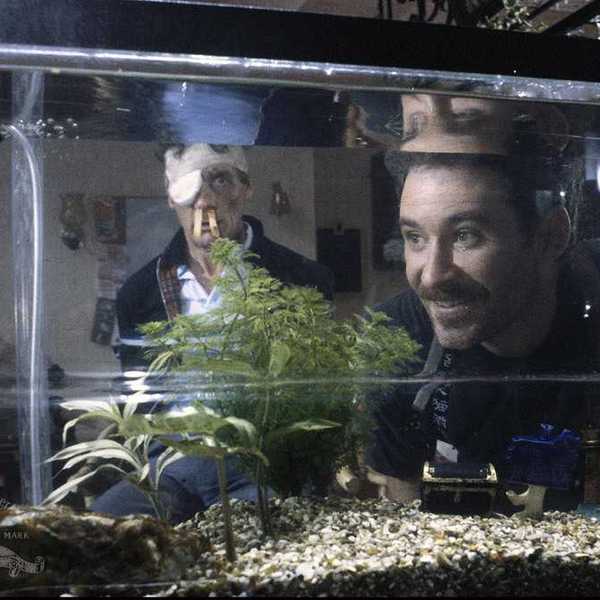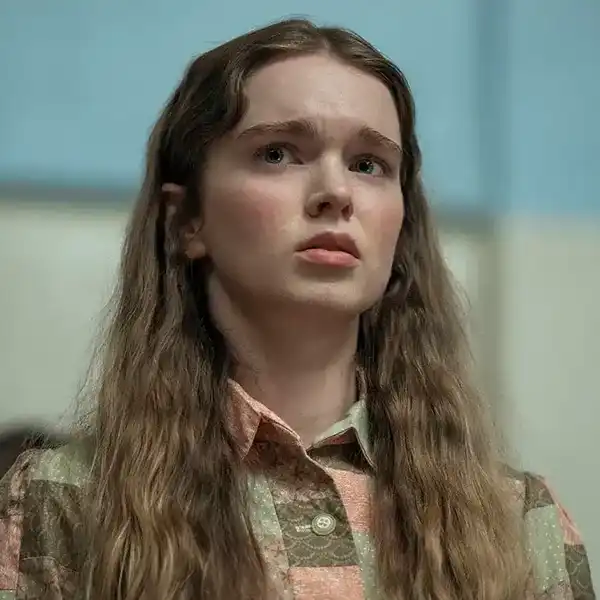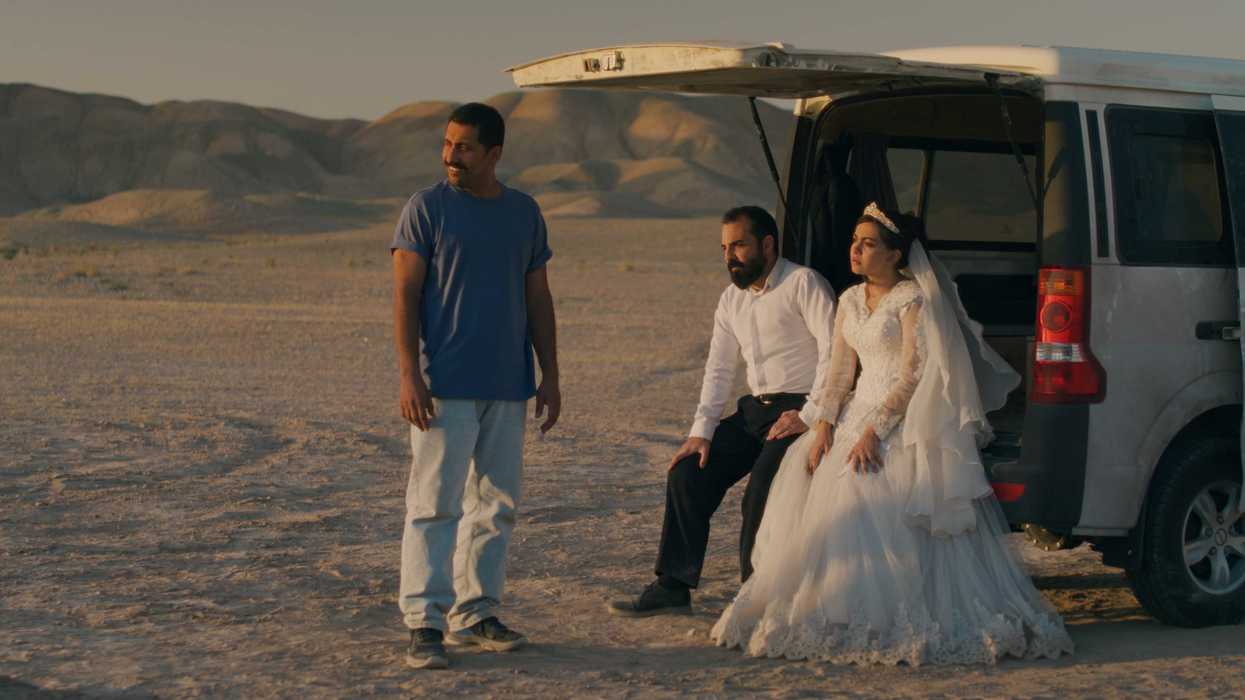
Buried in the lineup of keynote presentations and tech demos of new AI models and video editing tools, and features at this year’s Adobe MAX conference in Los Angeles, the team at Adobe hosted a screening of It Was Just An Accident—the latest film by Iranian filmmaker Jafar Panahi, which took home the Palme d'Or at the 78th Cannes Film Festival.
Despite featuring no AI or green screen special effects, the film served as an important reminder that—despite your excitement or fears regarding the newest and scariest of technologies—nothing will ever trump real human experiences and real human stories made by real human filmmakers.
To learn more about how the film came to be, and more specifically, how it was brought to life in the edit, we chatted with editor Amir Etminan about how he was able to reteam up with Panahi to tell this important story.
Note: This interview was conducted with Etminan via a translator and has been edited for clarity.
No Film School: Could you introduce yourself and give some background on your film and video editing career?
Amir Etminan: So, I was born in a small city in Iran, on the border with Turkey, and to say how exactly I started in editing, I wouldn't know, but I remember we had a huge VHS camera. Yeah, it's a very big one, almost as big as the broadcast camera today. And we would use it when we would travel to shoot travel shots, and when we would come back, I would digitize that image, cut parts of it, and make a kind of video clip out of it, only with my own image. So that was my first editing experience.

Amir Etminan
Credit: Amir Etminan
NFS: ‘It Was Just An Accident’ is a unique film that tells a story that is both comedic and lighthearted at times, while also exploring more profound trauma and heavier themes. How were you able to find the balance between these two extremes in the edit?
AE: Because we had other interviews today, you're going to explain the game, which is what we do at the beginning of the process. We will analyze each character's tempo, rhythm, and motion. Then we'll explore the emotion, tempo, and rhythm of each scene and each event in a film. Then we will see how this character, with its specific way of acting or behaving, would react in such a scene. Then we will try to analyze the combination of these two things to determine the rhythm filling and the attempt of that scene.
One thing about Panahi's cinema is that he does everything to avoid exaggerating the characters' feelings or their acting. His cinema is about telling the story more than about treating you with flashy things; as a director, impressing you is all about telling the story, and this is the first thing about cinema, and also about exaggeration. Yeah, and the emotion has to be told through the story, not with the directing tricks. And when you create such a real feeling connection between you and the audience, then the audience is not going to be bothered when the dark scenes are next to the very funny scenes, because it's always a part of reality that they are accepting it and feeling it.
NFS: Moving to the technical side, could you share which video editing platform you used for the film and what went into that decision for you?
AE: I was working on all the software I make to add to the ecosystem. I realized that, because I'm doing different things like photography, film, and After Effects, when you get better in one software, like Photoshop, you're also getting better in After Effects. For example, you're also getting better with editing software. They're all very interconnected. And so I decided to work with the Adobe family as software. The other point about the adult product is that it is beneficial and great for professionals and amateurs alike, such as students. It actually answers the needs of both, thanks to Adobe's capacity and the possibilities it offers users. I could edit this film on a small computer with 8GB of RAM.
Because I was present on a shooting set every day, I would use the encoder to create a proxy from the original image, which gave me this possibility. At the end of the day, I had a proxy. I could work on the proxy on my small computer, and I could tell Mr. Panahi to take all the original footage because, after all the security atmosphere we had, you could go and hide it. So I could easily work on various small files on my small computer, and they could keep the original image in a secure place, thanks to Adobe.

Credit: Neon
NFS: You’ve worked with Jafar Panâhi on several projects now. Could you share what the editing process with Panâhi was like—how did y’all work together on the project?
AE: We worked continuously for two months. One month was spent on a shooting set, so I was working simultaneously while we were shooting, and one month after the shoot ended, in Iran, I finished the editing and moved to Istanbul. We found a way to send all the footage to France for post-production color correction and other processes. And if there were a need to change the timeline again, I would do it in Turkey and send them the XML to apply it to their timeline.
NFS: What advice would you give to anyone looking to launch a career, especially with political motivations or trying to do it anywhere in the world where it might not be as accessible or easy to launch into the field?
AE: So I had this experience working with both sides. I worked in the independent cinema, as you see in this film. And I also had the chance to work on very professional, large-scale production projects. But what I realized — and the first thing you need for making a film, no matter how you want to do it — is having a good story to tell.
I am seeing a lot of younger people coming to me, and they're usually talking about the technical aspects, like which camera or equipment to use. And usually it takes up so much space in their minds that they don't put enough time into producing their work. And also because of the economic crisis we are living in, people have less and less money to invest in films, making it very difficult to produce a film economically. So they are swamped trying to make a good film technically, but they don't put enough time into their story, their scenario.
One of the strongest points of Iranian cinema is its scripts. This is storytelling. And most of the time, Iranian independent cinemas spend the most on scriptwriting during film production. Because directors usually know each other, when they write their scripts, they send them to each other and ask for each other's advice. And so this process is longer than even the film's production process. And they spend so much time polishing their script.
If you have average or good sound quality with a bit of a production, you can make a film acceptable for international festivals or audiences. But if you have a bad scenario, what do you want to do with that? Even if you have the most significant production and you have the most significant budget to make that script. I also have to learn the rules of writing a script and how to write one for an audience.
Especially in independent cinema, they have to try different roles in a film crew. For example, in this film of Mr. Panahi, I was not only the editor, I was also the driver. I would bring the crew to the set. My car was a place where they would do makeup in it—a makeup group would use it as a space for their work. And I would do anything, I would do anything on set, not only being an editor. And what is very sad is that younger people want to be just one thing. And I would do just that. I will be a focus puller, so I will not touch anything else on a set. So I think this is also one of the things people don't take advantage of: trying different skills in film production.
There is one point: some filmmakers aren't as conscious about it. As your crew gets smaller — fewer people there — you will be more focused on your set while you're shooting. I have been on a set with 11 monitors, 11 people behind them, watching what's happening on the set. And also a lot of machines for cinema, mobile, the location of the —I dunno how you call it in English —cinema, mobile, the cars with the equipment for film location cars, and many of them, and many people around. And in the end, they don't give enough importance to what they're shooting, and they're putting so much energy into what is behind the scenes.
And in the end, the result wasn't fantastic. And what I'm talking about, probably, is the reality of American cinema: the Americans are working this way, and they probably don't even imagine it's possible to make a film with just a small crew and a few people. So while you're talking about all those things about production, big crews, and those kinds of things, I think Adobe and the Adobe ecosystem help independent filmmakers speak about important things, tell important stories, and give them the ability to make their films.
And right now you can buy a camera for two for $3,000, and it delivers excellent quality that is even twice or three times better than what a cinema screen needs for definition. And it is very easy to make a film, but what is very difficult is to find a good story and not get stuck in the technical aspects.