The Ultimate Guide to Batman’s Most Iconic Villains
These nefarious antagonists have graced the big and small screens to torture the Caped Crusader.
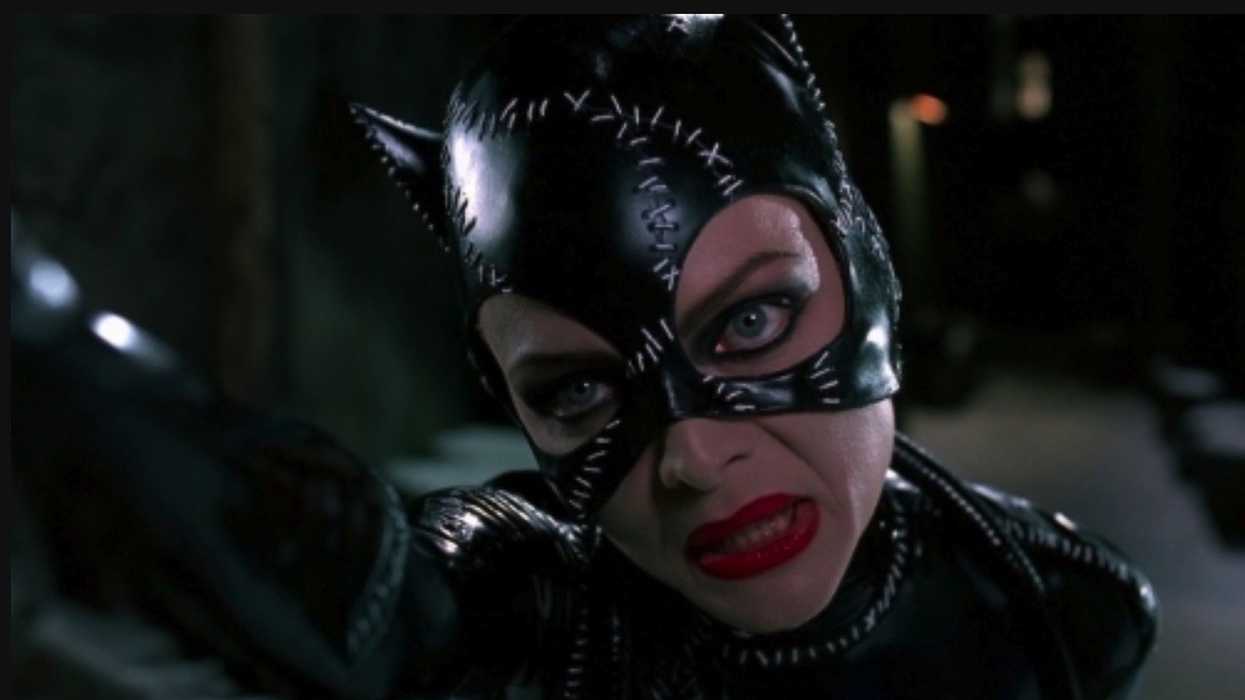
'Batman Returns'
It's incredibly hard to write a good villain character. And somehow, the Batman universe has tons of them. It seems like everyone who invades Gotham City also leaves a mark on the audience.
Today, I want to go over all the best Batman villains and talk about some lessons we can learn from them as writers.
Let's dive in.
1. The Joker
It would be hard to find a bad guy more famous and more influential than all the many iterations of the Joker. His core function is to be the thematic opposite of your hero. And as Batman changes through his writers and directors, so does Joker. Batman is order; Joker is chaos. This spans the test of time.
Screenwriting Lesson: Your villain doesn't need a sympathetic backstory. Sometimes, the most terrifying antagonist is the one whose motivations are purely philosophical. The Joker works because he forces Batman to see all the many sides of evil without reasoning.
2. Catwoman (Selina Kyle)
Catwoman is the perfect example of a character who elevates a story through moral complexity. She's not purely a villain; once in a while, her goals align with Batman's. And they also sort of are dating? There's always tension here - which side will she be on?
Screenwriting Lesson: A compelling antagonist doesn't have to be evil. They just need to disagree with the hero about what's happening. Their relationship with the hero becomes a central conflict in itself.
3. The Penguin (Oswald Cobblepot)
The Penguin has gone through a lot of different versions of his character. And all of them have been interesting for different reasons. The current version on TV is a "gentleman of crime," a mob boss desperate for the high-society acceptance he'll never have. That keeps him focused on always having a motivation to do something.
Screenwriting Lesson: Use character to inform motivation. This creates a villain who has clear desires and one whose motivations are easy to understand.
4. The Riddler (Edward Nygma)
The Riddler weaponizes intellect. He’s a villain who attacks the hero’s greatest strength—in Batman's case, his mind. And he keeps Batman on his toes, and he has to think and not punch his way out of these situations. His elaborate puzzles serve as the perfect engine for a detective story.
Screenwriting Lesson: Design your villain's methods to directly challenge your hero's best skills. This creates a natural, escalating conflict.
5. Two-Face (Harvey Dent)
Two-Face is cinematic tragedy personified. You can see a lot of relatability him him. He's someone driven to the edge and looking for revenge. He represents the fallen hero, a physical manifestation of what could happen to Batman if he lost faith. And he brings morality to the front.
Screenwriting Lesson: The most effective villains often have a personal connection to the hero. You want your hero to see a little of themselves in the bad guy. Scare them and woo them.
6. Ra's al Ghul
Ra's al Ghul provides a global scale to bad guys that takes Batman out of Gotham and makes him examine what evil looks like on a worldwide scale. This creates a complex dynamic where the conflict is one of methods and of execution.
Screenwriting Lesson: Give your villain a legitimate point of view. A villain who believes they are the hero of their own story is way more compelling.
7. Scarecrow (Dr. Jonathan Crane)
Scarecrow is a perfect horror-genre villain. Your hero has fears, and Scarecrow will bring them to the forefront. His fear toxin creates incredible opportunities for surreal, visually inventive sequences that explore a character's deepest psychological wounds.
Screenwriting Lesson: Use your villain to explore your hero's internal landscape. What's going on inside can be as scary as what's happening outside.
8. Bane
Bane is the ultimate physical threat, who is also a genius. He’s famous for "breaking the bat," but his real power is his strategy and his willingness to kill a lot of people in order to get what he wants. Bane knows how to wear down the Batman and take him to his breaking point, not just physically but mentally.
Screenwriting Lesson: A great villain attacks the hero on all fronts and has no mercy. Bane proves that a physical powerhouse is most terrifying when he's also a brilliant tactician, picking a man apart before he delivers the final blow.
9. Poison Ivy (Dr. Pamela Isley)
It's easy to get caught up in how sexy this character is and not to take her seriously. But the secret to Poison Ivy is her motivation—protecting the natural world from humanity's destruction. You sort of get it, even if you don't agree with her methods. Her looks are used to disarm, then once she has you, she wraps you up. It would be easy to be on her side, but you may not like how she gets you there.
Screenwriting Lesson: A clear and relatable motivation can make a villain sympathetic, even when their actions are monstrous.
10. Mr. Freeze (Dr. Victor Fries)
Thanks to Batman: The Animated Series, Mr. Freeze became one of the most tragic figures in comics and in the show. He's a villain driven not by greed or power, but by love. All of his crimes are committed in a desperate attempt to save his dying wife. This simple, powerful motivation makes him a profoundly empathetic character. And I think also why it was so hard to bring him to the big screen.
Screenwriting Lesson: A powerful emotional core can redefine a character. By giving Mr. Freeze a tragic love story, his writers transformed him from a B-list gimmick into an A-list antagonist.
11. Harley Quinn (Dr. Harleen Quinzel)
Harley is a brilliant example of character evolution. She started as a sidekick, but her story—a psychiatrist manipulated and abused by her patient. But she had so much depth and we had so much interest in her that she became a rogue unto herself. She explores themes of identity and liberation. And we're seeing new movies and shows built on her now.
Screenwriting Lesson: Don't be afraid to let your supporting characters grow. Harley’s journey from villain to an anti-hero is a testament to continuing to develop your character.
12. The Court of Owls
Batman comics are not content with just the rogues they ve got. We're always seeing new people added. The Court of Owls is a fantastic example of world-building through villainy. This secret society fundamentally rewrites the hero's understanding of his city and his own past in order to bring more conflict home.
Screenwriting Lesson: Use your villain to expand your story's lore. Can you build more of a world or more of an understanding for people? How can you let them draw the audience in and give them new information?
13. Carmine Falcone
Falcone represents the "before." He's the grounded, organized crime that Batman was created to fight. He’s not a costumed supervillain; he's the gritty, street-level corruption that allows supervillains to thrive. Sometimes, even in a superhero movie, you need that realism.
Screenwriting Lesson: Falcone grounds the story in a recognizable reality, making the arrival of the more theatrical villains feel even more impactful.
14. Talia al Ghul
Talia is the ultimate conflict of loyalties. She's torn between her father's world-changing ideology and her love for the hero who opposes him. She wants to have her cake and eat it too, and to draw in Batman to a life he may actually enjoy, even if for the wrong reasons. She's a complex player in a dangerous game.
Screenwriting Lesson: Complicate your hero's life with characters who can't be easily categorized as "good" or "bad." And make them suffer for not knowing. Make it hard for them to be with this person, and you'll get both internal and external conflicts.
15. Clayface (Basil Karlo)
Clayface is pure cinematic potential. And he has a movie coming out next year, so we'll learn a lot about how they're bringing him to the big screen. He’s often portrayed as a tragic actor who has lost his identity, a literal metaphor for being consumed by something so much that you can't come back.
Screenwriting Lesson: Think visually. What abilities would your villain have that are inherently cinematic? Is there a metaphor that could contribute to the look and feel of a character?
Summing It All Up
Batman has one of the best rogues' galleries around. These are all characters with distinct looks, personalities, and intentions. They must be so fun to write for and to experiment with on the pages.
I can't wait to see what villains hit the big and small screen again. And how we continue to modernize these characters with the changing times.
Let me know what you think in the comments.