13 Best Nonlinear Movies That Turn Storytelling Upside Down
These films are cinematic mazes that you are sure to love!
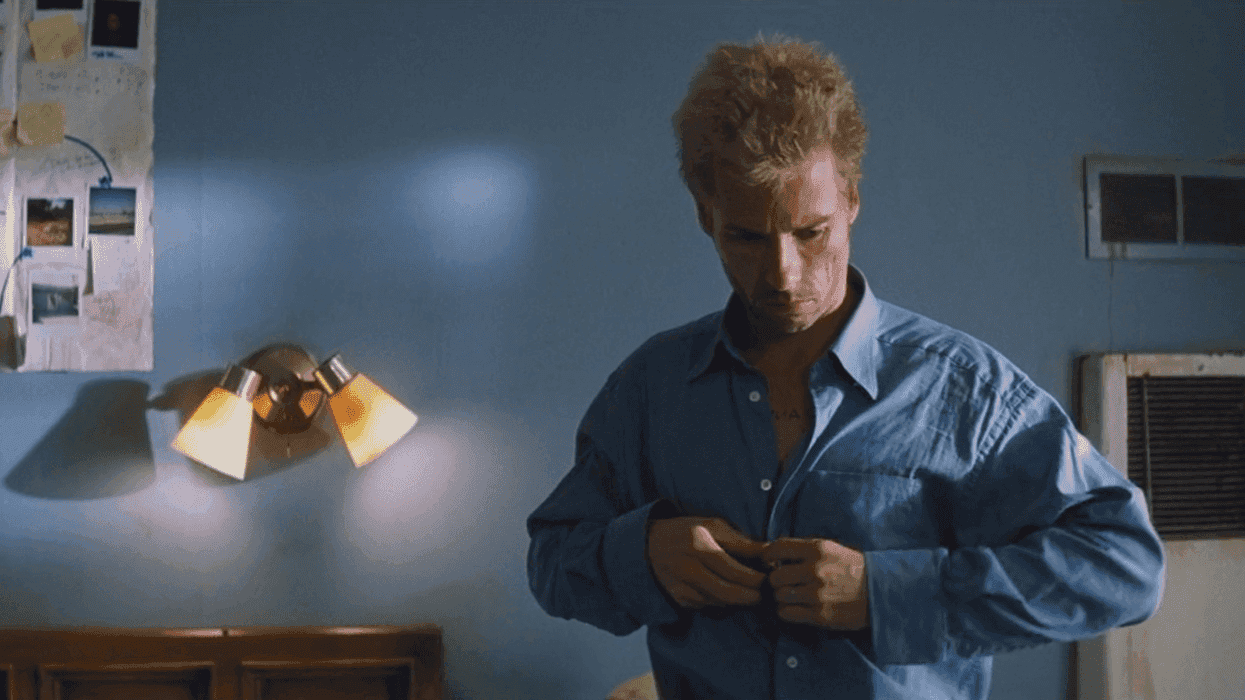
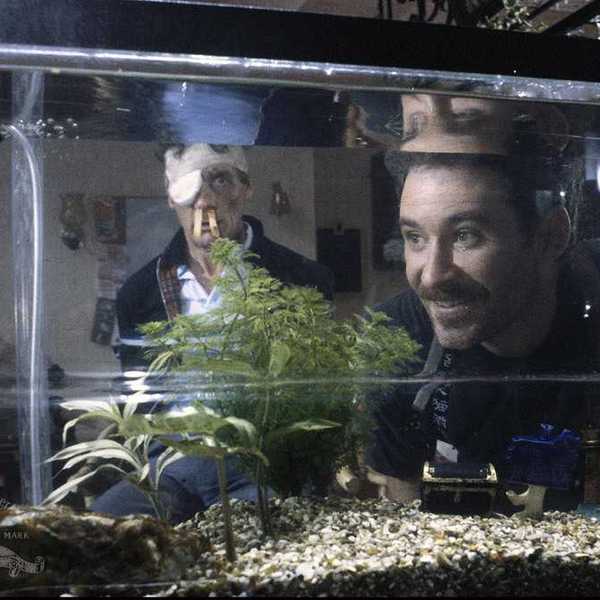
Memento (2000)
As much as I dread non-linear narratives as a script and continuity supervisor, as a viewer, they’re my one true love. It’s true that these films demand more attention and focus than the regular three-act screenplays, but hey, if done right, what’s more satisfying than jumping between timelines and realities with characters and the developing story?
In this article, we’re listing the best non-linear stories that defied time to enhance their narratives.
9 Best Non-Linear Films
1. Memento (2000)
An inventive exploration of memory and identity, Christopher Nolan’s Memento redefined non-linear storytelling. A hardcore revenge story centering on a former insurance investigator, Leonard (Guy Pearce), now a patient of anterograde amnesia, the narrative follows Leonard in his quest for his wife’s killer. His only clues? Notes and tattoos, hazed by a failed memory. Nolan distinguishes between the timelines using color: black and white for the past, while color is used for the continuous present. With that, Nolan presents the ongoing present in reverse, keeping the flashbacks linear, with both eventually converging at the climax.
2. Pulp Fiction (1994)
Quentin Tarantino’s Pulp Fiction is not only critically acclaimed for its stylized treatment but is also a cult classic non-linear narrative. Tarantino divides the story into seven main segments that are intertwined with each other. The narrative follows seven different individuals who cross paths with each other, with their storylines intersecting around significant incidents. Instead of a single climax or resolution, Pulp Fiction’s pay-offs occur at different points throughout the narrative, making sure that you’re always on the edge of your seat, both psychologically and emotionally.
3. Rashomon (1950)
The pioneer of shifting perspectives in a narrative, Akira Kurosawa’s Rashomon is a the story of a samurai bride’s rape and murder, recalled from the perspectives of a bandit (Toshirō Mifune), the victim (Machiko Kyô), the samurai’s ghost (Masayuki Mori) and a woodcutter (Takashi Shimura), after the bandit is arrested for the crime. Rashomon unites four radically different perspectives through the unreliability of human memory and self-interest to explore complex themes, with the subjectivity of truth being one of the central themes. In the end, with each recollection proving to be a subjective and self-preserving version of the truth, Kurosawa leaves us without the truth, further reinforcing the central theme of this film.
4. Citizen Kane (1941)'
Orson Welles’ Citizen Kane is widely considered to be one of the best films ever made. For me, the broken storyline plays a major role in its glowing reputation. The narrative begins following the death of publishing tycoon Charles Foster Kane (Orson Welles), whose last words, “Rosebud,” lead to total frenzy in the media, as the reporters try to decode its meaning. The broken storyline turns this period drama into a level one mystery, pulling the viewers into the investigative journey of finding the meaning of “Rosebud.”
5. Eternal Sunshine of the Spotless Mind (2004)
A unique exploration of love and relationships through memories, Michel Gondry’s Eternal Sunshine of the Spotless Mind follows Joel (Jim Carrey) and Clementine (Kate Winslet), a troubled couple, as they undergo a medical procedure to erase each other from their memory, after they have seemingly fallen out of love, due to conflicts and differences. The narrative uses non-linear storytelling to mirror the disjointedness and unreliability of memories and mimic the way they are experienced. At the same time, by jumbling up the timeline, the narrative invites viewers to assemble the story alongside the characters, deepening the emotional connection between them.
6. Mulholland Drive (2001)
David Lynch’s Mulholland Drive follows two women in their quest for truth—Rita (Laura Harring), who has lost her memory in a car crash and has been suffering from amnesia since, and Betty (Naomi Watts), who has just arrived in LA with her Hollywood dreams and is helping Rita uncover her life before the accident. Mulholland Drive is structured on alternate realities: Diane’s dream in which she imagines herself as Betty, the successful actress, the dream’s collapse, and Diana’s tragic reality. Lynch not only fragments time but also dimensions, as he juggles between timelines, personae, dreams, and reality, using visual cues for transition. Don’t be surprised if piecing the story together feels like a challenge because this is one good puzzle!
7. Reservoir Dogs (1992)
Another masterpiece and cult classic by Quentin Tarantino, Reservoir Dogs centers on a simple jewellery heist that goes horribly wrong. The lucky partners in crime, who survived the police, begin reminiscing on what happened at the site of the crime, trying to figure out if one of them is a police informant who tipped off the authorities. By opening the film after the failed heist, never showing the actual heist, and throwing the viewers into the aftermath of its failure right in the beginning, the film opens like a whirlwind of dramatic questions: “How did the heist go wrong?” “Who are these men?” “Who is reliable?” and the classic, “Who dunn’it?”
The entire truth is explored through flashbacks, while the narrative slowly reveals each character and their background, alongside the unfolding mystery.
8. The Prestige (2006)
Starring Christian Bale and Hugh Jackman, Christopher Nolan’s Prestige follows two 19th-century magicians engaged in a brutal battle for trade secrets. Nolan uses non-linear storytelling to elevate the essence of illusion in this story about magicians, with his focus on mimicking illusion (just like it happens in a sophisticated magic trick) in his storytelling. The non-linear narrative, therefore, doesn’t drive the story; rather, it immerses the audience in the story through what you can call visual deception (trust me, the best kind!).
9. The Godfather II (1974)
Employing a distinctive non-linear storytelling approach, Francis Ford Coppola’s The Godfather II interweaves the story of a father and a son. The narrative follows Vito Corleone (Robert De Niro), Michael Corleone’s father in his rise as a powerful Mafia Don and his successor, Michael Corleone’s (Al Pacino) struggles as the present mafia boss. Instead of giving us half-hearted glimpses of the rise of the mighty Corleone empire through precise flashbacks, Coppola interweaves its history with its present by showcasing the journey of the two leaders in a separate parallel storyline that seamlessly cuts through one another. By running two storylines in parallel, Coppola also successfully creates a contrast between the father and the son, underscoring how a change of reigns can affect even the biggest empires.
Did your favorite film make it to this list? Let us know which ones in the list you have watched already!
- How Christopher Nolan Brilliantly Hides 'The Prestige' in Plain Sight ›
- Bet You Didn’t Notice How 'The Prestige' Is Written Like Its Own Magic Trick ›
- 'Memento' Movie Explained—The Meaning Behind the Nolans' Masterpiece ›
- Which Video Editing Programs are Currently the Most Popular? ›
- Tarantino Explains Nonlinear Storytelling in this 'Pulp Fiction' Video Essay ›
- When Non-Linear is the Best Way to Structure a Documentary ›