7 Best Sam Peckinpah Movies, Ranked
Before Tarantino arrived on the scene with his stylized violence, Sam Peckinpah had already done it all.
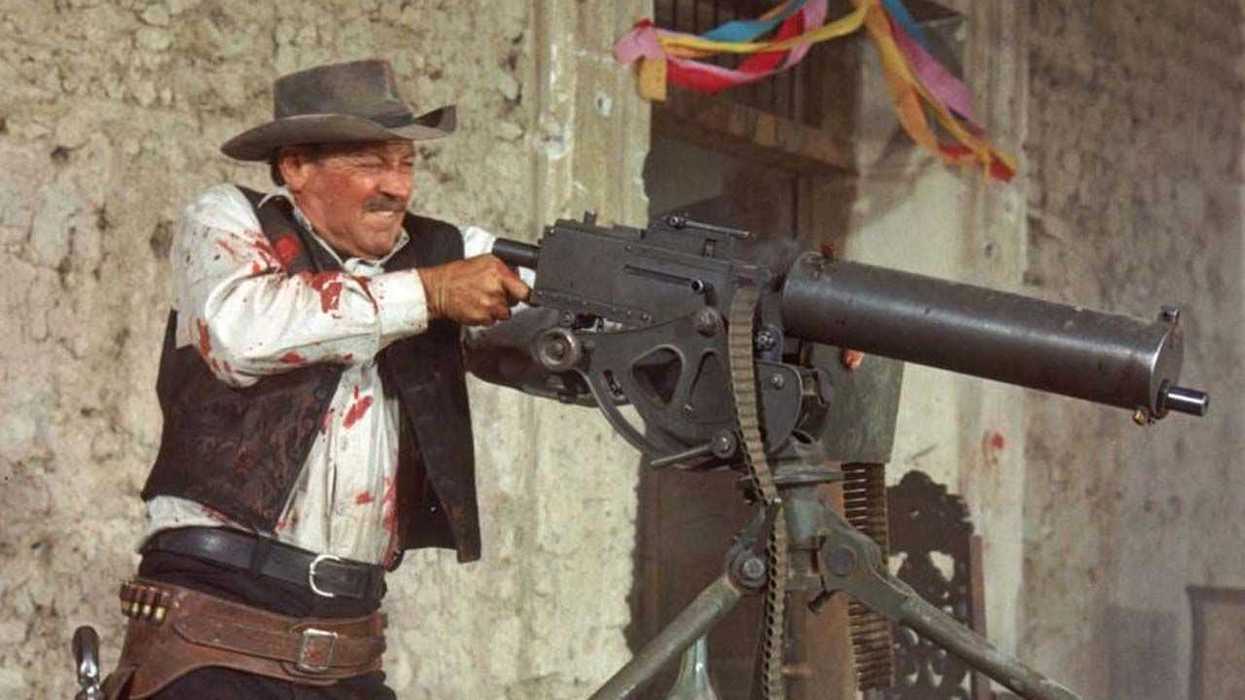
'The Wild Bunch' (1969)
Throughout his career, Sam Peckinpah dealt in violence and moral turpitude, seeing action scenes as explosions of carnage, captured in frame rates so slow that every impact feels like a sledgehammer to the audience.
Actors like Warren Oates, L.Q. Jones, R.G. Armstrong, Kris Kristofferson, and even Steve McQueen would appear in several of Peckinpah’s productions because everyone respected the unique talent the late auteur possessed. Ultimately, years of alcohol abuse caught up with him in 1984, and he passed away. To honor the legend, this is a list of Sam Peckinpah’s seven greatest movies of his career.
7 Mind-Blowing Sam Peckinpah Movies
1. The Wild Bunch (1969)
Peckinpah’s The Wild Bunch featured a never-before-seen showcase of violence—so jarring that Martin Scorsese emerged from an early screening, calling it a masterpiece. It is about a group of aging outlaws who plan to pull off one last grand heist before they retire from the criminal world, and violence inevitably follows.
In the movie, hundreds of men, women, and horses are slaughtered. But the deaths and gore are presented in such definitive terms that it paradoxically becomes a statement against violence. This alone makes The Wild Bunch one of the greatest Westerns, with great performances from each actor, as well as stuntmen who often appear only to be shot.
2. Straw Dogs (1971)
A young American mathematician, David (Dustin Hoffman), and his wife, Amy (Susan George), arrive in a village. Things take a dark turn when a gang of local handymen sexually assaults Amy, and subsequently, David has to fight back to protect his family.
Straw Dogs is Peckinpah’s most controversial movie, which forces the audience to ponder if evil is an absolute and inherent part of humans. It is one of the meanest, nastiest meditations on humans’ worst nature ever put to film, with a great climax that’ll remind you of the Home Alone movie (just with adults and far more graphic).
3. Ride the High Country (1962)
Peckinpah’s second film, Ride the High Country, is one of his absolute best. It follows Steve Judd (Joel McCrea), a poor but honest former lawman, now a sheriff, who escorts gold from a mining camp to the bank. Along the way, he recruits Gil Westrum (Randolph Scott) for the job, who plots to steal the gold, with or without Judd’s help.
Ride the High Country is Peckinpah’s tribute to the classic Westerns that got him his start in the business. There’s a sadness that both McCrea and Scott inject into their characters. They are two hardened men who know that the world they knew and thrived in has long since passed.
4. Pat Garrett & Billy the Kid (1973)
- YouTube
The movie tells a simple story. Pat Garrett (James Coburn) and Billy the Kid (Kris Kristofferson) are both old friends from way back, who find themselves on opposite sides of the law when Garrett becomes a sheriff. He locks Billy up for an old murder. Billy escapes from jail with only days left before his hanging, and Garrett has to bring him in.
Pat Garrett & Billy the Kid is a somber eulogy to the wild frontier that once was America before developers and the government fenced it all in. It is a road film as we spend the last hour of the movie watching Garrett chase Billy the Kid after he slips away from his initial capture.
5. Bring Me the Head of Alfredo Garcia (1974)
When a powerful Mexican named El Jefe (Emilio Fernandez) discovers that his daughter is pregnant, he commands, “Bring me the head of Alfredo Garcia.”
When his henchmen track Alfredo to a brothel/bar, whose owner, Bennie (Warren Oates), denies any knowledge of Alfredo. Bennie plans to deliver the head himself to get the bounty as he drives across Mexico, carrying a head in a gunny sack. Like Straw Dogs, this movie, at its core, is a movie about systematic abuse of women at the hands of men.
During the filming of this movie, Peckinpah struggled with alcoholism. In some ways, this movie was quite personal to him because the protagonist shared similar quirks and sadness that the director felt.
6. The Ballad of Cable Hogue (1970)
After Cable Hogue (Jason Robards) is abandoned in the desert without water, he wanders for days until he discovers a water source in a muddy ditch. With his new friend Joshua (David Warner) and a sex worker named Hildy (Stella Stevens), Hogue builds a successful business offering water to passing stagecoaches. However, the arrival of motor cars means the end of his era and his business.
The Ballad of Cable Hogue is Peckinpah’s gentlest and most likable film to date, with its atypical humor and a sense of musicality. In addition, Peckinpah handles his characters with care. Hildy's character is not the broad stereotype you’d expect her to be, either. She is strong-willed and independent, the closest thing to a Hawksian heroine in any of Peckinpah’s movies.
7. Cross of Iron (1977)
Featuring one of James Coburn’s greatest performances, Sam Peckinpah’s 1977 anti-war epic, Cross of Iron, is one of his best works. Coburn plays Sgt. Rolf Steiner, a grizzled soldier and a recipient of the Iron Cross, Germany’s highest military honor. Envious and desperate to receive his own cross, Capt. Hauptmann Stransky (Maximilian Schell) takes credit for a major attack against the enemy, triggering a rivalry between them.
In the movie, Cross of Iron becomes a study of two sides of the Nazi coin. Steiner is a man who hates uniforms and what they represent, but serves because he has no other choice. On the other hand, Stransky is a self-serving bigot, buying into the dictator’s cause so that glory may shine upon himself and Germany.
Summing It Up
These are seven of my favorite Sam Peckinpah movies. Most of them deal with violence, Westerns, and the evil that hides within human beings. Let me know your thoughts in the comments.