Why Chaotic Filmmaking Works in 'The Bourne Ultimatum' and Fails in 'Taken 3'
Jakob Owens breaks down why copying a style won't help you.
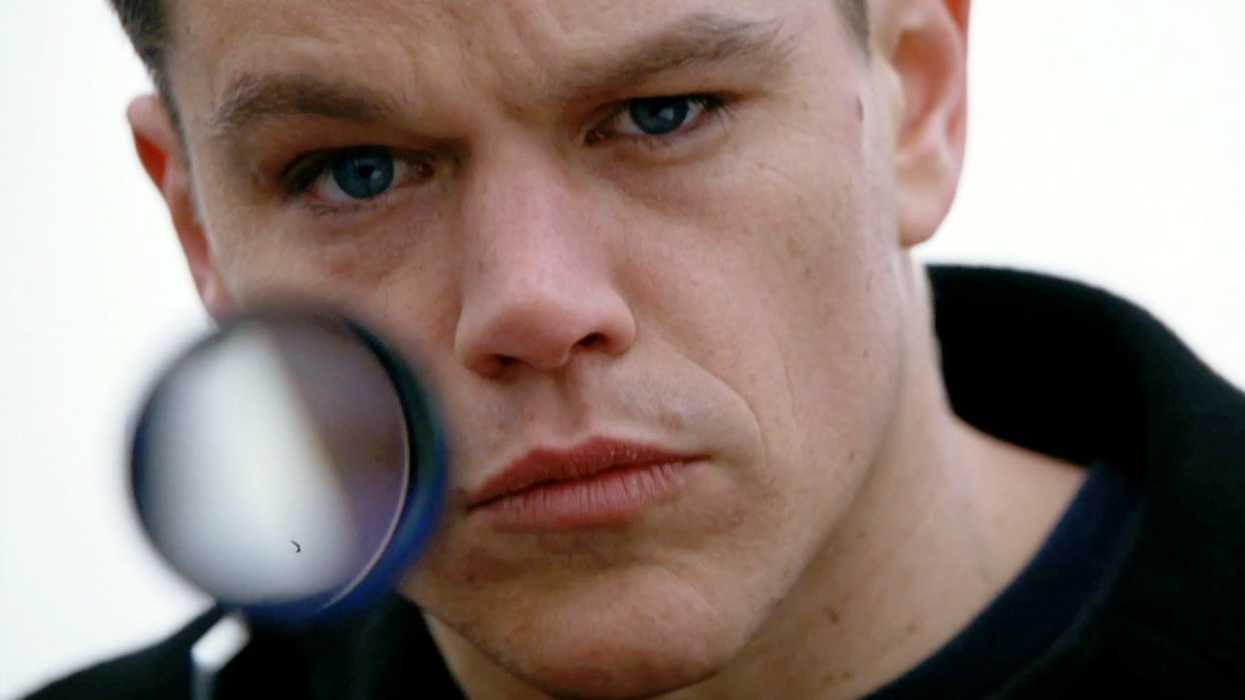
'The Bourne Supremacy'
You know how it goes. It's happening right now, in fact. Someone puts out a film that takes everyone by surprise because it's so new and different and successful… then you have a million copycats. And most of them flounder because they're mimicking, not putting out a story that the creators care about in the same way.
Right now you could point to the Backrooms and Obsession success and then the slew of Internet-based horror adaptations that were immediately announced and whose development I'll be watching with a significant amount of apprehension. Who knows. Maybe they'll all be amazing.
Anyway, that's why I was so interested when I found Jakob Owens' recent video essay trying to pinpoint the differences between great filmmaking and "bad" filmmaking. Owens, who co-founded Prism Lens FX with Thomas Taugher in 2018, puts The Bourne Ultimatum and Taken 3 side by side.
One is fast, confusing, and choppy, and the other does something similar… but still won the Oscar for Best Film Editing. So what makes the chaos work for one film but not the other?
Take a look below.
- YouTube www.youtube.com
Same Style, Different Results
On the face of it, these two movies are similar. They both use handheld cameras, rapid cuts, and chases through crowded streets. According to The Hollywood Reporter, editor Christopher Rouse used some 4,000 cuts in Ultimatum. That film took home three Oscars, including for editing. Taken 3, sorry, didn't get the same recognition.
Owens thinks the difference comes down to two words.
"I think the difference comes down to authenticity and intention. The filmmaking language of The Bourne Ultimatum feels authentic to itself. The camera work, the editing, the lens choices, the pacing, all feel like they belong to that world."
Owens borrows a line from critic Ryan Gilbey of The New Statesman, who wrote, "If it feels like a non-stop demolition derby, at least there's a responsible driver at the wheel."
Rouse's own explanation backs this up. He cut the film to mirror Bourne's mental state, telling The Hollywood Reporter, "Jason is uneasy; he's questioning; he's in search of his identity."
"Paul Greengrass makes the chaos feel intentional. The twitchy camera work and aggressive editing aren't just because they look cool."
Pick Lenses That Tell the Same Story
Editing gets most of the attention in this debate, but Owens spotted something else when he lined up the two films' chase scenes, and it has to do with the lenses.
"The Bourne Ultimatum seems to rely heavily on longer lenses that compress that image, and the compression makes everything feel more claustrophobic, crowded, and intense. You feel trapped inside the chaos with these characters."
Cinematographer Oliver Wood leaned on lightweight zooms for the handheld look. He told ICG Magazine that about 80% of first-unit photography was shot on two converted Nikon zooms, a 28–70mm and an 80–200mm.
"The zooms gave us a newsreel feeling, as if you're there, see something and zoom in," he said.
Taken 3 goes for a few similar tools, but doesn't fully commit.
"Taken 3 does use longer compressed lenses in certain moments, but it will then suddenly cut to these extremely wide close-ups while jumping between seemingly opposing camera movements. Sometimes you'll have these smoother, almost like gimbalesque shots, but then jump right back into a jarring handheld shot as it switches between all different types of camera angles and focal lengths."
Owens says the inconsistency keeps the film's world from ever feeling cohesive, and it pulls him out of the story.
Choose a lens package that serves one feeling and stick with it, as Wood did.
- YouTube www.youtube.com
The Storytelling Needs to Make Sense to You
Erratic cuts to create chaos still need to have reasoning in place for the editor and director. You need to be able to justify each choice.
"And that's an important distinction because the Bourne movies, Ultimatum specifically, are inherently choppy and chaotic, but there's almost a poetic quality to the chaos. It doesn't feel random. Even when it looks random, there's a system underneath it all," Owens says.
The poster child for the opposite approach is Taken 3's infamous fence jump. BGR counted 15 cuts in a six-second sequence of Liam Neeson's character climbing a fence. Owens imagines how that happened.
"It feels like they set out with the intention of emulating the Bourne movies. I can almost imagine a pre-production meeting saying, 'Hey, we're going to shoot this like the Bourne movies.' And technically they did. You can see the influence everywhere."
But if you're just copying without reasoning or understanding, it feels silly. Again, it's about that authenticity. Are the cuts supporting the story? Do the shots tell us something about the character's mental state? Or are you just operating on vibes?
Owens says, "I think audiences are incredibly good at sensing when something feels authentic versus when something feels like an imitation."
If the same franchise can produce both a tight thriller and a meme, what changed? Owens points to who was behind the camera.
Pierre Morel directed the first Taken, and Olivier Megaton directed the sequels. Greengrass' team, meanwhile, included Rouse and DP Oliver Wood, who earned a BAFTA cinematography nomination for Ultimatum.
"And then you have Paul Greengrass. He knew what he wanted his movies to feel like. And more importantly, he was able to assemble a team that understood that vision and executed it to perfection."
Ask Why It Works Before You Copy It
Of course, within filmmaking, directors and DPs constantly reference each other. We're not saying don't do that. But if you do, it still needs to tell the story you originally set out to.
Owens has argued before that movies should cut less and give shots room to breathe. He hasn't changed his mind, but he knows that every project might need something different.
"Every story has different needs. I wouldn't expect a slow-burn psychological thriller to be shot like The Bourne Ultimatum."
You have to make decisions about "style, framing, composition, lens choice, camera movement, and editing rhythm" that make sense for you, he says.
"Because when the intention disappears, the work becomes hollow. And when you're simply copying what someone else did without understanding why it worked, audiences can feel it."
Let us know what you think.