Making a large-scale sci-fi film usually comes with expectations of blockbuster resources, elaborate visual effects, and seemingly limitless time—but Space/Time was built by embracing the opposite approach.
For his feature directorial debut, filmmaker Michael O’Halloran leaned directly into the realities of independent filmmaking, crafting a high-concept time-travel story that mirrors the scrappy, inventive process behind its creation.
O’Halloran found ways to suggest scale rather than overspend on it, letting imagination and intention do much of the heavy lifting.
In the conversation below, O’Halloran discusses everything from the importance of rigorous preparation to making deliberate creative choices that turn budget constraints into storytelling advantages. He offers a practical look at how indie filmmakers can aim for cinematic sci-fi scope without sacrificing authenticity, clarity, or heart.
Details on where you can watch Space/Time here.
- YouTubewww.youtube.com
No Film School: Space/Time blends high-concept sci-fi with a grounded human story—what was the first spark that made you realize this was the film you wanted to make as your feature directorial debut?
Michael O’Halloran: When Adam Harmer, my co-writer, first put the idea of Back to the Future meets Breaking Bad to me, I immediately saw the potential to make a film about the independent filmmaking process. That the characters would be cutting corners, begging/borrowing/stealing to build their space-time engine, I knew would benefit from the film being made in the same way. Somehow, I knew that energy would feed into the film itself. That any of the corners we were having to cut would make the film feel alive with the same energy. It felt so exciting to me to make a film that was about filmmaking – writing what we know – and using that to speak about the things we sacrifice to follow our dreams.
NFS: When developing the script, what world-building rules or scientific ideas were non-negotiable for you?
MOH: Truthfully, all of the rules were non-negotiable. What mattered most was that we, as filmmakers, understood them completely, even if the characters didn’t. That distinction was really important. SPACE/TIME is about people discovering time travel in real time, without fully understanding what they’ve unleashed. Each character has their own theories and assumptions, but no one has the full picture, and part of the tension comes from watching them act without knowing exactly what the rules are.
While the film is very much science fiction, we always wanted the ideas to be grounded in real-world science. We take those concepts and have fun with them, but they’re rooted in ideas that actually exist. The goal was consistency – making sure the world operates by a clear internal logic that can stand up to scrutiny. What’s been really interesting is seeing how different audiences respond to that, and how confidently people come away with their own interpretations of what the rules are.
NFS: What specific directing challenges come with creating a sci-fi film on an indie budget, and how did you approach them creatively?
MOH: One of the biggest challenges of directing sci-fi on an indie budget is world-building. The genre comes with very clear audience expectations when it comes to design, scale, and visual credibility, and we were very conscious of wanting SPACE/TIME to feel believable and lived-in rather than thin or undercooked. On a microbudget, you simply can’t show everything, so the challenge becomes deciding what to show and why it looks the way it does.
We knew we’d have to cut corners, but we worked hard to make sure those choices felt deliberate rather than accidental. That meant being comfortable simplifying certain designs or ideas, as long as they made sense within the world of the film. A lot of the creative work was about finding in-universe reasons for limitations – turning constraints into character choices, rather than trying to hide them.
Prep played a huge role in that. We designed the film around what we already had access to, shaping the script to suit real locations. The approach was about doing the thinking upfront, trusting the audience’s imagination, and using suggestion, performance, and tone to carry ideas that might otherwise require resources we simply didn’t have.
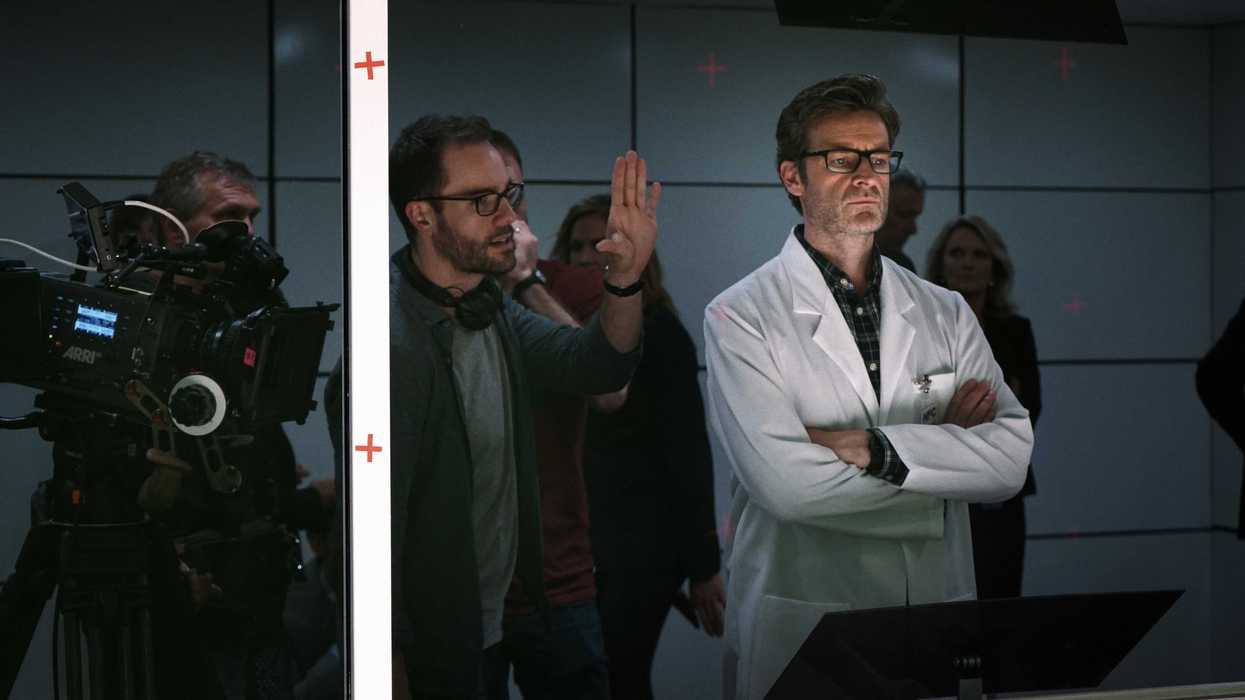
 Space/Time director Michael O’Halloran on set. Credit: Projection PR
NFS: Were there any key scenes where you adjusted your directing style to emphasize character over concept—or vice versa?
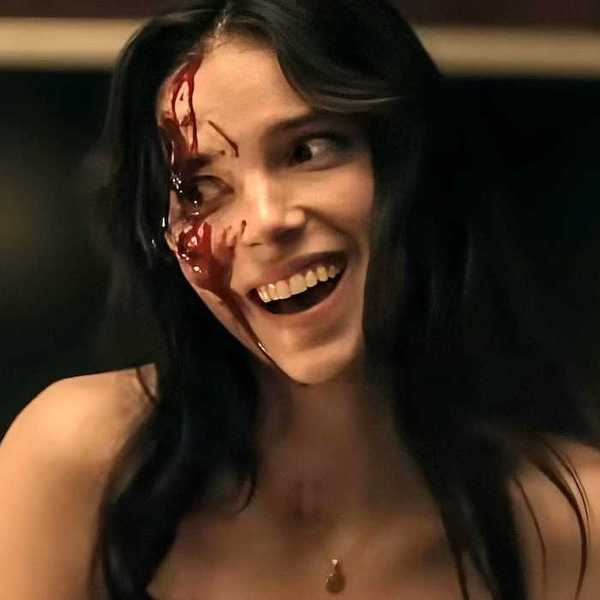
MOH: My directing style tends to adapt to the needs of the story and the characters, and in SPACE/TIME everything is anchored to Liv’s perspective. The audience discovers the world and the ideas at the same time she does, so the film is designed to be experienced from inside her point of view rather than observing events from a distance.
That approach extends very directly into the visual language of the film. The way the camera is framed, and how it moves or doesn’t move, is dictated almost entirely by Liv’s emotional state. When she’s confident and in control, the camera language is smoother and more composed. When she’s emotionally destabilised or overwhelmed, the framing becomes looser, and we lean more into handheld movement.
In the same way, the conceptual side of the film comes to the fore when Liv is actively grappling with those ideas herself. The science and the character are intertwined, with the visuals guiding the audience through both her emotional journey and her understanding of what’s unfolding.
NFS: What’s a moment in production where a budget constraint forced a creative breakthrough?
MOH: There were so many moments like that, it’s hard to pick just one! But I’d say some of the biggest creative breakthroughs actually happened in post-production. We were constantly looking for ways to communicate ideas more simply, which often meant finding solutions that reduced the visual effects burden without losing clarity or impact. That process forced us to be much more precise about what the audience really needed to see versus what could be suggested.
One thing that paid off was a structural choice Adam and I made early on in the writing. We included several sequences where characters communicate over radios, which gave us a lot of flexibility later. In the edit, that device became incredibly useful for clarifying story points, redistributing information, or even removing entire sequences that had become too complex or expensive to realise. What started as a practical writing decision ended up being a creative safety net that allowed the film to stay ambitious while still living within its means.
NFS: What’s a shot or sequence you’re especially proud of because it pushed your technical limits?
MOH: Definitely the first time Liv sees the second engine. It’s a continuous Steadicam shot that follows her as she enters the warehouse for the first time, and it ended up pushing us right to our technical limits. The shot involves some very complex blocking, multiple 360-degree rotations of the space, and two separate moments where the engine appears on screen. Because the camera sees everything, there’s nowhere to hide.
It was difficult to plan, difficult to shoot, and even more difficult to realise in post, but it was absolutely worth it. The shot puts the audience directly in Liv’s shoes and lets them experience that reveal in real time. It’s also the moment where the scale of what Holt has been working on in secret really lands, both emotionally and visually, and I’m really proud of how it came together!
NFS: You started the production company, Mohworks Films, which made Space/Time. What led you to create this company?
MOH: Mohworks Films is a name I’ve been making films under since I was a kid. I’ve been making little films for as long as I can remember, from the moment I first learned what a camera was. When I decided to start the company properly, it was about creating an entity that could bring the big-screen scale of the films I grew up loving into an independent framework.
That spirit is very much the spirit of SPACE/TIME. I’m excited to make films across different genres and styles, but they’ll all be united by the same mindset – a refusal to let budget define ambition, or to be limited by what a film of a certain scale is “supposed” to be able to do.
 'Space/Time'
NFS: How did you decide when to use practical effects versus digital effects?
MOH: It was always about choosing the best tool for the job. The effects in SPACE/TIME are largely digital, and I don’t shy away from that at all – a huge amount of what you see on screen exists because of the work Justin Leggereit did in post to bring the world of the film to life.
In many cases, we’d start practically. We’d build props or dress sets as far as we could within our means, then either enhance them or, in some cases, replace elements digitally. That approach let us ground the visuals in something real, while still using VFX as a way to elevate the design well beyond what our budget would normally allow.
Ultimately, the philosophy was to push things as far as we reasonably could in the physical world, and then trust that Justin could take the final steps through digital work. It wasn’t about practical versus digital as an ideology – it was about combining the two in a way that served the story and made the world feel believable.
NFS: Were there any effects sequences that were completely rethought once you got into the edit?
MOH: Yes, there were definitely effects sequences that were rethought once we got into the edit. Some of the action scenes were originally longer or more complicated, and as we started cutting the film together, it became clear that we wanted to get to the point much faster. The story benefited from being more direct, especially once the audience was already processing a lot of information.
There were also some time-travel ideas that evolved. Early on, we’d conceived of a few different visual approaches, including distortions that appeared more like bubbles. In practice, that ended up being visually confusing and harder to read. We found that keeping the distortions as these large, wave-like forms that fill the space was much clearer and more intuitive. Simplifying those ideas made the effects easier to understand and helped the action land more cleanly, without losing impact.
NFS: What’s the biggest lesson you learned making Space/Time that you wish you’d known at the start?
MOH: There are so many lessons, it’s hard to pick just one, and none of them are especially surprising in hindsight. The biggest thing I learned is how important a clear vision is. When things get hard, and they inevitably do, that clarity is what keeps everyone moving in the same direction. Alongside that, you have to fully trust your collaborators. There’s no time for second-guessing yourself or the people you’ve brought on – the film only works if everyone feels empowered to do their best work.
I also learned how important honesty and open communication are. Being upfront with cast and crew builds trust, and that trust makes it possible to weather difficult moments together. Some of the best ideas on SPACE/TIME came from unexpected places, simply because people felt safe to speak up. I’m genuinely grateful for every lesson the film taught me, and I’m excited to carry all of that experience forward into the next project.
 'Space/Time'
NFS: For filmmakers trying to make ambitious genre films with limited resources, what advice would you have for them?
MOH: Go for it. Make mistakes. Follow your instincts. Films are impossibly difficult to make – there’s no such thing as an easy film – so you may as well put that effort into something you genuinely care about. The key is to pair that ambition with preparation. Don’t jump in blindly. Test ideas, prototype things where you can, talk to people, and listen to filmmakers who’ve been through it before.
We’re living in a golden age of independent genre filmmaking. So many of the tools and techniques that were once only available to big studios are now accessible to indie filmmakers, if you’re smart about how you use them. With clear planning, good collaborators, and a willingness to learn as you go, it’s genuinely possible to aim high and still get the film made.
- How to Make a Bonkers Low Budget Sci-fi Gem With 'Tim Travers' ›
- Essential Tips for Filming Indie Sci-fi on a Tight Budget ›
- How (and Why) I Made an Indie Sci-Fi Feature Film for $30K ›
- Before ‘Avatar’ There Was ‘Waterworld’: A Film That Would Cost $355 Million Today ›
- How We Stole an Airport: A Guide to Making an Indie Feature Without Permission ›
- 5 Incredible Gregg Araki Movies You Cannot Miss ›
- Why “Imagine What You’ll Know Tomorrow” Is The Smartest ‘Men In Black’ Line ›