Why “Imagine What You’ll Know Tomorrow” is the Smartest ‘Men in Black’ Line
A quietly philosophical quote.
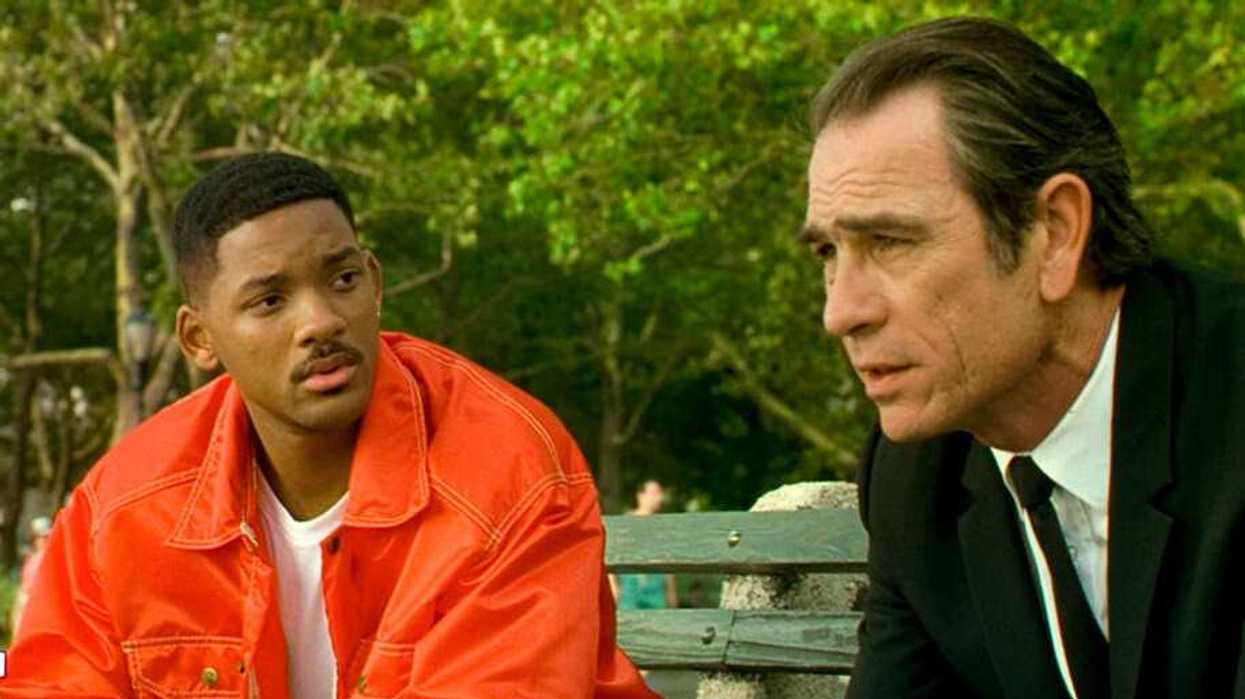
Men in Black (1997)
In the 1997 sci-fi comedy classic, Men in Black, directed by Barry Sonnenfeld, seasoned Agent K, played by Tommy Lee Jones, sits on a park bench with the recruit Agent J, played by Will Smith. During this iconic conversation, Agent K says a line that may feel like a throwaway quote, but in fact, touches on something deeply meaningful.
“Imagine what you’ll know tomorrow,” is subtly philosophical, historically resonant, and incredibly potent. What is said as advice to a young man actually centers on the evolution of human thought.
Agent K talks about how what is certain knowledge today was unimaginable before, and this is literally how our world functions. “Certainties” keep crumbling when new evidence comes to light and human thinking evolves with every passing day.
Let’s jump right in and explore what makes this quote so powerful.
How The Line Redefines Reality
Before we go deeper into what the quote really means, let’s remind ourselves of the main crux of Agent K’s monologue. When Will Smith’s Agent J says, “People are smart. They can handle it,” Tommy Lee Jones’s Agent K responds with the line, “A person is smart. People are dumb, panicky, dangerous animals and you know it. 1500 years ago, everybody “knew” that the Earth was the centre of the Universe. 500 years ago, everybody “knew” that the Earth was flat and 15 minutes ago you “knew” that people were alone on this planet.”
What Agent K is getting at, here, is how human thought constantly contradicts itself over time. What is assured today may sound bafflingly untrue tomorrow. So what does that mean for the idea of “reality”? Well, reality is just a temporary limit of our current information. The moment our information evolves, our reality shifts. There is no limit to how drastically this reality can shift, as one could observe with the example of people who presumed the Earth was flat.
By placing humanity’s latest shock, discovering extraterrestrial life, Agent K quietly dismantles the idea of certainty and rock-solid belief systems. Contradictions are a sign of human evolution, and without them, would the human race even learn and grow? These are just a few of the profound questions Agent K raises by putting his argument in the perspective of the history of the human race.
According to him, reality is not a fixed destination because nothing is certain. Centuries of beliefs are overturned in no time; so, finality is nothing but an illusion. This quote invites the audience to imbibe settled beliefs with a pinch of salt and deepens the context of the movie’s sci-fi universe.
Fine Line Between Certainty And Curiosity
One of the most interesting aspects of this line is how it paints a vivid picture of two separate entities: certainty and curiosity. While certainty feels safe, curiosity’s very job is to challenge it. Certainty could give us solid ground and clear answers without the need to second-guess, but give curiosity a humble moment, and it could dismantle everything we understand about the world around us.
Fifteen minutes before the conversation, Agent J was a young cop who was certain that humans were alone. It took exactly this much time for this notion to be challenged. Curiosity has the power to turn every “I know this for sure” into “what else might be true?”
Agent K’s words expose how the idea of comfort can be blinding and limiting. Even though it works on what it believes is a solid foundation, a few accurate questions could threaten this certainty with logic and evidence.
The smartest and best MIB agents are aware of the uncertainty at the centre of certainty. They walk a fine line by holding knowledge loosely enough to adapt when new information arrives. It is this flexibility that keeps them alert, sharp and focused.
Lessons From A Powerful Quote
Here are three strong takeaways from Agent K’s unforgettable line, “Imagine what you’ll know tomorrow.”
Disorientation Precedes True Growth
This is one of the deepest and most philosophical notions at the heart of Agent K’s monologue about the power of new information. How can true growth happen without the faintest glimmer of disorientation? According to Agent K’s logic, disorientation can be a transition phase between two types of certainties. To go from one belief to another demands a brief spell of confusion. This confusion isn’t just okay; it is almost a mandatory stepping stone. The moment one feels lost is probably the moment one’s old belief system begins to show cracks. This disorientation isn’t failure; it is the start of something new.
Defend Sci-Fi Logic With Realism
As writers who might want to create immersive sci-fi universes, it is important to build and defend your own logic. Agent K’s logic centres on something we can all understand and relate to. When he mentions the now-disregarded notion that the Earth is flat, he provides a strong foundation for the movie’s logic. This grounding in realism elevates the story significantly.
Impressive Character Perspectives Deepen Appreciation
More often than not, when a character offers a deeply balanced perspective that we can relate to, it deepens our understanding of what they are talking about and also our relationship with them. Agent K’s monologue draws historically accurate examples that are easy to understand and get behind. This deepens our relationship with him and makes the scene effective and precise.
Summing It Up
“Imagine what you’ll know tomorrow” is one of the smartest lines from Men in Black because it distills a profound universal truth about the nature of knowledge. Not only is Agent K’s monologue minimal and easy to understand, but it also encourages a friendly debate about the evolution of human thought.
Which is your favorite quote from Men in Black? Tell us in the comments below.