The Story Behind ‘Waterworld’: A Film That Would Cost $355 Million Today
Waterworld’s huge budget looks less reckless and more visionary in hindsight.
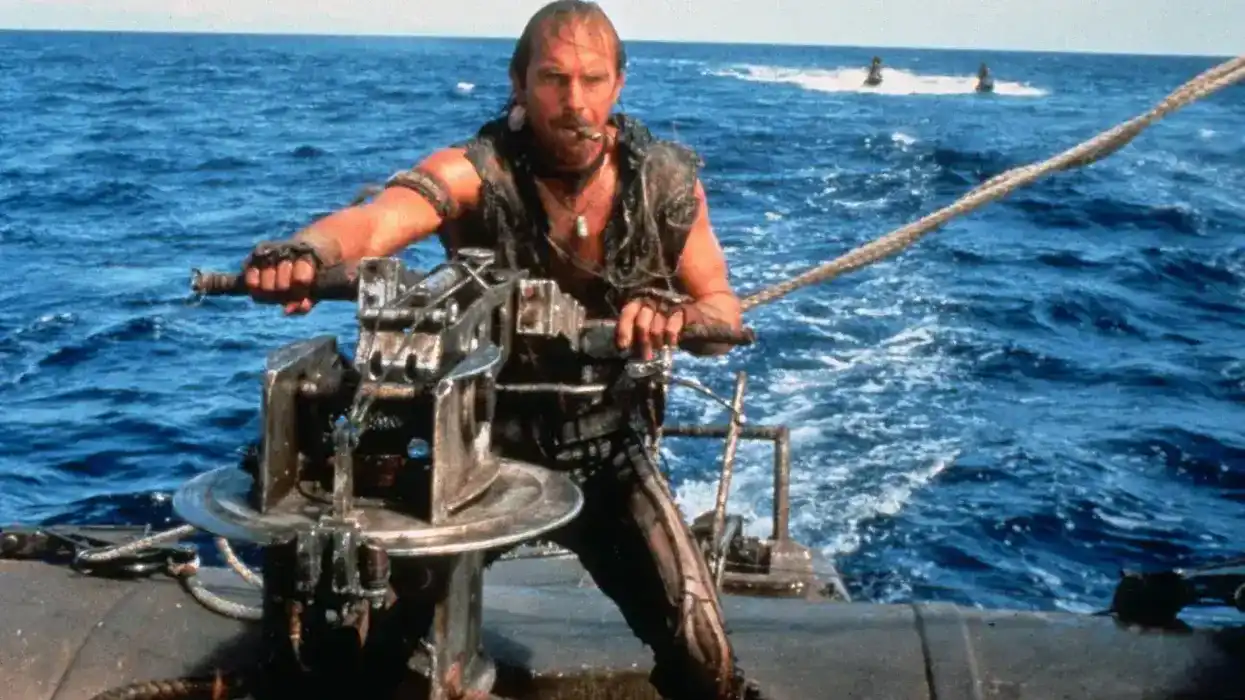
'Waterworld' (1995)
Long before James Cameron immersed us in the enchanting world of Avatar, Kevin Costner’s 1995 post-apocalyptic adventure Waterworld attempted something just as audacious.
Directed by Kevin Reynolds, Waterworld stars Kevin Costner, Jeanne Tripplehorn, Tina Majorino, Denis Hopper, among others. The film cost a massive $175 million to make. The dystopian movie, when adjusted for inflation, would cost around $355 million today, which puts it on par with some of the biggest blockbuster films of our time.
While the film was quickly labeled as “troubled”, its sheer ambition is admirable, and in hindsight, it appears less reckless and more visionary.
So, why did the movie cost so much money? And what can this teach us about studios taking serious swings on original worlds?
Let’s jump right in and explore.
How Waterworld Became The Most Expensive Movie Of Its Time
At the time of its release, Waterworld was the most expensive movie ever made. Its reported budget of around $175 million puts it comfortably above other movies that came before it. But why did it cost so much?
Well, to begin with, Universal greenlit the project with an ambitious scope. However, creating enormous floating sets (considered to be around 1,000 tons) obviously required incredible resources. Since this was a bare minimum requirement, set on the coast of Hawaii, the production was directly under threat of changing weather conditions.
A hurricane destroyed one key set, forcing massive rebuilds that also affected the shooting schedules, costing the production dearly on all fronts. While this might have been an isolated incident, the set’s coastal positioning was never going to help its case. Frequent weather fluctuations caused repeated shooting delays and safety issues.
Since the filming literally took place on the open sea, waves disrupted many shots, causing further delays. Eventually, the schedule, which was planned to be less than 100 days, extended far beyond initial expectations. Shooting the film on open water, rather than in controlled tanks or soundstages, also increased insurance, transportation, and other safety-related expenses.
For a film that was already written and imagined as an expensive, larger-than-life blockbuster, its inherent demand for authenticity put it at immediate risk of frequent budget expansions.
Creating An Entire Ocean Civilization Before CGI Took Over
During an era when Computer-Generated Imagery (CGI) was still in the early stages of development, Waterworld relied on practical effects and large-scale construction to bring its flooded, dystopian world to life.
For some context, when this film was being shot, the makers had far fewer technological options to rely on during production and in post-production. Practical effects weren’t a decision; they were more of an obligation. These limitations also affected writers and those involved in pre-production, as the film can only be conceptualized within the boundaries of what is possible to shoot, not beyond.
Now, within those limitations, certain key decisions can drastically affect budgetary constraints. For example, the makers decided to shoot off the Hawaiian coast, which was never going to be smooth and problem-free. Director Kevin Reynolds wanted to capture authentic water-based action, but this commitment to realism meant battling unprecedented seas, storms, and other weather delays that one simply couldn’t plan for.
Some sources believe that Steven Spielberg had even warned Kevin Costner about filming on open seas based on the issues he personally faced while shooting Jaws. However, the team persisted with shooting on the Hawaiian coast in an attempt to create a realistic and tangible ocean civilization experience.
All said and done, while the world has mostly focused on the pitfalls of the Waterworld production, there’s a lot to be admired about Reynolds’s film, Costner’s performance, and the sheer audaciousness of the film’s dystopian universe.
When Studios Took Big Swings On Original Worlds
It is considered well within expected standards for studios to splurge large amounts on franchises and sequels, but Universal’s massive bet on Waterworld, a post-apocalyptic original set on the open sea, is nothing but commendable.
Massive hits like Jurassic Park, which was released not too long ago, have restored Hollywood's faith in high-concept original movies that created fresh cinematic worlds. The keyword here is “experience”. Through the patterns we can see, it is evident that studios were putting everything into creating immersive, one-of-a-kind experiences for the movie theaters.
While the budgets were massive on many of these projects, the idea was simple: create new, enchanting movie worlds that could maybe later deliver sequels or similar follow-ups.
Personally, I think what makes movies like Waterworld stand out is the fact that they were entirely original on paper. This wasn’t a case of an adaptation of a popular book, a comic, or a classic film with potential for expanded scale. It was an original movie that was born out of a fresh new script. In our contemporary franchise-dominated world, a studio’s sizable commitment to an original film that would cost around $355 million today is almost unthinkable.
Summing It Up
In hindsight, Waterworld does not sound like a cautionary tale but more like a testament to a studio’s bravery and ambition. This wasn’t a film that banked on an existing IP; it risked everything, even during production, to create a one-of-a-kind theatrical experience people were not likely to forget. As movie lovers, we’ve got to commend that.
Which is your favorite Kevin Costner movie of all time? Tell us about it in the comments below.