I was scrolling over the weekend, as one does, and found a really great TikTok from user themoviemagick discussing Alfred Hitchcock’s philosophy of filmmaking. In short, the genius filmmaker was concerned that characters in contemporary films were just talking too much.
In July 1964, Alfred Hitchcock sat down with BBC interviewer Huw Wheldon for Monitor and delivered the critique, calling cinema "photographs of people talking."
Hitchcock wasn't referring to some arthouse fringe. He meant mainstream filmmaking, the industry at large. And he was already frustrated. The problem, as he saw it, was that dialogue had become the default tool for carrying story, character, and emotion. Filmmakers had stopped showing and started telling.
"Dialogue should simply be a sound among other sounds, just something that comes out of the mouths of people whose eyes tell the story in visual terms," Hitchcock said in his famous François Truffaut conversation (via Reverse Shot).
Sixty years later, have we only made the problem worse? Let’s dive in.
The Philosophy of Pure Cinema
Hitchcock called what he believed in "pure cinema." It's a philosophy in which the story is told through images rather than dialogue. Not imagery accompanied by dialogue, but imagery instead of dialogue, wherever possible.
Hitchcock told Truffaut:
"Well, the silent pictures were the purest form of cinema; the only thing they lacked was the sound of people talking and the noises. But this slight imperfection did not warrant the major changes that sound brought in. In other words, since all that was missing was simply natural sound, there was no need to go to the other extreme and completely abandon the technique of the pure motion picture, the way they did when sound came in."
Dialogue has to reinforce what images already communicate, not carry the narrative burden alone, he believed.
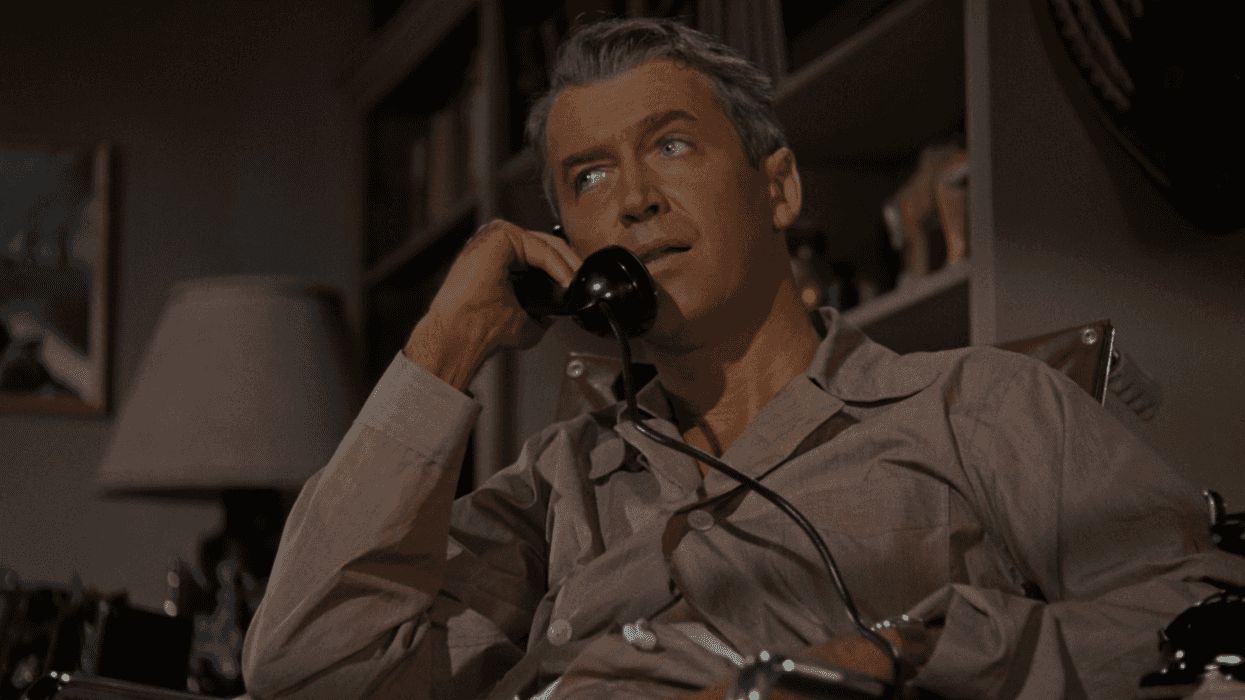
Consider Rear Window, where Hitchcock perfected the "subjective POV" or the Kuleshov Effect. He would show a character looking at something, then show what they see, then show their reaction. This forces the audience to step into the character's shoes and share their emotions.
Yes, Hitchcock Was Talky
Hitchcock's films are full of dialogue, yet he's considered a master of visual storytelling. The apparent contradiction disappears when you understand that, in his best work, dialogue and image work together.
In the famous opening scene from Rear Window, the protagonist and his editor discuss his work and goals.
On the surface, it's exposition and character banter. But Hitchcock uses a specific POV shot during this exchange that subtly establishes the film's setting and players. We get an idea of where the character is and what he can see.
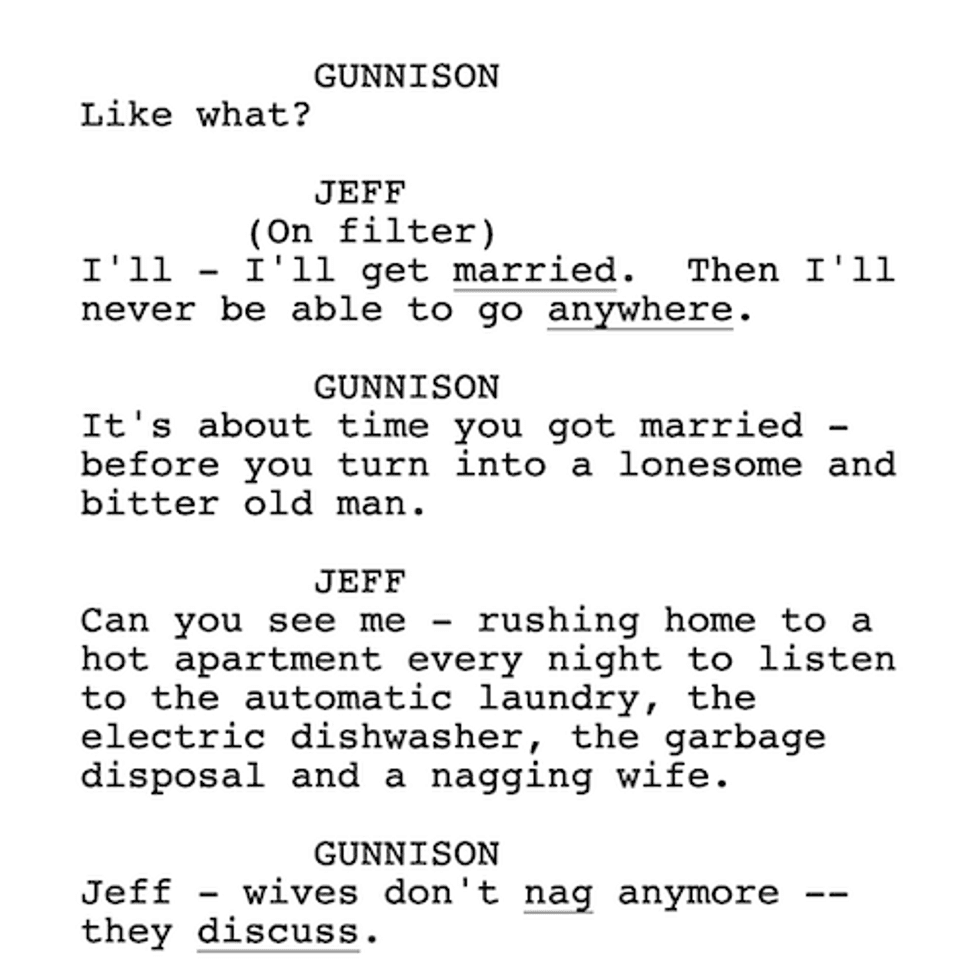 Credit: Paramount Pictures
The Shower Scene as Another Example
If you want to understand Hitchcock's philosophy in pure form, watch the shower sequence from Psycho.
There's almost no dialogue. Sergei Eisenstein had perfected the theory of montage, meaning shot A + shot B (both on screen) = shot C (in the audience's mind). Hitchcock was tremendously influenced by Eisenstein's montage and by the Soviet filmmakers' theories.
The shower scene unfolds as pure visual information. The knife, the water, the blood whirling down the drain, the shower curtain, the still eye.
Speaking to Truffaut, Hitchcock said, "I don't care about the subject matter; I don't care about the acting; but I do care about the pieces of film and the photography and the soundtrack and all of the technical ingredients that made the audience scream" (via Time Magazine).
Sound design was just as important. Hitchcock initially planned for silence, but changed his mind after hearing composer Bernard Herrmann's contribution—those screeching violins matched the movement of the knife while simultaneously evoking screams. Hitchcock realized that sound can never replace image, but one can reinforce the other.
Martin Scorsese later modeled the boxing scenes in Raging Bull on the shot selection in the shower scene. The technique was that influential.
Where Modern Filmmaking Fails
Now consider how dialogue is deployed in contemporary screenwriting.
A suspense scene might play out entirely through a character’s explanation of danger. A character tells another character what the audience already sees on screen. Exposition arrives disguised as casual conversation. The camera just frames people as they talk about intensity. Hitchcock would call this lazy.
His "pure cinema" minimizes dialogue, relying heavily on visual storytelling and sound to create suspense and keep the audience engaged. Modern streaming and prestige television have inverted this. Dialogue has become the default because it's perceived as "character work" and necessary to help a likely distracted viewer. A character explaining their feelings is considered deeper than one who shows them through behavior, reactions, and silence. Scenes might work fine on the page but then feel inert on screen. That's because dialogue is carrying narrative weight that it was never designed to bear.
- YouTubewww.youtube.com
How to Apply Hitchcock's Philosophy Right Now
There are a few things you can try on your next project.
- Treat every scene as if it were silent. Can an audience understand the emotional tension without hearing any words? If not, you need to restructure visually. What do the characters' posture, eye contact, and nearness to others tell us? What does the production design reveal?
- Use eyelines and reaction shots to establish power balance. Don't have a character say they're nervous or dominant. Show it through where they look, how long they hold a gaze, and how their body responds to another person's movement.
- Let sound design and music convey narrative weight. What can your sound mix communicate that dialogue doesn't need to?
- Minimize expository dialogue. If a character exists primarily to explain plot or backstory, you have a problem. Can information come through conflict or discovery instead?
- Pair dialogue with contradictory visuals. Think the parlor scene in Psycho, when Norman Bates positions himself as harmless while also sharing the frame with taxidermy birds. It’s creepy without being too explicit, so something just feels “off” about him.
- Shot duration can communicate character psychology, too. Hold on a character longer than expected to suggest guilt, obsession, or power. Cut away quickly to suggest evasion or weakness. The edit can tell a story.