From Sherlock to Benoit Blanc: Evolution of the Eccentric Genius Detective
This piece breaks down the origin, craft, and evolution of the eccentric genius trope across literature and film.
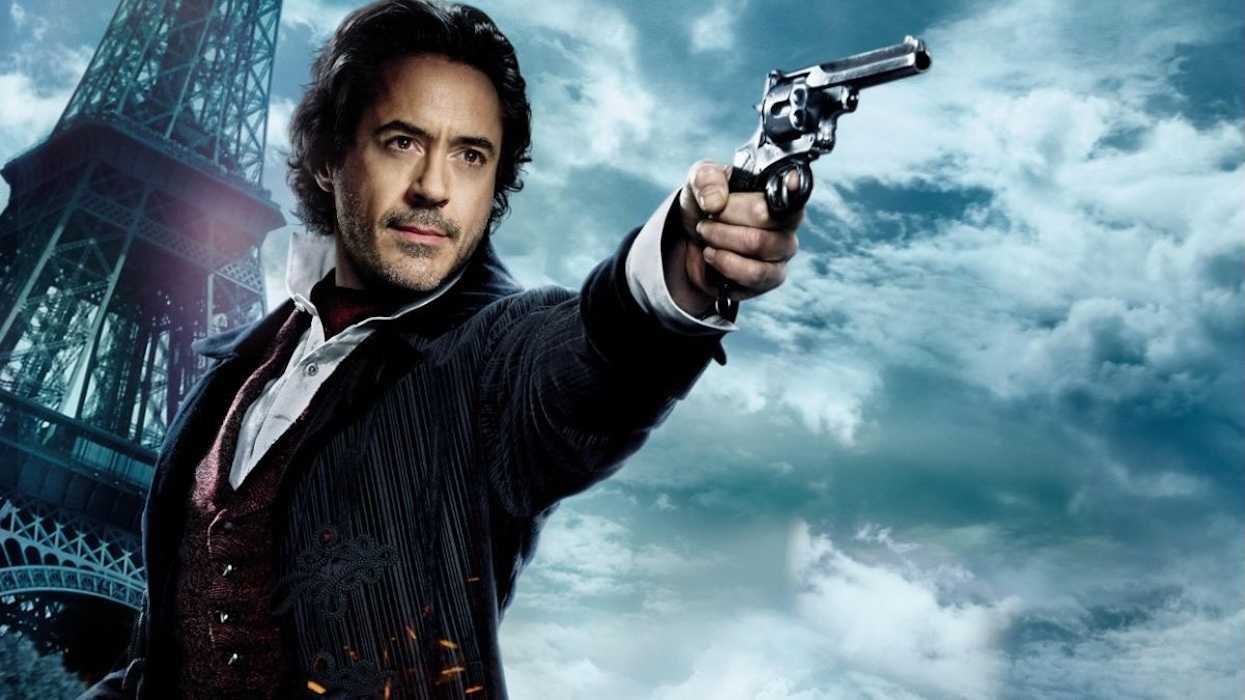
Sherlock Holmes (2009)
Among fictional characters that are as endearing as they are entertaining, an “eccentric genius” shines bright. They have been part of the storytelling ethos since long before the detectives took over. We enjoy watching them because they crack open mysteries that no one else is capable of seeing, and also because they bear some oddball qualities that are hard to look away from.
They are also a dependable character trope because they create instant contrast. Their quirks, social awkwardness, phobias, bizarre habits, and character traits are not their flaws, but are, in fact, a narrative camouflage for their superhuman intellect and instincts. As they shine through their brilliance, their strange behavior and quirks keep them unpredictable. In a narrative structure, they give us both clarity and chaos.
They come in many forms, from cold, analytical minds to theatrical personalities, but what remains constant is their ability to amaze and amuse.
This article traces the journey of this archetype and how it went through cultural shifts, defining brilliance across time.
Origins of the Eccentric Genius Archetype
Cultural Factors That Inspired the Archetype
The period of the Scientific Revolution (1543-1687) was marked by significant discoveries in the fields of mathematics, physics, astronomy, biology, and chemistry. Key figures like Copernicus, Galileo, and Newton were instrumental in replacing the traditional views of the world with new methods, such as keen observation, experimentation, and mathematical reasoning.
This intellectual movement laid the groundwork for the cultural and literary atmosphere that was fertile and nourishing for the development of this character archetype. Even readers developed the mindset for the stories that reflected this new scientific cognizance in logic and empirical reasoning, as well as a holistic outlook.
Early Literary Roots
If you want to get to the root of the eccentric geniuses, you might have to dig backwards in time through the nineteenth century until you reach C. Auguste Dupin in Edgar Allan Poe’s short story, The Murders in the Rue Morgue (1841). Dupin is widely regarded as the first modern detective. Poe regarded him as his ratiocinator—an individual who uses methodical processes of logical analysis (a mix of inductive and deductive reasoning) to reach a conclusion.
Anna Katharine Green, often cited as the “mother of detective fiction,” helped establish many genre conventions. Her characters, such as Ebenezer Gryce and Amelia Butterworth, often functioned through complex and layered plots that heavily relied on criminal law and elements such as “circumstantial evidence.” She was also responsible for creating the foundation on which later novelists, such as Agatha Christie, created the female sleuth characters like Miss Marple.
Then, there is Dr. Thorndyke from the detective stories of R. Austin Freeman. Thorndyke is a medico-legal forensic investigator, or as described by Freeman, a medical jurispractitioner, whose methods involve collecting all possible data and making primary conjectures before turning to things like possible suspects and motives.
All these characters were the symbolic shifts in literature that were brought upon by the Scientific Revolution. These characters mirrored the era’s belief that proper investigation—careful, critical, clinical, and cynical—could reveal truths that were beyond ordinary people’s reach.
Where Did Oddness Come From
To make their brilliant characters stand apart (with a starker contrast) from the regular people, the writers had to give them something more than just intelligence and mental acuity. This is where and why they considered the human tendency to notice something bizarre more instinctively than to notice something traditionally remarkable.
But they had to be careful. Finding a perfect balance between bizarre and morbid was equally important, or else their characters stood the risk of looking unpleasant. They had to write these characters in a way that would incite readers’ attention, but also affection.
The Defining Traits of the Eccentric Genius
The mystery that needs to be solved or the process that will help solve it; it all comes later. What will the readers notice first? The person who is solving it. That person’s ability to intrigue will decide how deeply the readers want to get involved in the plot. So, these are some personality traits that make eccentric geniuses intriguing.
- Heightened pattern recognition: They intuitively notice inks, rhythms, or contradictions that others don’t notice at all.
- Unusual problem-solving logic: They rarely follow a straight line of logic, which makes their deductions feel more organic and earned rather than convenient.
- Selective social engagement: They are too much into their own craft, and it leads them to be inept in things like identifying emotional cues and doing small talk.
- Hyper-fixation on details: The minutest and seemingly insignificant clues can launch them into a full-blown investigative mode.
- Ritualistic habits: What we now call OCD, these habits are the odd comforts that help them process information and stay rooted in reality.
- Detached emotional perspective: Since feelings and drama are not what they engage in (or know how to), they are more able to observe people and details with clarity.
- Sharp observational humor: They are, most of the time, bluntly honest, and it makes their observations and comments funnier and more sarcastic than others.
- Intuitive leaps: Their internal process makes them jump from clues to conclusion in ways that seem sudden and weird to regular people, but it all makes perfect sense with the final conclusion.
- Unusual personal aesthetics: Their personal style, posture, or general vibe is often at odds with what’s in vogue or considered normal. It makes them appear a bit out of place.
- Moral and ethical inflexibility: They have a range of private codes of what is right and what is not. Even when subjectivity is factored in, it’s often viewed as annoying and/or confusing.
- Restless curiosity: They have an insatiable hunger for puzzles. In fact, quite often the story is driven more because of their need for answers than by the stakes involved.
- Mental pacing and fidgeting: They are constantly involved and engaged with their brain, and it leads them to talk to themselves, move around, fiddle with objects, or have sudden epiphanies.
Enter the Modern Oddball Detectives
Sherlock Holmes
Arguably the sharpest, but also the coldest, eccentric genius, Sherlock is a master of quick deductions, amazing pattern recognition, and almost clinical attention to detail. His eccentric qualities are emotional detachment and erratic routines. He sees social norms and etiquette more as obstacles in his process than as necessary formalities. Typical of his kind, he sees links between clues and conclusions in ways others cannot.
Hercule Poirot
Hercule’s uniqueness lies in his sharp mental acuity combined with diligent and painstaking personal standards. He has what Sherlock lacks: emotional insight. His investigation is usually based on unmistakable observations and his reliance on the patterns of human behavior. His eccentricity is more superficial than internal, such as precise grooming, structured habits, and nonchalant theatricality.
Benoit Blanc
Benoit brings a quaint sense of charm and warmth to this archetype. His intelligence lies in letting the conversations breathe as he assiduously looks for cues and links and stitches them together with the ultimate truth. His peculiarity lies in his relaxed attitude, atypical comparisons, and deceptive (yet genuine) politeness. He is best at revealing how each small detail is ultimately a loose thread that forms a definitive, often surprising, conclusion.
Conclusion
Regardless of where he is, be it the gaslit alleyways of Victorian London or the sunny opulence of the modern New York City, the eccentric genius always captivates us. As we move from one genius to another, he changes his forms and faces, and his eccentricity evolves as smoothly as his brilliance, but what remains constant is his isolating logic and calculated charm.
As the eccentric genius solves relentless mysteries, we can’t get tired of solving the only mystery that we truly care about: the mystery of how his mind works.
- 'The Afterparty' Reinvented the Murder Mystery Genre in These ... ›
- Go Behind the Scenes of 'Glass Onion' with Rian Johnson and the ... ›
- How Did 'Knives Out' Pull Off That Plot Twist? | No Film School ›
- What Are the Best Mystery Movies of All Time? | No Film School ›
- The 10 Commandments of Detective Fiction by Ronald Knox ›
- What Is Deductive Reasoning? Art of Thinking Like Sherlock ›
- The World's Greatest Detective Is In The Public Domain | No Film ... ›
- Sherlock Holmes' Most Famous Line Wasn't in the Original Stories ... ›