5 Cinematography Lessons From Legendary 'Eyes Wide Shut' DP Larry Smith
Stanley Kubrick’s final film is legendary for its marathon production schedule, but his cinematographer reveals that the method behind the madness was actually quite practical.
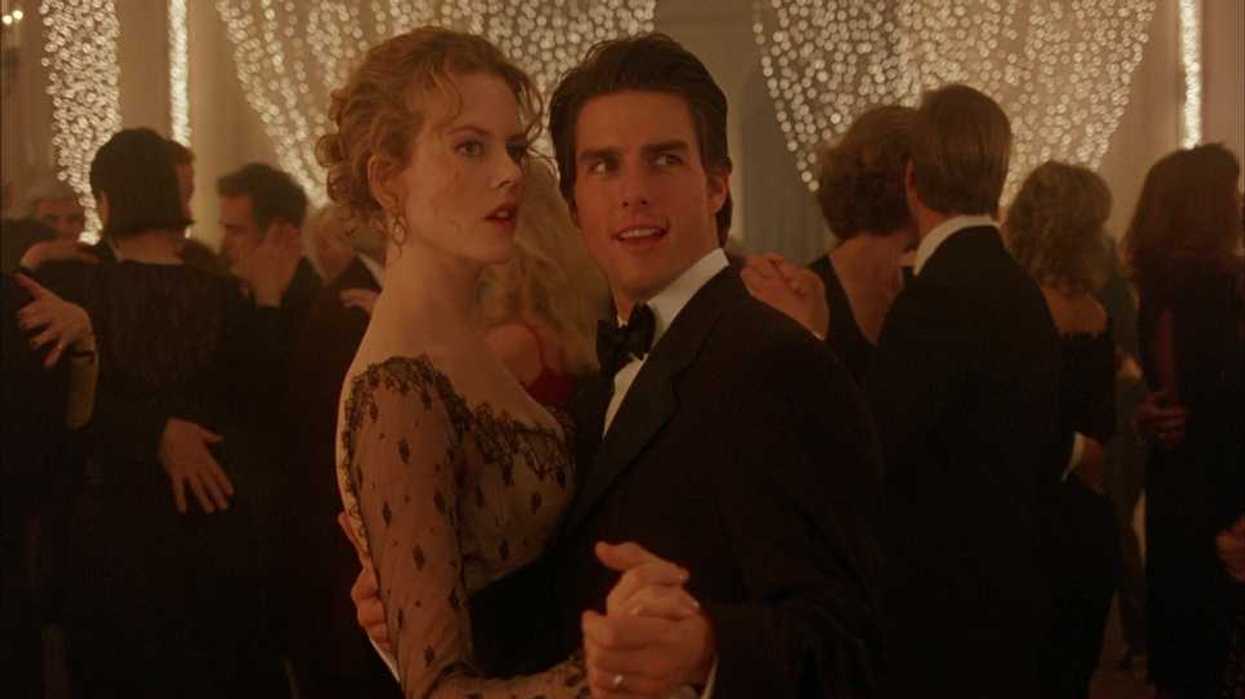
'Eyes Wide Shut'
Few films in cinema history are shrouded in as much mystique as Stanley Kubrick’s Eyes Wide Shut. From the Guinness World Record-breaking 400-day shoot to the controversies surrounding its rating and its final edit, the film is a masterclass in obsession and atmosphere.
I love this movie so much, which is why I was so stoked to see Indiewire doing an entire week of coverage on the film, including an interview with the film's cinematographer, Larry Smith.
This is all to celebrate the new 4K edition of the movie coming from Criterion.
I wanted to unpack the best quotes from Larry Smith’s reflection on Eyes Wide Shut.
Let's dive in.
- YouTube www.youtube.com
1. The Logic Behind the 400-Day Shoot
One of the funniest parts of the discourse around this movie is that it took an incredibly long time to make a movie that is largely two people talking in rooms.
According to Smith, it wasn't about indecision; it was about the natural expansion of the creative process when resources allow for it.
With that, it’s a bit like the analogy I would use is you live in a small flat, and suddenly you’ve got no room, you can’t get all your furniture and your clothes in. So you need a bigger place. So you go from a studio flat to a one-bedroom or maybe a two-bedroom. In two or three years, you’ve got no room again. You keep expanding. “This is comfortable, but I’d like a bit more.” I think Stanley naturally would more likely go in that direction until such times that he can’t work in a different way. It takes him this long. He didn’t make a film every year. He made a film on average every six years, seven years, maybe even longer than that, not because he didn’t want to make more films. His process wouldn’t allow him to.
2. Don’t Overshoot Your Coverage
In the digital age, it is common practice to "spray and pray"—shooting massive amounts of coverage from every angle to save the edit later.
That is pretty insane, and one of the reasons movies don't look real or composed anymore.
Smith reveals that Kubrick, despite his reputation for doing many takes, did not shoot excessive coverage.
People don’t realize how little coverage he did. This is, to me, a wake-up call for the way modern TV and movies are shot. The coverage, the extra shots. If you talk to directors that work this way, they say, “We need it because of the audience and their attention span.” I don’t believe it. If you cover a scene well, you don’t need a million cuts. That’s my opinion, and very few people allude to that as the way Stanley worked. That’s why he never did storyboards. That’s why he never did shot lists. He knew the coverage he wanted, and he never questioned [if he] was anything short, because he never was.
3. Keep the Set Sanctified
Kubrick was notorious for keeping a "small crew," but Smith clarifies what that actually meant. It turns out, Kubrick refused to let the machinery of filmmaking interfere with the performance. He wanted it to feel intimate. even on a big movie like this one.
When we say he liked a smaller crew, he never had 10 cameras. He had two cameras, that’s it, maximum. Shoot with one most of the time. We did have a big crew. He just wouldn’t have lots of people on the set. It’s a distraction. We don’t need them on the set. Make them sit out in the corridor. Film crews can be very obstructive, and not deliberately sometimes. They sit around. They don’t mean to sit around. They’re bored or in the way or they’re talking. He hated anything like that. Any kind of distraction, we would take people out. For people that shoot with lots of people on the set, it would look like “Where is everyone? Is everyone on a tea break?”
4. Color Grading is About Correction, Not Revisionism
There has been internet chatter regarding the new 4K transfer, with some cinephiles complaining that the film looks different or "grainier" than they remember.
One of the things that worries me when we get these new transfers is revisionist history. Like what did this dead director intend? Who speaks for him?
Smith points out that because Kubrick passed away before the final grade, the original DVD releases were actually the incorrect versions.
The new restoration isn't changing Kubrick's vision—it's finally finishing it. Smith even noted technical errors in the original release that they were finally able to fix.
Now that Criterion said, “What do you think about this print?,” we talked about it. We came to exactly the same view: It has lots of problems. It shouldn’t be like this. It shouldn’t be this grainy, this bright, or this or this. So, we went into a post-production house here in London, and we rectified a lot of the technical problems that were never addressed, which is unforgivable. Forget how you see it, how it should be graded. There were things in there that shouldn’t have been there. They should have been painted out. OK, it was a different world then, and a bit more difficult to do, but they would’ve come out had Stanley been alive. In a way, that tells you the care that was taken to release the original movie that was nowhere near good enough. So the understanding of how it should have looked, therefore, would not have been good enough.
He went on to clarify the work they did on this and how people can take it.
If people are wedded to that look, that’s what they’re used to, then, of course, when they see this version, it’s gonna jump for some people. It should jump in a more enjoyable way. It doesn’t change the plot; it’s just visually, I hope anyway, more interesting to see. Less grain, the highlights are not too bright. We pulled back maybe a couple things here and there that he would’ve done anyway for sure.
5. Aspect Ratio Matters
Finally, for the tech-heads curious about the framing: ignore the boxy 4:3 DVD releases of the past. Smith confirms that Kubrick was a spherical filmmaker.
This [Criterion release] is how you’ll see it in the cinema. Stanley was never anyone who shot in any other format apart from “2001,” which he shot in 65-millimeter. He only ever shot in one format, it was 1.85:1, spherical. I may be wrong going back to before “Strangelove,” but that was his preferred aspect ratio.
Summing It All Up
Man, I miss Stanley Kubrick. I wish he were still making films. This interview was a great glance into the process of this movie and his collaboration with Larry Smith.
It doesn't sound like making this movie was easy, and I am sure the new 4K version was also painstaking to put together.
But at the end of the day, it was cool to hear Smith rejoice in the experience and the art.
The new Criterion Collection 4K release of Eyes Wide Shut is available now.
Let me know what you think in the comments.
- 'Eyes Wide Cut': What Happens When a Filmmaker Reimagines Kubrick's Masterpiece? ›
- What Does The Mask On The Pillow In ‘Eyes Wide Shut’ Mean? ›
- 7 Actors That Kubrick Wanted to Cast as the Lead in 'Eyes Wide Shut' ›
- Is 'Eyes Wide Shut' the Movie Stanley Kubrick Wanted Us to See? ›
- How Stanley Kubrick Recreated New York Without Leaving London ›