Why Do Modern Movies Feel So Fake?
It’s not just bad CGI. It’s about how we capture reality—and why we’ve stopped trying.
Here at No Film School, we pride ourselves on being on top of all the newest filmmaking tech out there. There are so many new tools out there at people's disposal that allow them to make stuff look and feel incredible.
So why are so many Hollywood blockbusters looking so fake?
For a long time, I thought this was just nostalgia talking within me. I thought maybe I just missed the grain of 35mm or the practical effects of the 80s.
But a brilliant new video essay from Like Stories of Old digs deep into the psychology and philosophy of cinematic realism, and it turns out, the problem is much deeper than "CGI is bad."
Let's dive in.
Movies Used to Look Better
- YouTube www.youtube.com
One of the biggest takeaways from the video is the concept of "Perceptual Realism." This isn't about whether a movie is real (we know movies are fake); it’s about whether it triggers the exact brain mechanisms we use to navigate the real world.
That's maybe the moral of every film ever made. How do we get the audience to buy in and feel like what's happening on screen happened in real life?
The video points out a massive shift in modern filmmaking: The death of deep focus.
Look at a film like Lawrence of Arabia or the original Jurassic Park. They used deep focus and long shots that allowed the audience to "scan" the frame. You could choose where to look. That interactivity makes the world feel like it has three dimensions and is tangible.
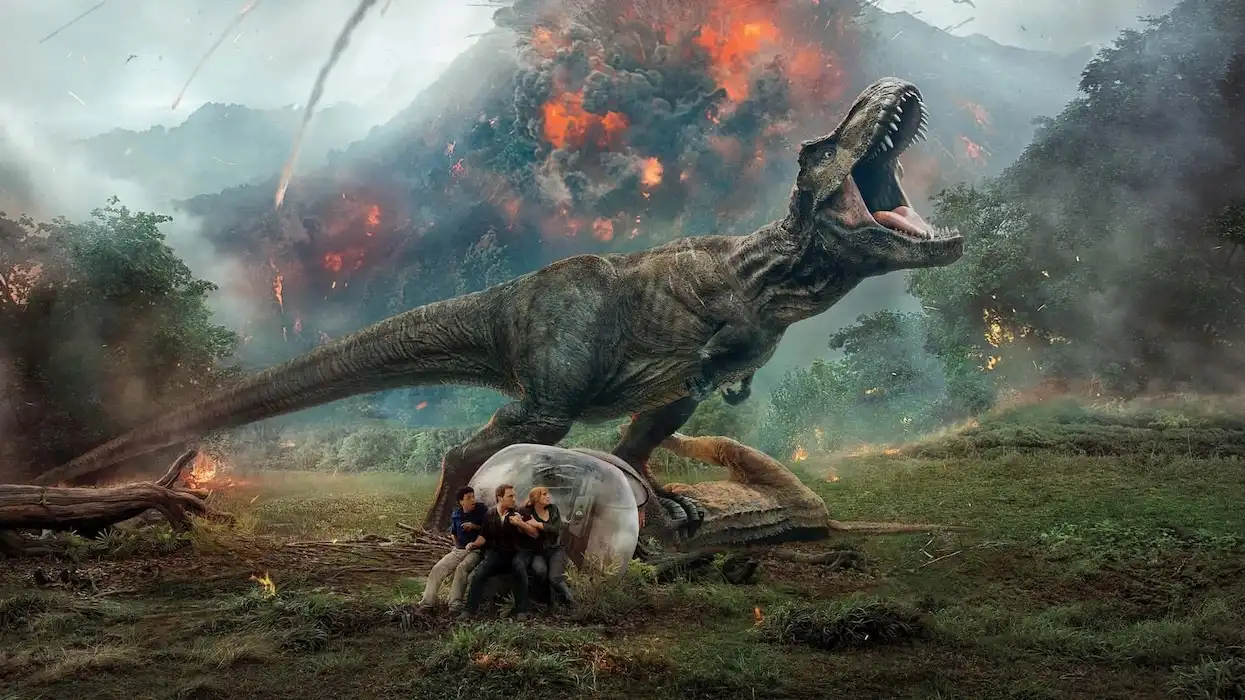
Now, look at Ant-Man: Quantumania or even parts of the new Jurassic World.
We are seeing a ton of medium close-ups with shallow depth of field. The backgrounds are just digital noise.
And in that noise, nothing feels real to us.
Defining Haptic Visuality
The essay introduces Laura Marks' concept of Haptic Visuality, which is a term I had never heard before. Haptic visuality is a film theory concept describing a way of looking at images that triggers the sense of touch through the eyes.
For example, when you watch Sorcerer or The Revenant, you can feel the humidity. You can feel the grit of the dirt, the coldness of the metal, the wetness of the rain. The video contrasts this with the "clean" look of modern blockbusters, where everyone looks like they just walked out of a makeup trailer.
When we "fix it in post" or light everything flatly so we can adjust it later, we lose the texture. We lose the sweat. We lose the soul of the image.
Make It Real
The core of the video is basically that shooting digitally means you don't have to make decisions on set. You can always fix it in post.
And that lack of icons makes distortion and color later, which takes us out of the world we see on the screen.
It's not just filmmakers doing this for themselves, but also to appease the studio. There is a temptation to shoot everything "flat" and "safe" so executives or editors can change the background or the lighting later.
But when you don't commit to a lighting choice on set, you end up with that "content sludge" look that takes us out of a movie.
Realism comes from commitment by everyone on set. You want the director and cinematographer to establish a look and then shoot that way the whole time, not make the decision much later in the editing bay.
So, do your part: actually pick a visual theme for your movie and shoot it that way. Don't rely on post, dig into the very roots of cinema and use deep focus ot help you convey your story.
Summing It All Up
You don't need a $100 million budget to make a movie feel real. In fact, the video argues that the budget often gets in the way. You need to commit to a look and a feel and actually shoot for that, not just try to do it in post.
Shoot with intention, and the palpable reality we want to achieve in movies will follow.