9 Films That Were Almost Ruined—Until One Decision
How desperate eleventh-hour choices rescued movies from total disaster.
World War Z (2013)
As a general audience, we take movies for granted. When a movie releases, we watch it, either love it or hate it, and that’s it. We are done. We don’t take into account what a journey it is for a movie to pick up from a writer’s page and hit the screens. Everything that comes between is itself movie material.
Filmmaking is essentially organizing chaos while burning millions of dollars and hoping the chaos wins. Sometimes it does. But sometimes sets fall apart, scripts remain unfinished, or actors don’t click. Giving up is not an option. At such moments come frantic last-minute choices that aim to soften the mess, if not outright fix it. These critical moments force filmmakers to find creative solutions they would otherwise have never considered.
Here, we are going to look at nine such movies that came to the breaking point but were saved by the frantic decisions made at the last moment. Let’s dive into this eleventh-hour magic.
9 Films Saved by One Last-Minute Decision
1. Casablanca (1942)
Written by: Julius J. Epstein, Philip G. Epstein, Howard Koch | Directed by: Michael Curtiz
You may not believe it (since the movie is a gem of a classic), but its production was a mess. There were other reasons, but an important one was that—hold your breath—the script wasn’t ready. What? The movie that is literally known for its wonderful plot, timeless romance, memorable characters, and ageless quotes was filmed without a locked script? Well, yes. Especially the ending (yes, yes… that iconic ending) was in shambles. Many variations were being considered, plus there was the omnipresent (and headache of a bother) Hays Code. It was literally a last-minute, on-set decision to have Ilsa and Rick depart for good. And this last-ditch pivot turned a standard romance into a selfless sacrifice. The classic that we know today was the product of this climactic filmmaking choice.
2. The Godfather (1972)
Written by: Mario Puzo, Francis Ford Coppola | Directed by: Francis Ford Coppola
The production of The Godfather was chaotic on many fronts, but one that almost derailed it was the studio executives’ frustration with the tonal direction Coppola was taking and the subdued performance of a “newbie” that was cast in the lead role—Al Pacino. After two weeks of shooting had been completed, both Coppola and Pacino were expecting to be fired. Coppola finally decided to act fast. First, he fired some toxic crew members who were responsible for creating this hostile sentiment at the studio. Then he quickly edited the famous “restaurant assassination” scene and showed it to the executives. He vehemently defended the film’s gritty aesthetic, which they were calling “dark cinematography.” Also, the scene proved what a powerful weapon Pacino was.
3. Jaws (1975)
Written by: Peter Benchley, Carl Gottlieb | Directed by: Steven Spielberg
This was quite a pickle! The monster that the movie was named after was not really functional. I mean, the mechanical fake shark, called Bruce, would break down all the time. It threatened to turn the movie into a laughing stock. Desperate times, right? But this is where Spielberg proved why he deserved his stellar reputation and phenomenal legacy—one that he had yet to achieve. He devised a new strategy: to keep the shark off-screen most of the time and instead make its presence felt through subjective camera angles, Hitchcockian methods of suspense, and John Williams’s iconic soundtrack. The frantic decision turned out to be quite revolutionary, and Spielberg landed with an instant classic.
4. Star Wars: A New Hope (1977)
Written by: George Lucas | Directed by: George Lucas
The project was halfway through production, and the studio was already not very hopeful about it. To make matters worse, its edit was turning out to be quite slow, and the story was lacking in tension. Desperate, Lucas fired the editor John Jympson and replaced him with Paul Hirsch, Richard Chew, and his then-wife, Marcia Lucas. They re-cut the entire footage that had been filmed until then. They especially focused on cross-cutting and dialogue overlays to manufacture the urgency of the final battle. And that’s how the fast-paced, exciting space epic that we have come to love so much was made.
5. Apocalypse Now (1979)
Written by: John Milius, Francis Ford Coppola | Directed by: Francis Ford Coppola
The making of Apocalypse Now is a movie in itself. Infamous for being one of the most troubled productions in cinema history, Coppola faced many challenges: Marlon Brando showed up on set heavily overweight and absolutely unprepared; Martin Sheen suffered a heart attack, and the sets were destroyed by storms and heavy downpour. It was so chaotic that Coppola realized following the script rigidly was pointless. Instead, he began reshaping the film on set and ultimately discovered its meaning in the edit. This improvisational approach transformed a standard war movie into a surreal fever dream.
6. Blade Runner (1982)
Written by: Hampton Fancher, David Peoples | Directed by: Ridley Scott
When the final edit was run for the test audience, they were baffled. Back in the early ‘80s, a film with such a continuously dark and somber mood was unusual. So, to make the film more accessible for the masses, the studio added a film noir voice-over done by Harrison Ford and gave it a happy ending. The special director’s cut version was later released with the original edits. Although the film pundits prefer this original version to the theatrical one, back then, these last-minute changes proved to be quite digestible for the ‘80s audiences.
7. Back to the Future (1985)
Written by: Robert Zemeckis, Bob Gale | Directed by: Robert Zemeckis
Despite Michael J. Fox being the first choice as Marty, his unavailability led to the casting of Eric Stoltz. However, shortly after the filming began, it became clear that Stoltz wasn’t the right choice—he was too serious for the movie’s tone. This prompted Zemeckis and Spielberg (as a producer) to make the expensive choice of replacing Stoltz with Fox, which included reshooting the scenes already shot with Stoltz. But ultimately, this choice proved beneficial because Fox provided the necessary lighthearted comedic energy that was essential for the film’s success.
8. Toy Story (1995)
Written by: Joss Whedon, Andrew Stanton, Joel Cohen, Alec Sokolow | Directed by: John Lasseter
Can you believe the universally loved Woody (Tom Hanks) was originally written to be a “mean jerk”? That’s who he was, and that version was quite unlikable. Disney hated the character so much that it almost canned the entire project. This led to Pixar “begging” for a chance to rewrite the script. Disney agreed, and the resulting draft showed Woody driven by insecurity rather than malice. By doing so, the writers also found the heart of the story. I will say, Pixar didn’t only rewrite the script; they rewrote the future of computer animation.
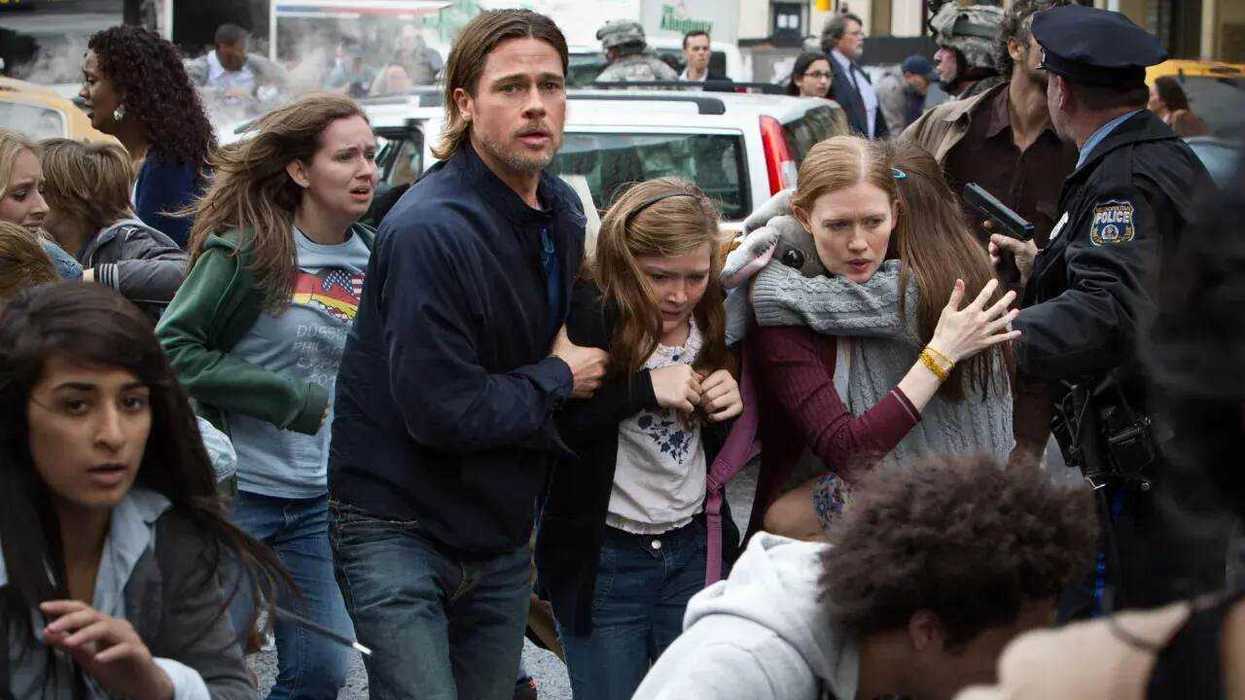
9. World War Z (2013)
Written by: Matthew Michael Carnahan, Drew Goddard, Damon Lindelof | Directed by: Marc Forster
Originally, this famous zombie horror had a climax that was much messier, much more (disturbingly) violent, and it took place in Russia. It felt kinda disconnecting from the rest of the movie. The studio ended up spending millions to scrap the original version, then rewriting it and reshooting it as a quieter suspense sequence that took place in a lab. This smaller, smarter conclusion saved the film from what could have been a bloated failure.