It's night on the sand at Tarkwa Bay, a stretch of coast off Lagos you can only reach by boat. No budget, no crew — just me, a Canon C70, and a bag of gear.
I'm going table to table at a beachside bar asking strangers to cut the generator, put their phones away, and hold still for twenty minutes like they're in a library, because that generator is the only power on the island and it's also killing my audio. They do it. Not for me — for GP, the local surf instructor whose story we're here to tell.
That's the whole job on a film like this: solving one impossible problem at a time, alone, with what's in the bag.
A few weeks ago, the film we made on that beach — Godpower — had its world premiere at Dances With Films in Los Angeles, a festival that has championed independent filmmakers for 29 years, and walked away with the Grand Jury Prize for Best Short Film. Here's exactly how I shot it.
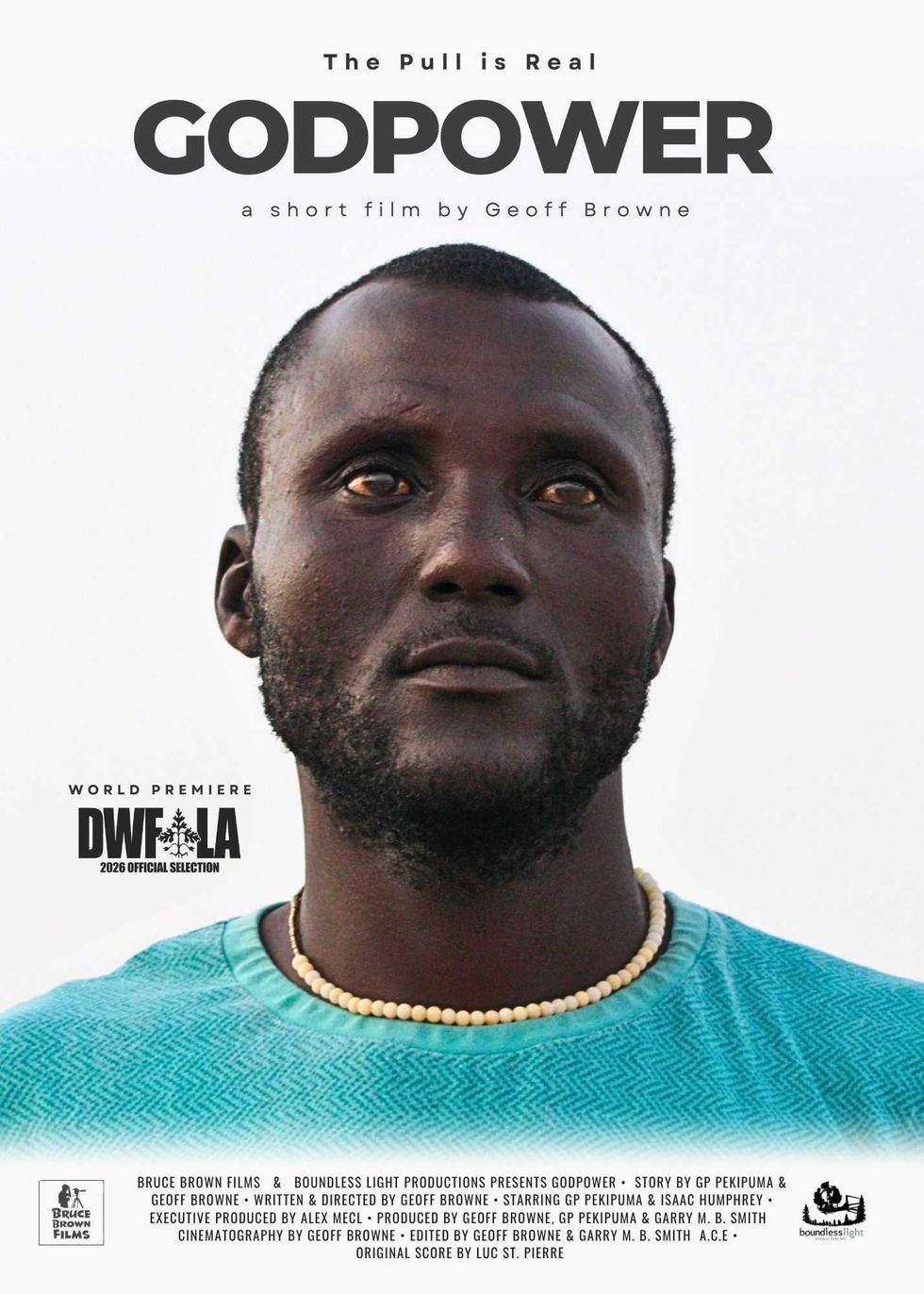 Godpower Credit: Boundless Light
How I Got There (Fast Version)
I was in Lagos wrapping a project when, on a day off, I noticed my old Endless Summer tee had Nigeria printed on it. I booked a surf lesson with a guy named GP — Godpower — off Instagram. He told me to meet him under a bridge; next thing I knew, we were on a boat pulling up to Tarkwa Bay, a bay off Lagos you can only reach by boat — remote enough that it feels like an island.
Turns out GP grew up there and learned to surf because he saw The Endless Summer as a kid — one of the beaches Bruce Brown filmed in 1966. I went home, wrote a script around his world, and came back months later with a camera.
Godpower is now a Bruce Brown Films presentation — Alex Mecl, the company's CEO, came on board as executive producer after hearing how it all came to be, and helped cover some of the post. The jury put it best: "What started out as a curious little thing on a T-shirt evolved into a cinematic gift."
Casting: Real People, Close to the Bone
It's a narrative short — written, with characters — but I cast it with the people who actually live in Tarkwa Bay, the way Fernando Meirelles cast City of God with kids from the favelas. GP plays the lead: a surf instructor trying to turn a tourist's booking into a birthday gift for his son. Nobody on screen is a professional actor.
For Isaac — GP's son, playing the boy — I used Phillip Noyce's Rabbit-Proof Fence casting method. Noyce auditioned two thousand Aboriginal kids who'd never acted by having them walk through a door and try to convince him an imaginary friend was in real danger. The ones who could hold it, without giggling, got cast.
I ran that with Isaac a few times and saw everything I needed: he took direction, he was creative, he could summon urgency, and he was easy in front of the lens. On the day, I directed the non-actors like trained actors — substitution, the moment before, the essence of the scene — I just explained more.
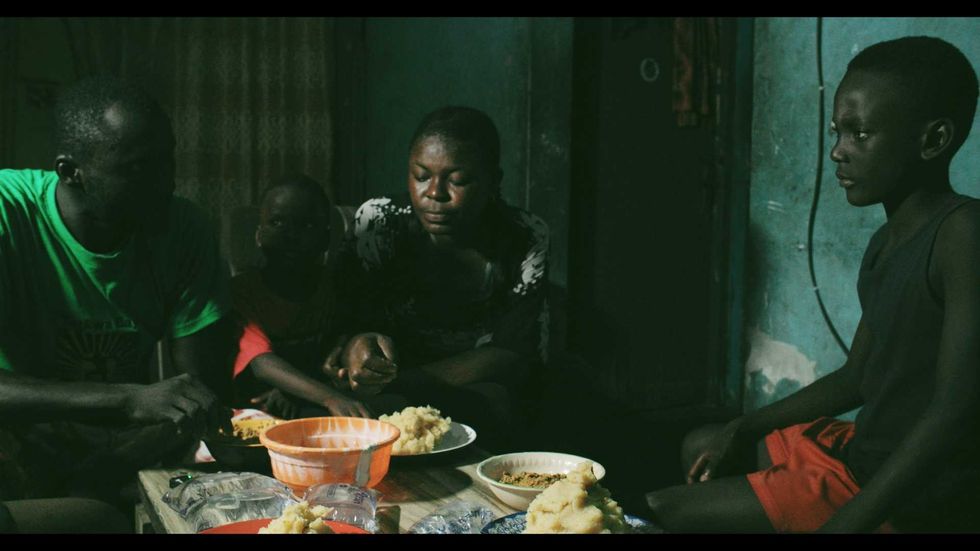 'Godpower' Credit: Boundless Light
The Kit, and Matching the Look to the Story
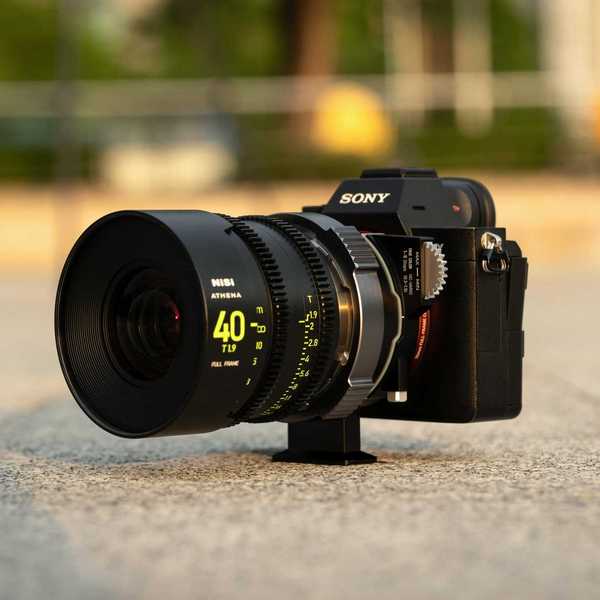
One bag: the script, a Canon C70, a DJI gimbal, two lenses, a baby-legs tripod, Hollyland lavs, a pocket hazer, and two small Nanlite tube lights.
The C70 was the camera I had, and I didn't mind — for this film I didn't want an Alexa Mini, and good thing, because there was no budget for one anyway. That's the real lesson, and it's a writing lesson as much as a camera one: write a script that fits its tool. Not just a location chosen for production value, but a location and a look that set the tone and tell the story. I didn't write a film that belongs on IMAX. I wrote a raw one — raw place, raw camera — and the look completes it.
So I leaned all the way in: mostly available light, the two Nanlite tubes only to shape or save a scene, handheld and gimbal for immediacy, and the baby-legs tripod down low in the sand and at the water. The grit, the grain in low light, the unpolished edges of GP's life — I wanted all of it. And on the 4K projection at the Chinese Theatre, that grain read as texture, not noise. The camera I had turned out to be the camera the story needed.
Light, Power, and the War with Sound
This was the real technical fight, and it nearly sank the film. On Tarkwa Bay, power comes from a generator. No generator, no power, no lights — which left me on two battery-powered Nanlite tubes that burn out fast. But the generator roars, and post sound on this film was do or die.
So every setup became a negotiation between light and silence. Kill the generator for clean dialogue, and I'd lose my power, racing two dying Nanlite batteries to land the shot before they died. Leave it running, and the track was unusable. Add the ambient life of the island — generators everywhere, music down the beach, phones at the bar — and getting twenty usable seconds of quiet meant working the crowd myself, every night, one person at a time. Twenty minutes that took an hour or two.
I planned around it. I shot at all hours, scheduled to the light instead of fighting it, scouted my own locations and times, and knocked on GP's door at 4:30 a.m. to steal first light more than once. Run-and-gun, but disciplined — because when you're the director, the DP, the gaffer, and the sound department, discipline is the only thing standing between you and a movie you can't finish.
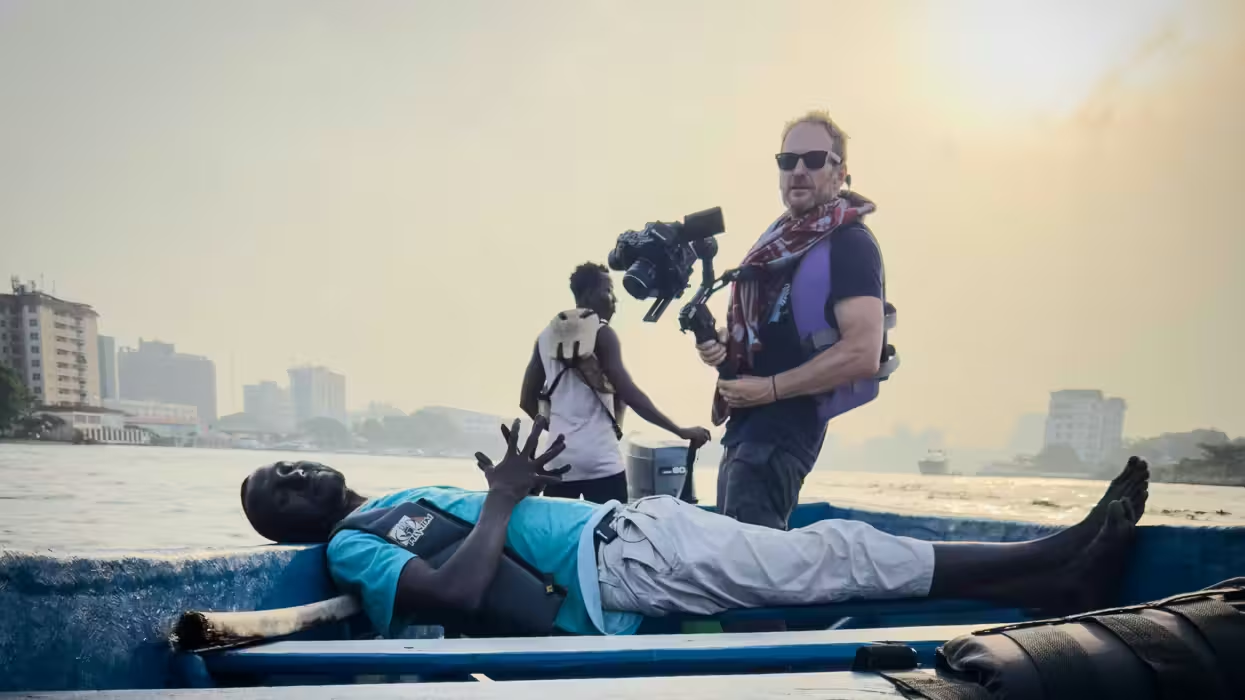
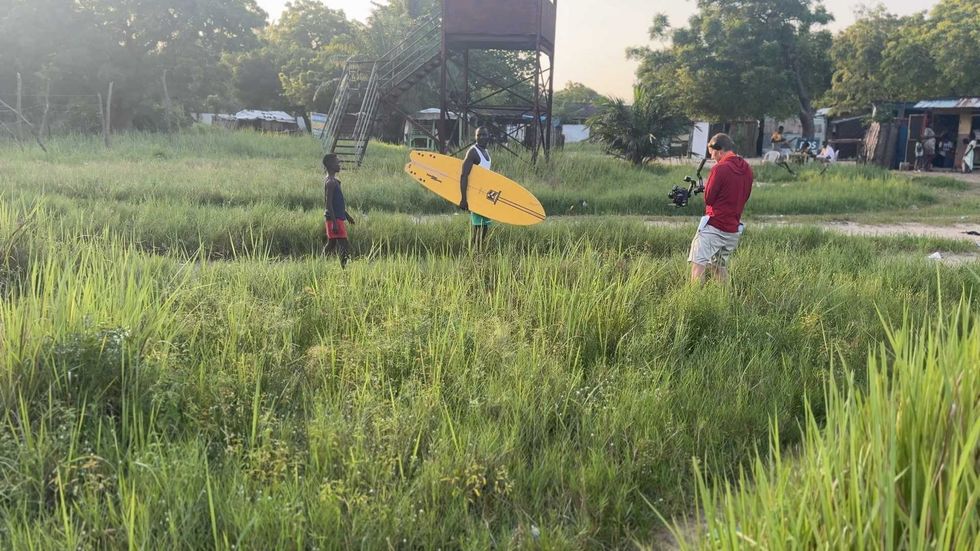 "Godpower' BTS Credit: Boundless Light
Post: Data Management First, Then the Look
The film was won or lost on the drives. Shooting and running the whole thing solo in 100-degree sweltering heat, I'd get back to the guest house wrecked at the end of the day — and that's exactly when the cards had to be offloaded, backed up, and organized. It's the least glamorous part of no-budget filmmaking and the most important. Get sloppy there, and the movie's gone.
I cut it myself alongside a seasoned editor, Garry M.B. Smith, who also post-supervised and brought on a strong assistant editor, Crystal Platas, to organize the footage and drives — the thing that actually let two editors work in parallel. Then I had it graded in Vancouver by Dermot Shane, who helped push and dial in the look, protecting the grit while making it sing.
Score and Sound
The music came from Luc St-Pierre, a composer in Montreal who believed in the story and wanted to help. To root it in place, I found two Nigerian musicians through Fiverr who laid down vocals, drums, and guitar — a little Lagos in the track. Sound design and the mix were handled by John Chalfant in Los Angeles. Given how hard the location fought me on audio, that post work wasn't a polish pass — it was the difference between a finished film and a folder of unusable takes.
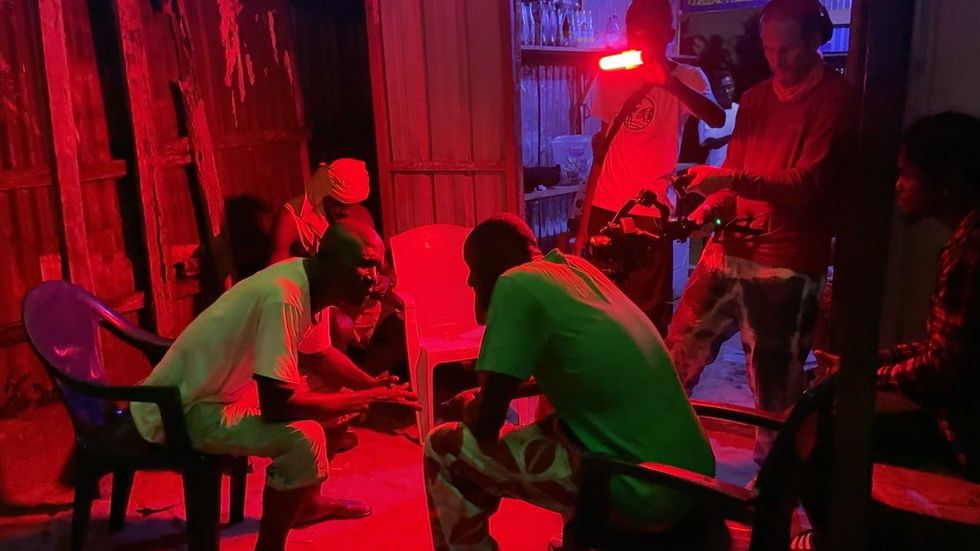 'Godpower' BTS Credit: Boundless Light
What Actually Made it Work
You can't fake passion, and a community can feel the difference — that's the most practical production note I have, not a sentimental one. It's why strangers gave up their nights to hold still for my takes. And your limitations become your style: no crew forced a closeness that became the entire look of the film. The constraint wasn't the obstacle. It was the film.
The moment I won't forget was watching GP up on the big screen at the Chinese Theatre — two guys who met for two hours under a bridge, up there in front of a packed house. I'm sure I annoyed him running take after take; that's the job. The award is his as much as mine.
Godpower is a proof of concept for a feature — the fuller story of GP and Tarkwa Bay that I want to make next. I've shot in the Arctic, India, China, and more, and the lesson under all of it is the same: you don't need permission, a budget, or a crew. You need to show up, earn trust, solve the technical problem in front of you, and let the people and the place lead.
I showed up alone. I didn't make it alone. That was the whole point.
So here's the least technical advice I've got: talk to strangers. If you ever get to Nigeria, book a surf class with GP — tell him I sent you. And wherever you are on the planet, if you want to make a film and have no idea where to start, instead of grabbing the shawarma to go, stick around. Say hello. That's the whole trick. A T-shirt, a surf lesson, and staying a little longer than I needed to — that's where Godpower came from.
Bruce Brown Films & Boundless Light Productions present Godpower. Story by GP Pekipuma & Geoff Browne. Written & directed by Geoff Browne. Starring GP Pekipuma & Isaac Humphrey. Executive producer Alex Mecl. Produced by Geoff Browne, GP Pekipuma & Garry M.B. Smith. Cinematography by Geoff Browne. Edited by Geoff Browne & Garry M.B. Smith, A.C.E. Original score by Luc St. Pierre. Winner, Grand Jury Prize for Best Short Film, Dances With Films: LA 2026.