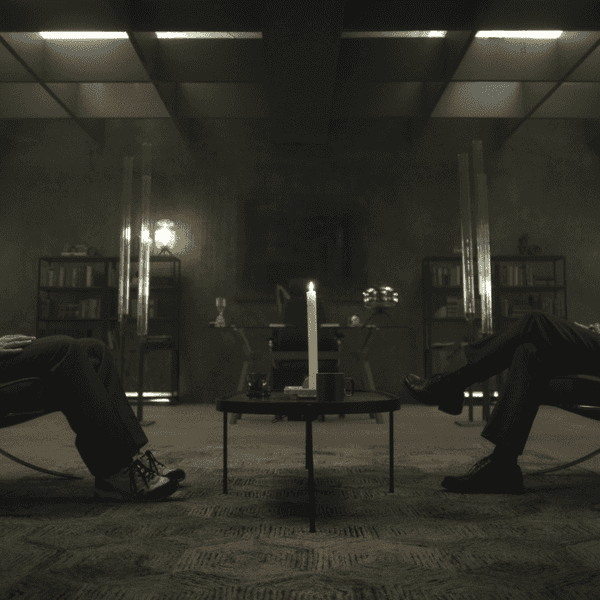
This F. Scott Fitzgerald classic famously details the story of a desire that burns so bright that it sets ablaze the person bearing it. This person, Jay Gatsby (Leonardo DiCaprio), lives in the world of beauty, noise, and vast dreams, and despite his desire burning him down, he refuses to let it slip off him.
In this scene, where one of his glorious, legendary, and exorbitant parties has just ended, Gatsby stands, lamenting its fruitless conclusion: Daisy Buchanan (Carey Mulligan) wasn’t impressed.
In this moment, he realizes that this extravaganza was neither for strangers nor for prestige; it was for her. He spirals into plans of recreating the magic. A do-over. And he wants Nick (Tobey Maguire) to help him out. But Nick has a different take on the situation.
“You can’t repeat the past,” he says.
Nick has pointed out the truth, but Jay is not ready for it. He isn’t done with his desire yet. He counters, “Why, of course you can.” He is a man desperately stretching backwards trying to get a hold of the love he thinks is slipping away, with the belief that if he holds tight, he will have it.
The scene may be gentle, but it holds the film’s thematic truth: desire rooted in delusion won’t let him accept that life moves only in one direction.
The Quote
Nick’s Voice of Reality
Nick is the narrator of Jay Gatsby’s story. We explore the protagonist (Gatsby) from Nick’s point of view. So, Nick’s role in the story is to observe rather than influence the narrative. And that’s exactly what he does. Before he met Gatsby, Nick thought he was mysterious. When they became friends, he also learned of his charming personality, his love for Daisy, and, of course, his immensely hopeful spirit.
Nick appreciates Gatsby’s spirit but is also aware of the problems it may cause. Nick’s background is different from Gatsby’s; his world and worldview are more grounded and shaped by experience, unlike Gatsby’s, who dwells in illusions. So when Nick tells Gatsby that he can’t repeat the past, he is not spilling water on Gatsby’s hopeful spirit; he is warning his friend that he is heading towards a cliff.
Gatsby’s Denial
Gatsby almost instantly rebuffs Nick’s argument. It comes out with a calm confidence, but it is also laced with desperation. His hopeful spirit cannot afford to be wrong on this. So, when he rejects Nick’s argument, he also rejects reality. The way Gatsby sees the past is not how Nick does. He doesn’t think the past is (or has to be) memory. He thinks it’s a promise by time itself. And going a step ahead, he also believes that strong hope, sheer willpower, and, if needed, money are enough to bend time to his will.
That’s not Gatsby being arrogant or stupid. He has faith. It’s another thing that this faith finally destroys him.
Gatsby’s Obsession with Memory
Rewriting the Past through Reinvention
The current Gatsby is basically who he always wished he was. On the surface, it sounds harmless—ideal, even. It’s a typical success story, isn't it? Who wouldn’t appreciate it if their dreams were materialized?
But there is a catch. His dreams are fine, but his hope is giving him the wrong impression that by changing his present, he can rewrite his past. And that’s what is happening. Everything Gatsby is or has right now is meticulously regulated: a new name, a new fortune, and a painstakingly curated image. And all this because he thinks that by turning backwards, he can reshuffle the pieces in the past. He has built a new identity, but when it is built on only desire and not the truth, it’s at high risk of cracking. The Great Gatsby looks glorious from a distance, but up close it becomes clear that he is a heartbeat away from chaos.
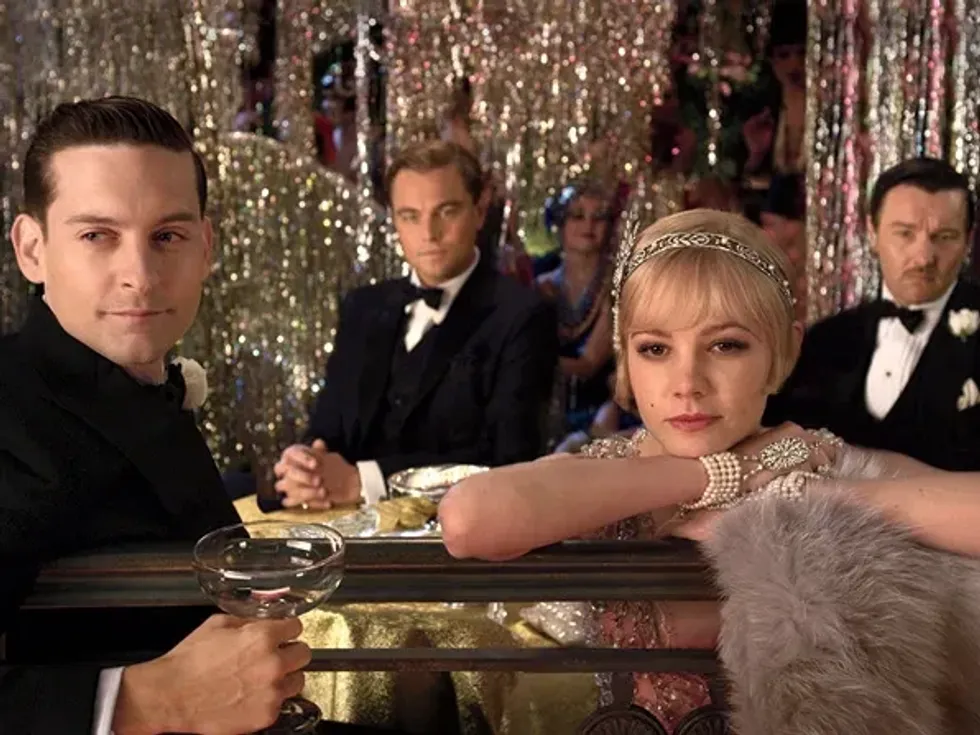 'The Great Gatsby' Credit: Warner Bros. Pictures
Daisy, Time, and the Ghost Gatsby Loves
Jay met Daisy in 1917, and they fell in love. Suddenly, Gatsby was drafted to fight in the Great War (WWI), and their romance was cut short. They lost touch. Then Gatsby reinvented himself, got rich, and became the mysterious Great Gatsby. This party scene takes place five years after he fell in love with Daisy. He intended to rekindle their romance and steal her away from Tom Buchanan (Joel Edgerton), but it didn't go as planned. Daisy wasn’t impressed by Gatsby’s wealth and his party.
The problem lies in the fact that Gatsby thinks she is still the same Daisy whom he fell in love with—pure and hopelessly in love. Daisy was his world before his ambition and pursuit of success hollowed him out. He believes in and longs for that Daisy from five years ago. But he doesn’t factor in the possibility that, just like he did, Daisy has also lived since then. Just like he sought wealth and success, she did too. She has chosen comfort, stability, and the safety of money. She has stopped being the dream that he worships and, since then, has become someone real.
His animosity towards Tom is understandable but ultimately pointless. Tom has nothing to do with Gatsby’s lost love. He was just one of the pieces that destiny used to bring things to where they are right now. If he wants to blame someone, he can blame time, but that’s even more pointless.
His hopeful spirit makes him believe he can drag the past into the present, but he fails to see that while memories don't age, people do. And that’s the universal tragedy of any love story.
Conclusion
Jay Gatsby’s story is a reminder that nostalgia may feel like hope, but it can also be quicksand. We chase a beautiful moment from the past but don’t realize that it was beautiful in the moment. That moment is frozen in time, and time keeps moving on. It doesn’t stop for beautiful dreams or hopeful love stories.
We all have Jay Gatsby in us, to a greater or lesser extent. We all chase after the beautiful past. And perhaps that’s why a movie quote like “You can’t repeat the past” stings on a very personal level. We all may have beautiful memories, but we must learn to appreciate them while also knowing that we should leave them be where they were born—in the past. Gatsby refuses to learn this, and that makes his heartbreak more painful than it should be.
- What Films Did Martin Scorsese Show Leonardo DiCaprio to Inspire ... ›
- Why Did Leonardo DiCaprio Want 'Killers of the Flower Moon ... ›
- What's Leonardo DiCaprio's Biggest Career Regret? | No Film School ›
- How Leonardo DiCaprio Was Almost In 'Primal Fear' | No Film School ›
- 10 Best Leonardo DiCaprio Performances | No Film School ›
- 5 Movies Leonardo DiCaprio Would Put on His Cinematic Mount ... ›