The Perfect Villain: How Hans Landa Turned a Simple Goodbye Into a Death Sentence
A critical look at how sound, timing, and a single French phrase established the high-stakes world of this WW-II revisionist epic.
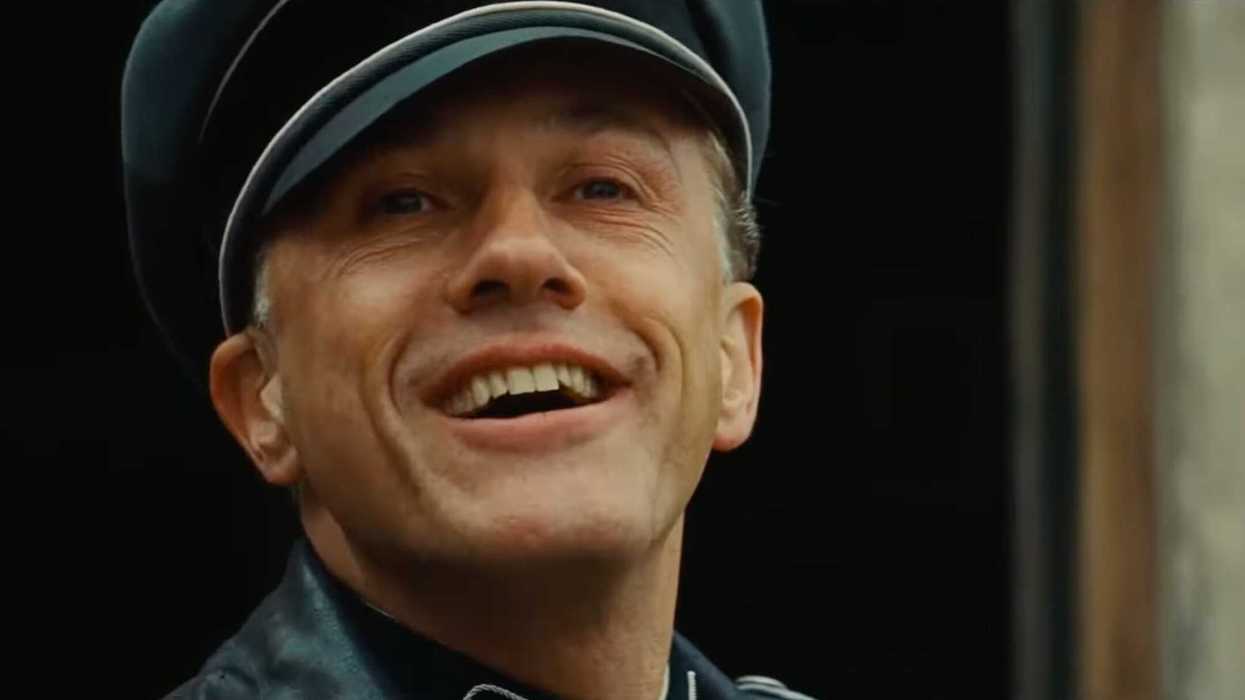
'Inglourious Basterds' (2009)
The opening scene of Inglourious Basterds (2009) remains memorable, not because it offers any visual spectacle, but because it provides a fireworks display of character establishment and dramatic tension. Also, it’s inarguably one of the best villain introductions in cinema.
It starts with the fake display of civility and politeness. Milk is served, the pipe is lit, and there is a smile on the face. And yet, the vile and menacing vibe cannot be missed. As the villain, the callous centerpiece of this scene, grills the suspect, we hold our breath right up until the oppressive silence is shattered by the sound of floorboards giving way to gunfire.
Only one victim escapes. As she sprints across the vast meadow, the “rat exterminator” emerges and aims his gun at her. Suddenly, he has a change of heart and lets her run away, but with a sinister, bloodcurdling farewell: Au revoir, Shoshanna!
Most form a natural first impression that he let her run away because she went out of his range. But that’s not the case. What we see here is a calculated display of power that sets the entire narrative in motion. The heart-wrenching tragedy we just witnessed suddenly transforms into a high-stakes game of cat and mouse. And this cat has decided to stop being hungry for a moment, just to see what happens next.
The Last-Ditch Run and the Menacing Holler
It’s the heyday of World War II; everything is wrong for the right people and right for the wrong ones. The opening scene swirls around Colonel Hans Landa (Christoph Waltz), a high-ranking SS officer, whose job is to investigate and pursue Jews who have gone into hiding. He excels at his job, so much so that he has earned the moniker "Jew Hunter.”
In the scene, Landa visits a small commune in Vichy, France, and raids the farmhouse of a dairy farmer, Perrier LaPadite (Denis Ménochet), who, he suspects, is hiding a family of Jews. During the long scene, Landa interrogates him, displaying his sadistic flair for psychological manipulation. When he succeeds in making LaPadite disclose that the Jews are hiding under the floor, Landa thanks him and has his squad unleash massive gunfire through the wooden floor, killing everyone except one.
Shoshanna Dreyfus (Mélanine Laurent) escapes the subterranean hideout and runs across the grassy field for her life. Landa comes out and points his gun in her direction. But suddenly, he changes his mind and lets her run away. Then, with a bright smile on his face, he shouts, "Au revoir, Shoshanna!”
Landa’s Version of “Letting Go”
A Predator’s Choice
Landa is one of those who sees his work as a “hobby.” He makes a “fun game” out of Jew hunting. Why just kill them when you can make them run for their lives and entertain you? He thrives on the theater of the hunt. When he sees a running Shosanna, he doesn’t see only a Jew who dared to escape; he sees an opportunity to create a future narrative. A story. A potential anecdote for the future “warm and friendly” parties. If he had killed her right then and there, he would have just “killed her.” The story ends before it starts. By choosing not to shoot, he asserts a terrifying level of control. His letting her go isn’t benevolence. It just means that Shosanna’s story has just started, and he is going to have fun with it.
The Linguistic Weapon
His choice of words. He doesn’t say, “Adieu,” which means “goodbye.” He says “Au revoir,” which essentially translates to “be seeing you” or “until we see each other again.” It’s a cheeky, terrifying promise. He is letting her go, for now. But he is also promising to see her again, most likely with more lethal consequences.
This specific use of language is how he bridges the gap between a cold-blooded executioner and a (supposed) gentleman. He is saying that his most dangerous weapon is not his Luger but his propensity to charm while he destroys.
Revisionist History and Character Stakes
Establishing the Rivalry
This is the moment that creates an invisible thread between the two characters that spans years. If you take away this moment of “mercy,” Landa’s eventual fate loses its emotional weight.
See Landa’s act of letting her go as his ultimate ego trip; he believes he is omnipresent, and he will see her again and deliver his “hand of justice.” For him, Shosanna is a loose end that he can tie up anytime and anywhere he wishes. Of course, being as conceited as he is, he fails to see that she is actually his undoing.
Subverting the War Trope
The central play in Revisionist Cinema is the idea of “what if.” In this movie, this shout by Landa is the ultimate catalyst. The moment he lets her go, the movie veers away from a standard historical drama and enters the realm of a revenge epic. In a hard-nosed depiction, the film’s plot would be driven by military (Gestapo, in this case) strategy. But here, it is driven by personality and whim. This “playfulness” makes Landa very unpredictable, and that’s why he's a more lethal threat.
Conclusion
This “Au revoir,” right in the opening scene of the film, becomes a benchmark for cinematic introductions of narrative plots. It works because it perfectly captures the villainy that is as charismatic as it is monstrous and because it turns a moment of escape into a threat that lingers for the entire length of the movie. The scene shows how a hunter letting his prey go can be even more terrifying than killing it right away.
Shosanna’s run and Landa’s shout, together, created a ripple effect that brought out the film’s bold, revisionist spirit. In the end, Landa didn’t really take her leave; he scheduled a rematch.