How Denis Villeneuve Finally Solved the "Sandworm Problem" in 'Dune'
From sound design to scale tricks, Denis Villeneuve’s Dune films reinvented one of sci-fi’s most iconic creatures.
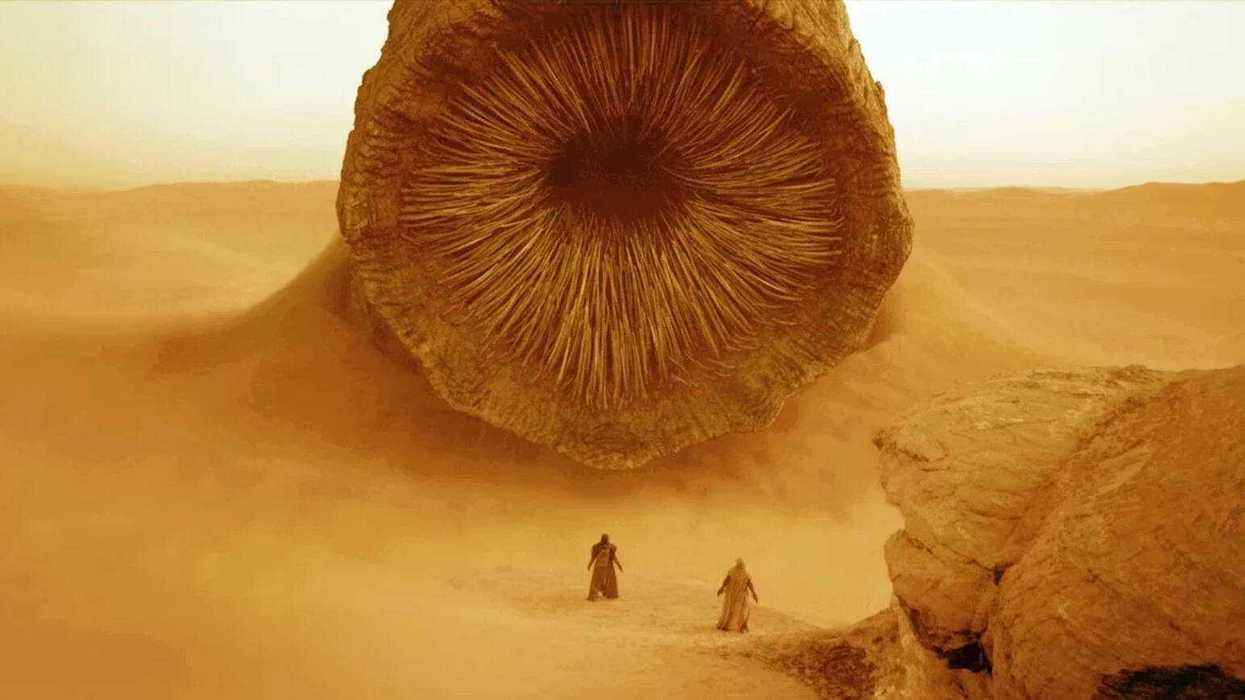
'Dune' (2021)
If you have seen Dune, you know what it must feel like to stand in the middle of an Arrakis desert when “they” are on the move. The desert doesn’t only shake; it literally purrs and gurgles. And when that happens, you know your life is hanging by a thread.
Shai-Hulud, as they are called by the Fremen (the desert inhabitants), are gigantic psammophile annelids, or sand-dwelling segmented worms. With a length of almost half a kilometer and a diameter of 40-50 meters, these sandworms are one of the most monstrous creatures ever to come on the silver screen.
The thing with such fictional freaks of nature (especially the ones that are defined by their size) is that they are easier to show than to sell. Most commonly, the intention is to make a spectacle, so filmmakers show as much as they can. The Dune series does the opposite. They are shown more as physical disruptors than visual events. The makers want you to feel them before you see them.
And this required a change of approach. Denis Villeneuve saw these creatures as a filmmaking challenge rather than a visual effects showcase. The goal was to convince, not just impress. So they couldn’t be just cool aliens. They had to be apex predators who respected the laws of physics.
This article isn’t only about advanced Special FX; it is about how exactly a team of CGI experts turned these “desert noodles” into a cinematic icon and the technology that made them breathe.
The Physics of Shai-Hulud
Beyond the Typical Monster Design
Villeneuve spent almost a year perfecting the design of Shai-Hulud. His vision for it included a prehistoric look, with a dense, armor-like exterior. These sandworms survive the extreme friction of moving through billions of tons of abrasive sand. Clearly, it would have made no sense for them to have smooth, slimy skin typical of annelids. He didn’t want the sandworms to look like giant earthworms.
The designers gave them a heavy, layered appearance, suggesting a protective “shell” that goes several inches deep. This thickness gives the creatures their sense of massive weight and invulnerability to human weapons.
Its mouth was inspired by Baleen Whales, which served a functional purpose: filtering nutrients from the sand.
Such design choices made sandworms feel like an integral part of the Arrakis ecosystem rather than some sort of space dragons. They felt gritty, gruesome, and yet grounded.
The Scale Illusion
When it came to size, the CGI team at D-NEG (the British VFX and animation studio that created sandworms) took on the “less is more” approach. Their goal was that the audience wouldn’t just see the giant worms but feel the weight of their massive presence.
They achieved it by obscuring parts of the worm with sand or clouds and forcing the audience’s brain to fill in the gaps. This was combined with low-angle shots, which created a sense of overwhelming scale.
A Symphony of Sand and Sound
The Rhythmic Call of the Thumper
Since the sand monster’s design was fitting for its ecosystem, the sound that surrounded it would also have to be organic. That ruled out synthetic monster noises.
That being said, Shai-Hulud doesn’t “roar” like traditional movie monsters. However, they have a specific set of sounds that are unique to them. Again, Villeneuve deliberately avoided giving sandworms any sort of animalistic shriek or roar to ground them in realism.
The noises that they make are biological and environmental. For example, as they move, the friction of their massive scales against the sand creates a rhythmic, dry whistling or hissing sound. When their skin clashes against rocks, it creates low-frequency crinkling sounds. This is particularly heard when they are nearby.
The sound design team also created specific noises for its breathing system to show its internal biology. When a rider exposes the sensitive skin under its scales, you can hear the internal rush of air and the movement of its breathing vents. This makes the creature feel more like a living, breathing, vulnerable animal rather than an indestructible killing machine for the sake of it.
Practical Magic in a Digital World
Bringing the Worm to the Set
For Dune: Part Two, the production built a huge “shaker rig” to simulate Paul Atreides (Timothée Chalamet) riding the worm. This practical platform was made to vibrate and tilt, throwing sand at the rider at high speeds.
This mechanism would force Chalamet to actually struggle against the elements. So when he is seen covered in dust and squinting, that’s no digital makeup. That’s the real Arrakis grit.
Conclusion
With his realistic vision for the sandworms, Villeneuve attempted to combine advanced technology with respect for biology. By integrating innovative soundscapes with practical rigs and restrained visual effects, he turned a literary legend into a believable reality.
This highlights the fact that the best monster visual effects are those that don’t just look good or imposing but “feel” heavy and dangerous and, most importantly, lived-in.
- What Is 'Dune' About? 'Dune' Characters, Symbols, Terminology ... ›
- How Greig Fraser Was Able to Shoot in Infrared for 'Dune: Part Two' ›
- Is Denis Villeneuve Actually Shooting 'Dune Messiah' Entirely on ... ›
- This Is How the Oscar-Winning Sound of 'Dune' Tricks Your Brain ›
- Eric Roth Didn't Like 'Dune' the Book, Which Helped Him Perfectly ... ›
- Why 'Dune' Was Shot on Digital, Transferred to 35mm, Then ... ›
- Some Buffoons Bought a 'Dune' Book and Mistakenly Thought They ... ›