When Twister hit theaters in 1996, audiences were blown away by Jan de Bont’s tornado disaster epic. The movie didn’t just show tornadoes and storms; it made you feel their intensity and speed as if they were real.
Mind you, it was a time when visual effects were still in their early stages and costly. They didn’t even have as many visual references of tornadoes as we have today to replicate them (as seen in the recent 2024 remake). However, Twister became something of a phenomenon that made great use of the advancements in CGI that Steven Spielberg, one of the executive producers, pioneered in 1993’s landmark smash hit Jurassic Park. With that, let’s understand how Twister forever changed the summer movie season.
The Movie: Twister (1996)
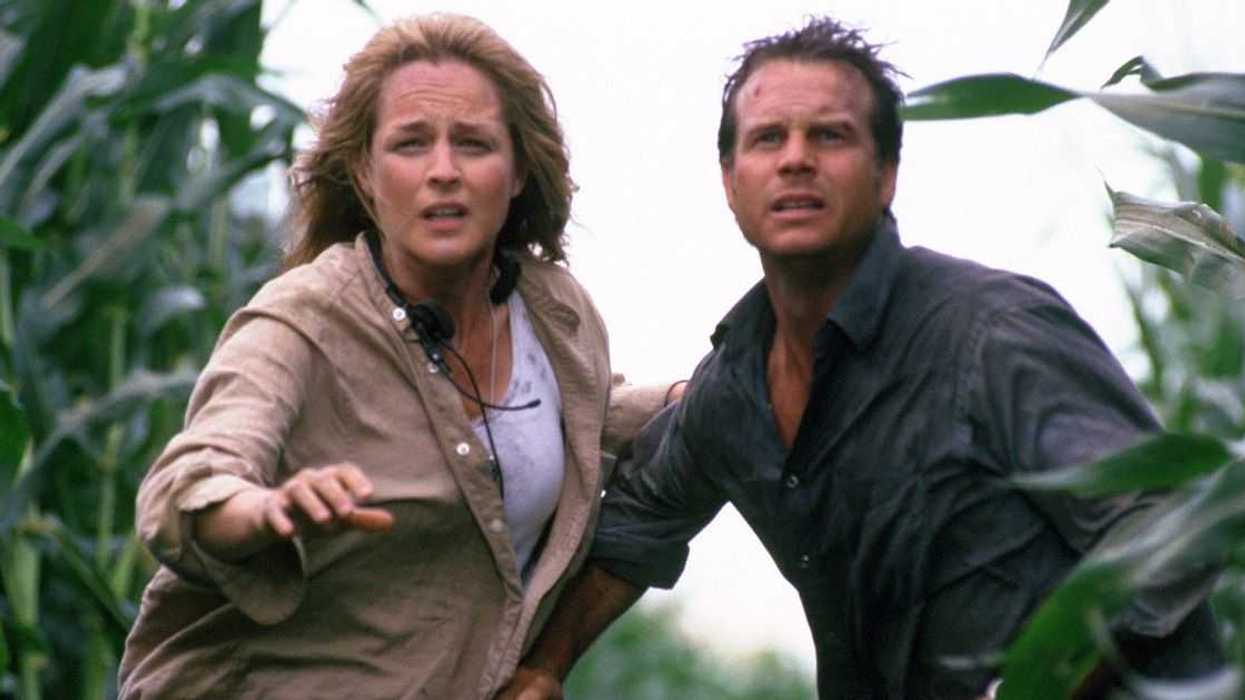
For a refresher, Twister features an estranged couple, Dr. Jo Harding (Helen Hunt) and Bill Harding (Bill Paxton), who used to chase storms together.
The movie opens with them reuniting in a field to finalize their divorce papers. But as a record-breaking series of storms emerges, Bill is roped back into his former rag-tag group of storm chasers to help deploy “Dorothy,” a tornado research device that could improve tornado warning systems and save lives. Before they split up, Bill and Jo had invented the machine.
By the end of the movie, you’ll have seen five tornadoes, including a double-twister (the Sisters), and a dreaded Level 5 Tornado (the Finger of God).
The Cast
As Hunt and Paxton lead the pack of storm chasers, director de Bont assembled a strong ensemble, including Cary Elwes from The Princess Bride, Jami Gertz from The Lost Boys, Alan Ruck from Ferris Bueller’s Day Off, and the late, great actor Philip Seymour Hoffman, known for Scent of a Woman, The Master, and Capote.
With the fast-paced film, their acting talent held the film together. Whenever the storms appear, even the audience forgets about the plot, the characters, the story, and gets sucked into chasing the tornado just like the characters. In any event, every character on screen was compelling enough to make this movie a success.
Groundbreaking Special Effects
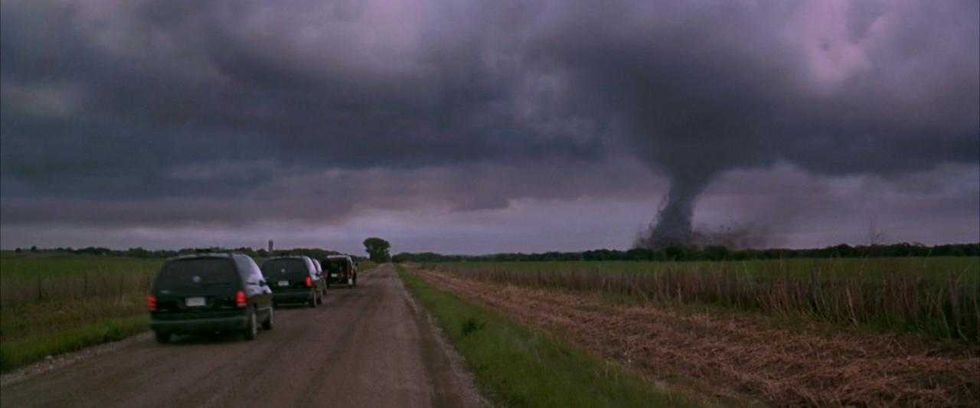 'Twister' (1996)Credit: Warner Bros.
The cast and crew of Twister may have had it rough while shooting such physically and mentally intense sequences, but ILM’s VFX team had big expectations to meet.
While the realism was paramount, the team had one question: “What exactly did tornadoes look like up close?” Millions had experienced and survived the deadly storms over the years, but none had captured them in detail.
But before a studio agreed to finance Twister, ILM had to show proof of how the concept would be conceived on screen. Dennis Muren (9 Oscars), who also served as the creative director of ILM at the time, worked with ILM’s Habib Zargarpour and attempted to create a tornado.
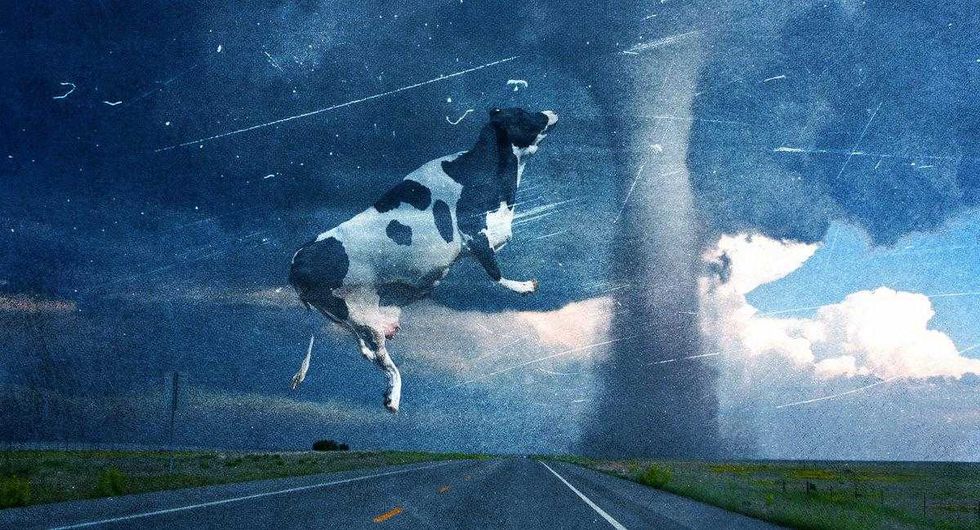 'Twister' (1996)Credit: Warner Bros.
Zargarpour used a software called Dynamation to create the millions of tiny particles that made up a spinning, fast-moving funnel cloud. “You could script behaviors for every single particle,” he said.
The test footage of the tornado from a truck driver’s perspective passed with flying colors and impressed everyone, including Spielberg and ILM artists.
Selling To Hollywood
Spielberg and his producing partner, Kathleen Kennedy, were able to sell Twister to Warner Bros. and Universal, with the former handling the domestic rights and the latter distributing the movie internationally.
To create the exhilarating experience of being around a storm, the producers brought De Bont on board, who was coming off his highly successful directorial debut, Speed (1994), starring Keanu Reeves and Sandra Bullock.
Although Crichton and his wife, Anne-Marie Martin, wrote Twister, the script was rewritten several times by the likes of Joss Whedon (The Avengers) and Jeff Nathanson (Rush Hour 2).
The ‘90s were the time when there were no massive superhero movies, streaming options, or franchise-based movie obsession, just a cable-operated TV in the living room of every household. So, the audience had seen nothing like Twister until then—from flying cows to a mile-wide tornado. It was a true cinematic spectacle, and it was marketed that way.
The only movie to do better than Twister in the summer of 1996 was Independence Day, led by the star power of Will Smith and one heck of a motivational speech by Bill Pullman. It earned $817 million worldwide.
The Challenges in Making
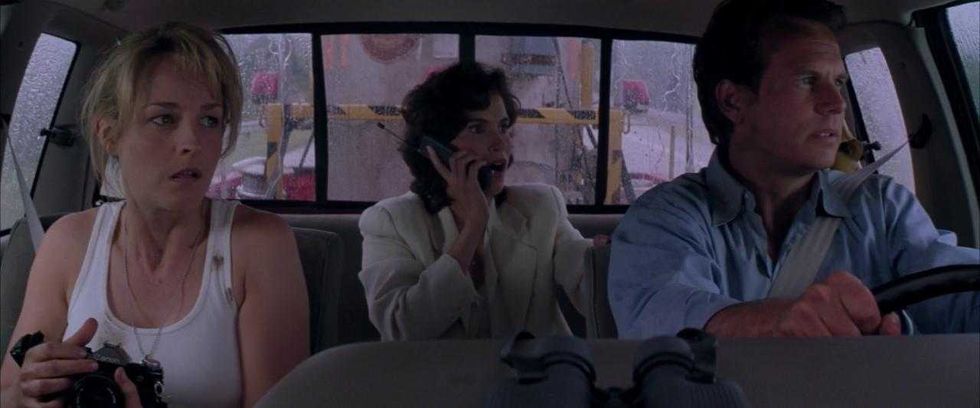 'Twister' (1996)Credit: Warner Bros.
The main challenge with this film was to craft a digital version of a something that exists in contemporary nature. You can’t get it wrong; the film doesn’t hold visually otherwise. Add the cost of practically done sequences to the expenses, which were particularly hard on the cast. In an interview given to Entertainment Weekly in 1996 while promoting the film, Cary Elwes said, “We all got bruises and cuts.”
Moreover, the film’s initial budget of $70 million was inflated to $90 million due to a significant amount of last-minute reshoots and overtime visual effects.
To put it into perspective, James Cameron’s True Lies was the first movie to ever cost more than $100 million in 1994, and Twister’s budget was at the higher end of that spectrum. Fortunately, when it was all said and done, Twister amassed approximately $490 million worldwide.
Legacy
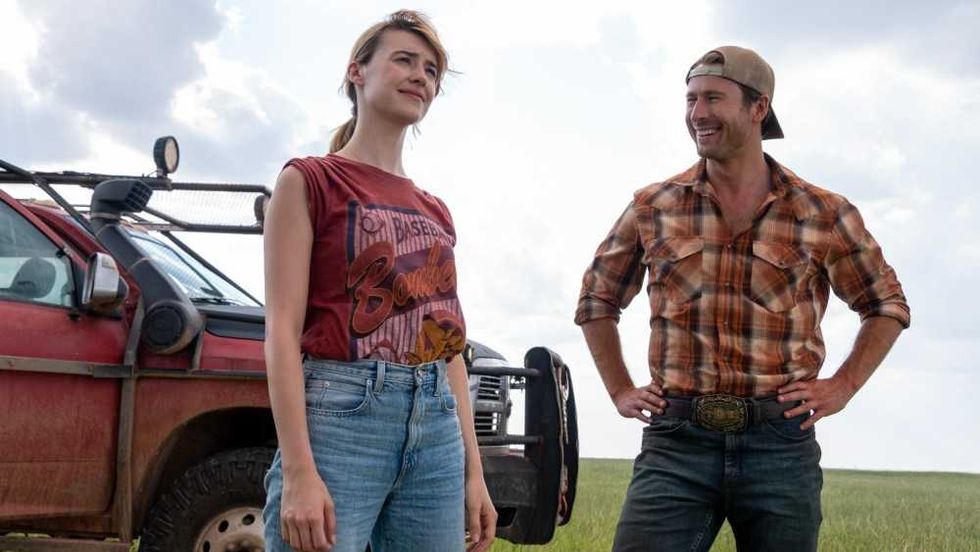 'Twisters' (2024)Credit: Universal Pictures
Twister was released in May, while Independence Day was released in June, which is when Hollywood's summer season traditionally begins. As de Bont’s Twister worked so well commercially and critically, it made a case for Hollywood summer films to be released from early May rather than June.
Moreover, in 2024, the film received a modern remake starring Glen Powell, Kiernan Shipka, David Corenswet, and Daisy Edgar-Jones. While Twisters (2024) may not pack the practical effect punch of its predecessor, its CGI is solid. It gives you the same jitters and thrill that the original offered, while honoring its predecessor.