We remember and cherish movies mostly through their scenes and dialogues. But sometimes, these memories refuse to stay entirely inside their films. These memories don’t speak, at least not through words. They slip out of context, grow entirely outside of their scenes, and manifest their own lives.
Just one single frame from a scene. That’s all it takes for the entire movie’s identity to get condensed. And quite often, that’s how we remember these movies. You don’t need to remember the plot, the characters, or even the climax. That one frame becomes familiar, almost communal.
When a shot is that good, it doesn’t have to remain within its scene or even the movie. It becomes a part of us, our collective memory. A standalone masterpiece that you can even hang in your bedroom. An independent artwork in itself.
Let’s look at 11 such artworks that jumped out of iconic movie scenes and stopped time.
11 Movie Frames That Made Iconic Images
1. The Man-in-the-Moon with the rocket in his eye (A Trip to the Moon, 1902)
 'A Trip to the Moon'
This frame is literally the birth of sci-fi cinema—with a touch of whimsy. When George Méliès gave the moon eyes and then poked one with a rocket, he unleashed the visual storytelling and moviemaking creativity that has been overflowing ever since. He used a waggish, theatrical style to demonstrate that a film could go anywhere.
2. The Odessa Steps (Battleship Potemkin, 1925)
 'Battleship Potemkin'
If you are a Wes Anderson fan, you are aware of visual geometry. This frame here, from Battleship Potemkin, is perhaps where it all started. This image from the Odessa Steps scene captures the horror of the massacre. The director, Sergei Eisenstein, uses the rhythmic lines of the stone stairs to create a sense of inevitable descent while positioning the child-carrying mother in the center. This creates a poignant contrast of a vulnerable human silhouette against a rigid, mechanical line of soldiers at the top. The scattered bodies across the steps and the high-angle perspective create a harrowing visual composition that pioneered the use of the camera as a witness to social tragedy.
3. Rhett Butler leaning over Scarlett O’Hara (Gone With the Wind, 1939)
 'Gone With the Wind'Credit: Warner Bros. Entertainment
This scene is maybe what set the foundation for depicting romance and passion on the screen in newly colorized cinema. The romantic lighting and crimson hues literally wash the scene in a sense of urgent passion. The composition uses a heavy profile view and casts the characters in near-silhouette to accentuate the emotional gravity between them. The shot captures the exact moment of anticipation right before a kiss. It uses a warm, flickering glow to (barely) highlight their faces against a dark, empty background. What we get is a timeless image of pure cinematic longing.
4. Rick and Ilsa on the airfield (Casablanca, 1942)
 'Casablanca'Credit: Warner Bros.)
The scene’s use of low-key lighting in a foggy atmosphere creates a moody, noir-inspired ambience, and it perfectly heightens the stakes of their goodbye. The framing is kept tight, and it forces the audience into the intimate, heartbreaking space of Rick (Humphrey Bogart) and Ilsa (Ingrid Bergman). The acutely emotional vibe of the scene turned this shot into the classic image of cinematic sacrifice.
5. Gene Kelly hanging and swaying by a lamp post (Singin’ in the Rain, 1952)
 'Singin’ in the RainCredit: Warner Bros
Tell me you don’t know this image, and tell me every time you see this image, you don’t feel exhilarating joy. Impossible! The composition centers on the vertical line of the lamp post, while Gene Kelly dangles off of it, and the lamp’s soft milky-white glow makes the aura absolutely quaint. The pouring rain and the umbrella he is holding make the scene even more charming. This moment of pure, physical spontaneity is where a simple street fixture becomes a partner in a dance, and a dream materializes.
6. Marion Crane screaming in the shower (Psycho, 1960)
 'Psycho' Credit: Universal Pictures
The whole scene is iconic, and because of Hitchcock’s rapid-fire editing, the images run by in a jiffy, but this one frame, pure shock and horror in Marion’s (Janet Leigh) face, freezes in time. The overhead bathroom lighting is quite harsh (which flattens the image), and the framing is tight. As a result, the image we get creates a sense of inescapable claustrophobia and terror. This image is also an example of how Hitchcock experimented with the genre, proving that under extreme stress and stark light, you can create the most frightening image of all.
7. Benjamin framed by Mrs. Robinson’s leg (The Graduate, 1967)
 'The Graduate'Credit: Embassy Pictures
This is a no-brainer in composition. By framing the protagonist, Benjamin Braddock (Dustin Hoffman), in the background, visible only through the arch of Mrs. Robinson’s (Ann Bancroft) leg, director Mike Nichols communicates power and entrapment visually. The shallow depth of field keeps the foreground leg slightly soft and out of focus to emphasize Benjamin’s confused and vulnerable state. What a witty and sophisticated way of visual storytelling!
8. Jack Torrance at the broken door (The Shining, 1980)
 'The Shining' Credit: Warner Bros.
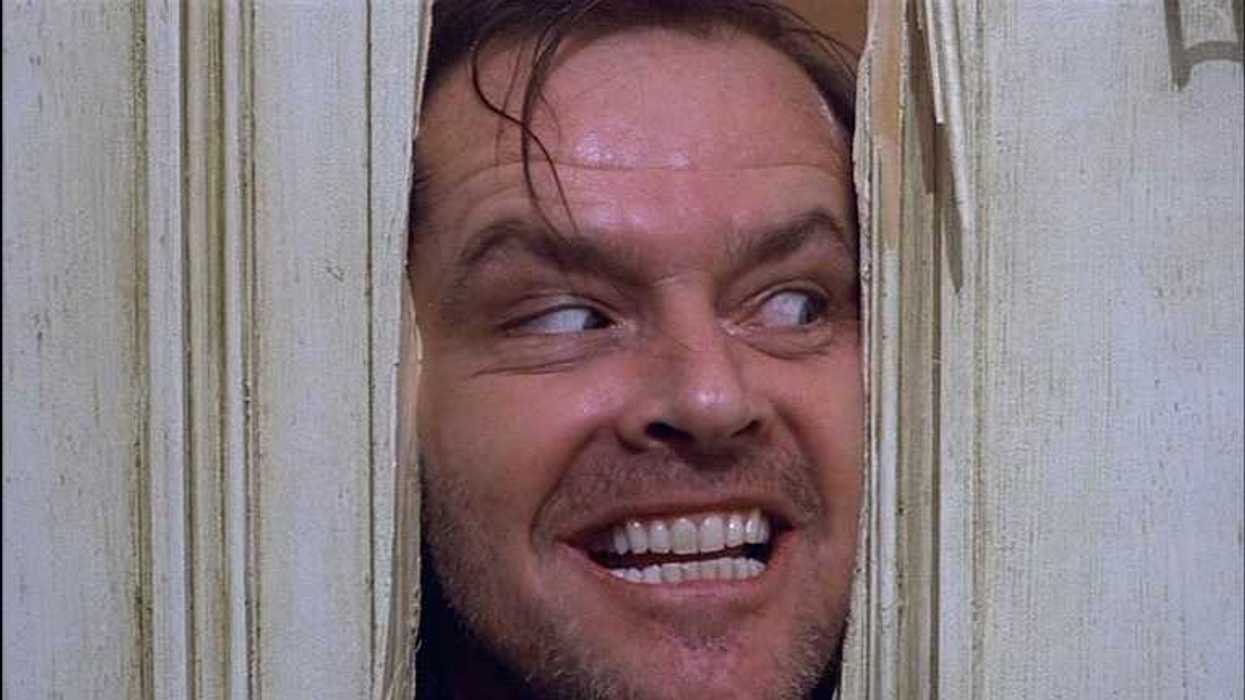
The jagged wood of the door acts as a natural frame within the frame, bottlenecking all the energy and focus on Jack Torrance’s (Jack Nicholson) unhinged, manic expression. Kubrick (much like Wes Anderson today) was obsessed with centered compositions. That framing makes the image feel balanced but also deeply disturbing—more so if you know the context. Just like how we saw in Psycho (1960), the bright, clinical lighting removes any scope for the viewer to hide. That makes Jack’s insanity feel uncomfortably close and impossible to ignore.
9. The bicycle flying across the moon (E.T. the Extra-Terrestrial, 1982)
 'E.T. the Extra-Terrestrial'Credit: Universal Pictures
If we are talking about using backlight to create an intimate silhouette, then this is one of the prime examples—maybe replace intimate with cathartic, larger-than-life. Spielberg placed the characters directly against the giant, glowing moon and turned a simple chase into a mythic event. This image perfectly (and quite grandly) captures the wonder of childhood and the magic of “limitless possibilities” we feel during those unreal years.
10. Jack and Rose at the bow of the ship (Titanic, 1997)
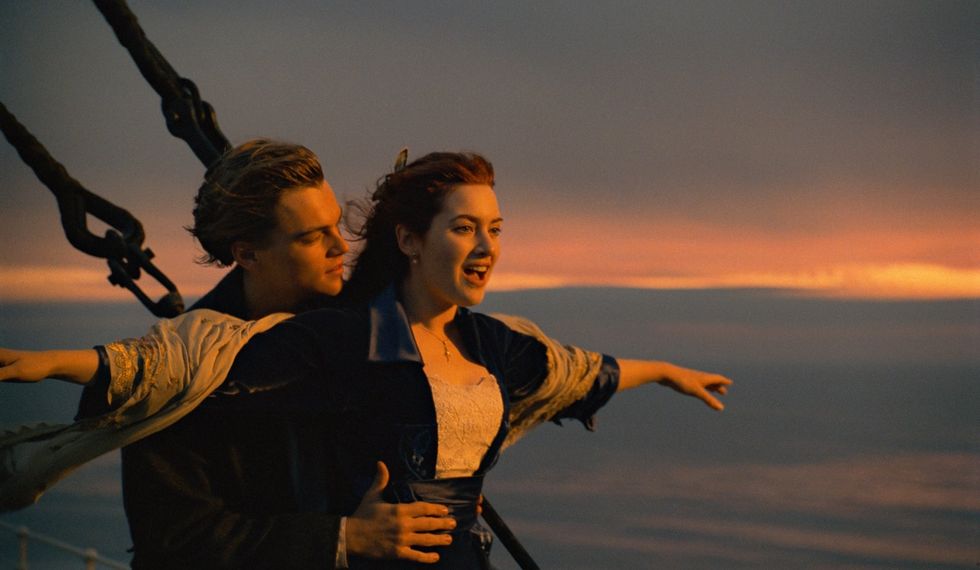 'Titanic' Credit: Paramount
There is hardly anyone who doesn’t know this image. Some swear by this image to stress the allure of romance. In this image, the camera orbits the characters, who are at the highest point of the ship, using the golden hour light to create a romantic, ethereal glow. The vastness of the ocean and the sky in the background emphasizes the freedom and infinite hope the characters feel in the moment. This is a soaring, aspirational image that creates a deeply personal, intimate human connection.
11. Neo dodging bullets (bullet time) (The Matrix, 1999)
 'The Matrix'Credit: Warner Bros.
This shot is the world’s introduction to “bullet time,” a technical marvel that used a ring of still cameras to simulate 360-degree frozen motion. The image’s green-tinted, clinical aesthetic, together with the unreal, back-bending posture, creates a visual language of the digital age. It is a landmark frame that successfully combines high-concept philosophy with groundbreaking action and redefines what is possible in the realm of visual effects.