The Dark Meaning Hidden Inside the Iconic Line in 'Sunset Boulevard'
How “I am big. It’s the pictures that got small” captures the essence of lost stardom amidst the industry’s transition from the silent era to the modern spectacle.
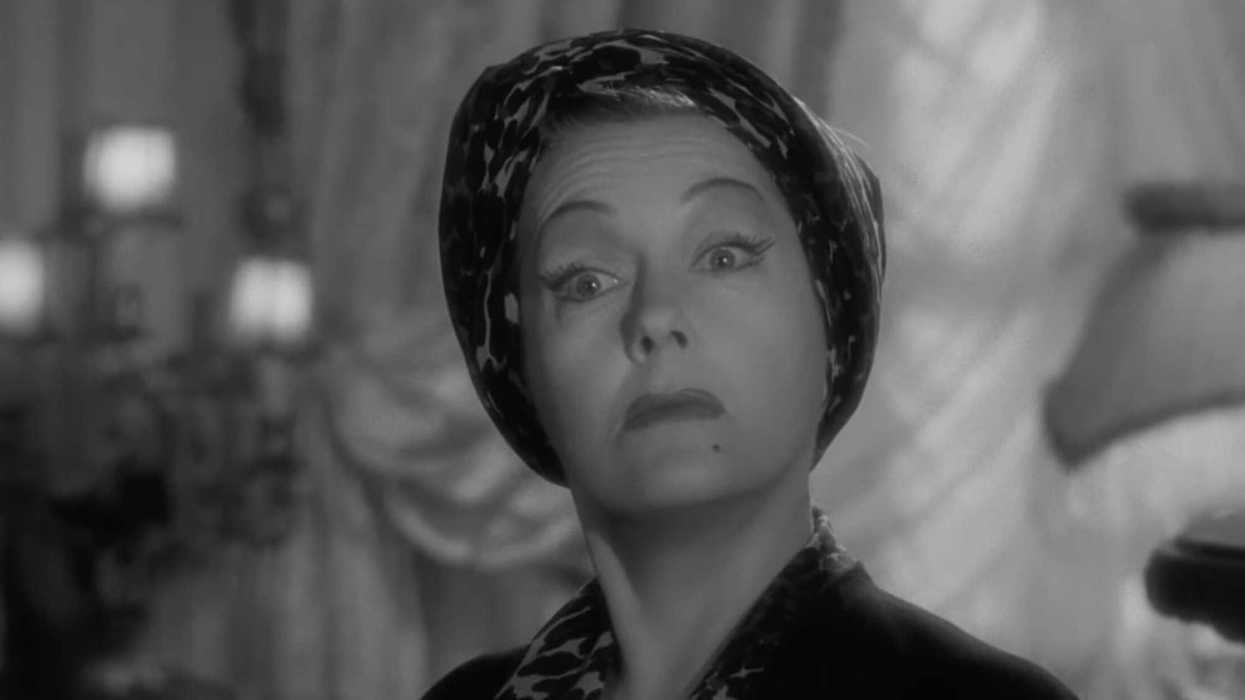
Sunset Boulevard (1950)
There is a distinct kind of sadness in watching someone hold on to a happier past, a period that was kinder to them than the present is. We often see elders in our family talking about the “glorious bygones,” and, at that time, the pain hidden behind their momentarily sparkling eyes is as heartbreaking as it is unmistakable.
We find this dejected spirit in the showbiz, too. Movie stars, who don’t shine as brightly as they once did, talk about their glory days as if they happened last week. We, non-filmy outsiders, may think of it as dramatic or eccentric, but in all its truth, this is how nostalgia festers in an industry that strives on glamour, fame, youth, and beauty.
In Sunset Boulevard (1950), Norma Desmond (Gloria Swanson), a “yesteryear” silent-movie star, lives in that space: secluded, far away from “the action,” and within the sphere of obscurity. Her fame and glory have long deserted her, but, like many in her situation, she copes with that loss by creating delusions of grandeur. When something or someone tries to pull her out of them, she spins another. What makes it sadder is the fact that the only person who doesn’t know she is delusional is Norma herself. She is the sole resident of her happy land.
What she says feels resonant even today. If you ever felt like your world changed faster than you could follow, you would know what I mean.
The Scene, the Line, the Misbelief
Norma Desmond’s Headspace
Norma ruled the screen when the pictures hadn’t yet started talking. But when her world started moving on, she refused to stop digging her heels in. She even equates herself with big names, “the Fairbankses, the Gilberts, the Valentinoes,” who, she says, the industry lost to its “mad new obsession” over sound technology.
She utters the words, “I am big. It’s the pictures that got small,” from a place where pride and fear sit side by side. When she calls herself “big,” she is holding on to the pride of being the star that she once was. And her fear comes from everything that threatens that pride.
In her head, she is no longer the screen goddess, not because she refused to (or couldn’t) change with time, but because the industry shrank its standards, because Hollywood (due to its “addiction” to the talkies) lost its ability to optimize her talents in the old, pure way.
The line is a naked example of Norma trying to withstand the pain of losing fame by convincing herself that it’s the industry that lost its way, not her.
The Scene’s Role in the Story
The scene plays a pivotal role in forging her dynamic with Joe Gillis (William Holden). In this scene, which is also their first meeting, Joe is a struggling screenwriter who wants to make a name for himself. Norma, despite her delusions, dreams of making a comeback. Professionally, they are both looking in the same direction, but from very different places.
Norma’s words create a strong distinction between their worlds: the slow, expressive world of the silent films and the sharper, faster rhythms of the new Hollywood. Joe can see through her mistaken impressions of greatness and decides to use them to his benefit, while Norma sees him as an avenue she can utilize to reclaim her glory.
She is out of touch and (kind of) simple-minded, and he is pragmatic and exploitative; they both represent their own versions of Hollywood.
Hollywood’s Shifting Identity
When sound came, Hollywood found its golden voice. The change wasn’t limited to characters being able to speak and be heard. It forced studios to rebuild sets and use quieter cameras. Directors lost some visual freedom because scenes had to be staged around audio equipment. Budgets grew, and productions slowed.
For actors, it was equally (or more) intense. They had to learn to control their voices, diction, and even breathing for microphones, and it limited their movement. They had to abandon the exaggerated silent-era acting style (that depended on the facial expressions) they had gotten so used to. Suddenly, acting wasn’t only about body movement and facial expressions; it was also about accents, pitch, voice modulation, and vocal quality. Molding completely blank talent was easier than teaching old dogs new tricks. This is why most silent era actors disappeared and were replaced by new, fresh faces with voices.
For stars like Norma, the industry started to feel smaller because it could no longer afford them space or the roles that once defined them. The bitterness in her line reflects this clash between an older world of stardom and a new one that moved on without looking back.
The Quote’s Relevance Today
The quote perfectly captures the FOMO spirit of today’s world, which is defined by the race for staying relevant. Today’s fame and glory are nothing like what they used to be in the silent era. Hell, they are nothing like what they were just two decades ago. The path to stardom is much shorter and extremely crowded. Thanks to social media, streaming, and never-ending content, all you need to have is a face, voice, and a smartphone to be a contender for fame and glory.
Today, we see fame less as a luxury ambition and more as a necessity. And with that sense of urgency stuck to it, many of us live through the constant pressure to stay relevant, to adapt, and the fear of disappearing.
Norma’s line communicates that frustration of watching the world speed up while you stay in one place.
Conclusion
The quote sticks because it is a strange mix of confidence and heartbreak. We often talk about how challenging it is to achieve success, but we never consider how difficult and exhausting it is to reclaim it after you have lost it. Norma’s words also show us the problem we face with letting go of the version of ourselves that once felt strong and beautiful. She speaks with conviction, but her words reveal a wound that she refuses to name.
She froze in time, and movies kept marching on. So, if these movies look smaller to her from a great distance, can you really blame her?
- Watch: Is Billy Wilder the Best Screenwriter of All Time? | No Film ... ›
- Learn How Stairs Can Be Used as Visual Metaphors in Your Films ... ›
- Billy Wilder's Top Ten Screenwriting Tips | No Film School ›
- 10 Storytelling Tips from Billy Wilder | No Film School ›
- Here's Some of the Best Black & White Cinematography in Film ... ›
- The Meaning Behind the Final Close-Up in 'Sunset Boulevard' ›