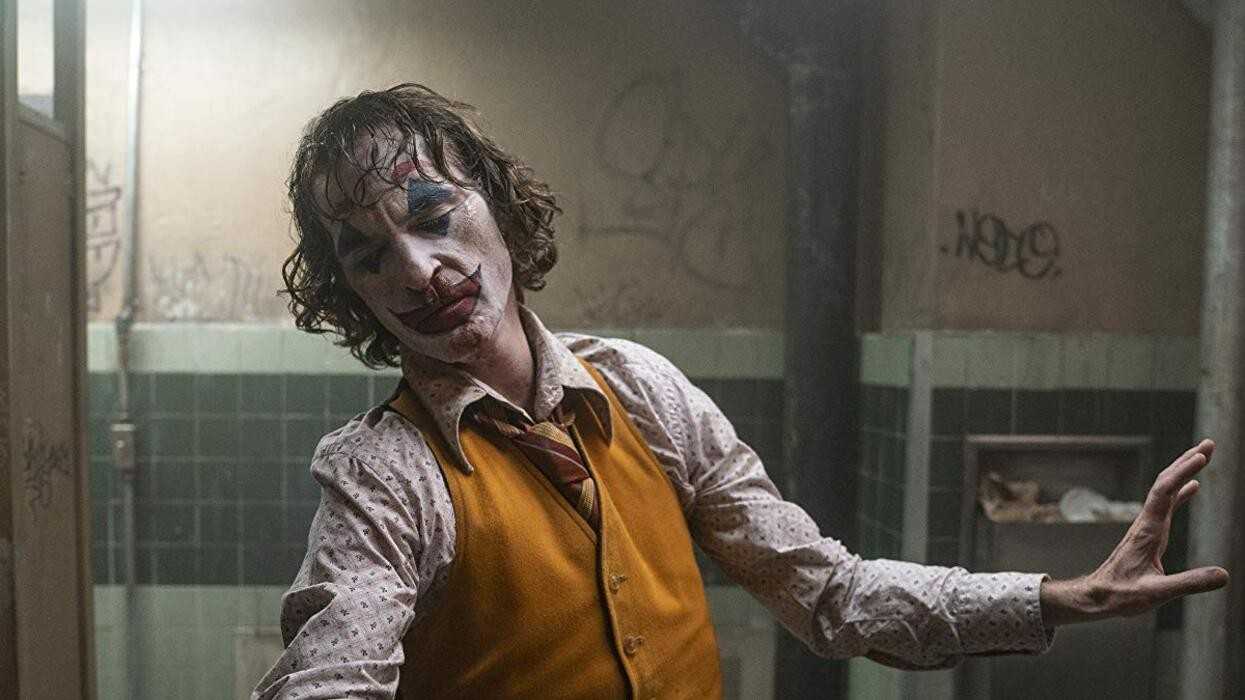
One of the most hauntingly beautiful scenes in Joker (2019) wasn’t written in the script. That moment is when Arthur Fleck, played by Joaquin Phoenix, slips into that grimy public bathroom after the subway killings and begins moving in a slow, hypnotic dance.
The whole dance sequence was completely improvised. No storyboards, no choreographers, no pre-planned beats. Just an actor, a director who trusted him, and a camera that didn’t look away.
To grasp why this improvised sequence is so vital, you have to place it in its narrative moment.
What the script had originally intended was: Arthur has just committed his first murders, crossing a moral line he can’t uncross. He rushes into a rundown bathroom, a man in shock and panic. That’s it.
What Phoenix gave instead was something beyond shock and panic. He gave pure metamorphosis.
That scene, born on the spot, became the emotional core of the movie.
The central question is: how did one unscripted act turn into the heartbeat of a modern classic?
Setting the Stage
Arthur's Descent: The Pivotal Turning Point
Before the bathroom, there’s blood on the subway floor. Arthur (Joaquin Phoenix), ridiculed and assaulted by three businessmen, pulls out a gun and kills them. Unlike the earlier scene where his violence was defensive and chaotic, this time his actions are deliberate.
Once the adrenaline clears, he flees into the nearest public bathroom. That room becomes his cocoon—the place where Arthur sheds his skin.
The original intention for the sequence was simple. A man spiraling into fear after murder. The tension should’ve been about shock and regret, maybe even an attempt to wash off the guilt. Instead, what Phoenix delivered was a physical performance that said: Arthur wasn’t horrified. He was waking up.
The Script's Directive vs. The Actor's Instinct
In early drafts, the bathroom moment wasn’t anything special. Screenwriter-director Todd Phillips envisioned Arthur splashing water on his face, maybe trembling as he processed the enormity of what he’d done. According to Phillips, the script note was plain: Arthur tries to “calm himself.” That’s it.
But Phoenix didn’t see fear in Arthur anymore. He felt that the character was slipping into someone else, someone freer and more terrifying. That instinct overrode the words on the page.
Instead of playing panic, he let his body tell the story of transformation. The result wasn’t Arthur catching his breath—it was Joker learning to breathe.
The Birth of an Icon: Anatomy of an Improvised Scene
A Director's Trust
Improvisation only works if the director doesn’t kill it mid-bloom. Phillips has said he sensed Phoenix drifting somewhere unexpected, so he simply kept the camera running. That trust became a turning point in the filmmaking process.
What could have been a forgettable beat about self-reflection became one of the film’s defining sequences. Phillips didn’t cut. He didn’t reset. He let Phoenix push until the moment fully bloomed. That choice—to let instinct dictate the camera—turned a gap in the script into cinematic history.
Choreography in Chaos
The dance is minimal, almost balletic. Phoenix straightens his back like a puppet loosening its strings. His arms carve arcs in the dirty air. Fingers twitch, wrists curl, his head tilts in slow ecstasy. It’s not a dance of joy but of birth—painful, awkward, and strangely graceful. He moves as if something inside him has finally found a body to inhabit.
On screen, this reads like a ritual. The killing on the train was the spark, but this dance is the ignition. Arthur is no longer a man in society’s margins—he’s stepping into something new. The audience sees the Joker not as a mask Arthur wears, but as the truth emerging from underneath.
The Sonic Landscape
However eclectic, the bathroom sequence didn’t light up with a flashy pop beat, as one would make an obvious assumption. Instead, it’s anchored by an unsettling, soul-deep cello theme. Composer Hildur Guðnadóttir wrote the piece titled Bathroom Dance, and not just as a musical cue, but as a character in its own right.
Played on a halldorophone (an amplified, feedback-rich electric cello), the solo line buzzes with tension before being slowly swallowed by an orchestra that creeps in like a dark tide. That swelling contrast mirrors Arthur’s metamorphosis: fragile humanity overtaken by the roar of Joker’s emergence.
And all this—it shaped the performance on set. Director Todd Phillips played the score during filming and even fed it to Joaquin Phoenix through an earpiece so he could move with the music, not against it.
Phillips avoided the urge to choreograph the scene. Instead, he let Phoenix unfold the ritual in real time, with sound and movement fused from the inside out. So instead of a jarring glam-rock mix, the bathroom dance rides on a cello’s cry—chaotic, dissonant, and unforgettable.
Beyond the Moment
A Narrative Linchpin: Redefining Arthur's Transformation
The bathroom dance reshaped the film. What began as filler turned into the visual marker for Arthur’s rebirth. After this scene, he isn’t Arthur anymore. The timid man trying to survive Gotham has been eclipsed by the Joker, who will soon paint his face and own the stage.
This single improvisation shifted the film’s second act into higher gear. It became the emotional punctuation mark between “before” and “after.” Without it, the arc of Arthur’s transformation wouldn’t feel nearly as definitive.
Cementing a Legacy
Culturally, the dance leapt out of the movie and into the world. Within weeks, it became a meme, a TikTok trend, and a staple of Halloween costumes. Tourists flocked to the Bronx staircase where another Joker dance plays out later in the film, but the bathroom sequence remained the real turning point.
Cinematic history is full of iconic dances—Travolta and Thurman in Pulp Fiction (1994), Gene Kelly in Singin’ in the Rain (1952)—but Joker’s bathroom dance sits apart. It’s not celebratory, not communal, not staged for applause. It’s private madness becoming public identity. That’s what makes it so haunting.
 Pulp Fiction Credit: Miramax
Why This Improv Worked So Well
The Preparation
Improvisation works best when it’s not random. Phoenix had immersed himself in Arthur for months, studying body language, mental illness, and clowning traditions. He arrived on set with so much character knowledge that improvisation wasn’t guesswork—it was instinct backed by preparation.
The bathroom dance felt spontaneous, but it was built on a foundation of obsessive research and rehearsal. Phoenix trusted his instincts because he had done the homework. That’s why the scene rings with authenticity instead of chaos.
The Director-Actor Synergy
What sealed the magic was the trust between actor and director. Phillips didn’t demand the script’s version of the scene. He allowed Phoenix to rewrite the moment physically, capturing it without hesitation. That synergy between performer and filmmaker turned risk into reward.
This collaboration shows that sometimes the best scenes come not from rigid control, but from creating space for artists to surprise each other. In a film about chaos, the filmmaking embraced a little of it too.
The Unplanned Heart of a Masterpiece
The bathroom dance in Joker wasn’t in the script, but it ended up defining the movie. An improvised moment became the axis around which Arthur Fleck’s transformation spun, reshaping both the narrative and the cultural afterlife of the film. It proved that sometimes the heart of a masterpiece comes from what isn’t planned at all.
At its core, the scene is a reminder that art thrives on risk. Phoenix trusted his body; Phillips trusted his actor; and together, they captured lightning in a bottle.
Watching it now, you can feel the raw alchemy of spontaneity. That’s the irony of filmmaking—sometimes the most unforgettable parts are the ones no one saw coming.
And maybe that’s why the Joker smiles.