"What is Your Favorite Color?": The Hilarious “Bridge of Death” Scene in Monty Python’
A breakdown of the absurdly brilliant three-question test in the “Bridge of Death” scene of Monty Python and the Holy Grail (1975) and why it’s comedy gold.
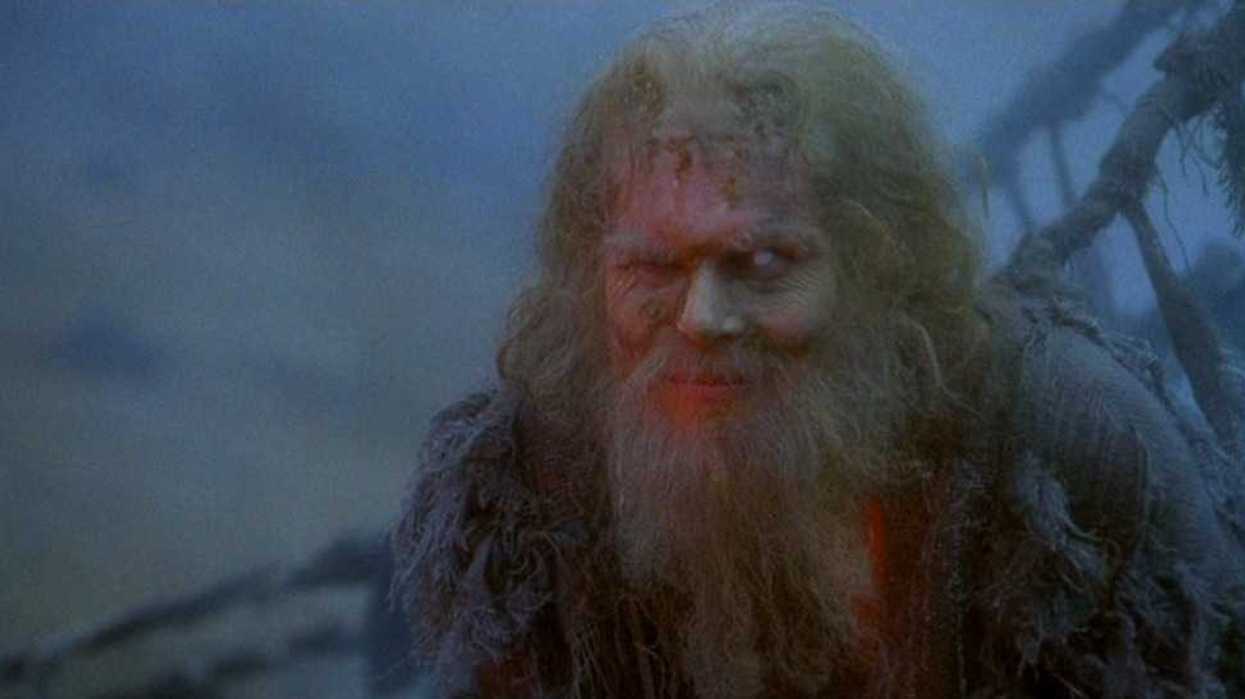
‘Monty Python and the Holy Grail’ (1975)
You expect heroes to prove their worth through fistfights, duels, or some sort of bravery. But when you enter the world of Monty Python, rules change, and so do the expectations. The “Bridge of Death” scene gives us a glimpse into that.
It gives us a trivia, as eccentric as those who are playing it, and the sum total we get is pure “chaos” energy. The scene comes in that place in the movie where you expect some tension and a sense of climactic urgency. Even the situation is literally life-or-death. But instead, you get a pop quiz and a series of increasingly panicked (and ridiculous) interviews. The stakes are super high; you answer right, you live; you answer wrong, you die—there’s a projectile flying into a pit of fire and doom. Like, literally.
And yet, there’s no way you can stop chuckling. That’s because, with this scene, the movie plays a masterstroke in subverting expectations.
The “Bridge of Death”
This absurdist comedy parodies the medieval Arthurian legend of the “Knights of the Round Table” and their quest for the Holy Grail. The fellowship consists of King Arthur (Graham Chapman) and his knights, Sir Bedevere the Wise (Terry Jones), Sir Lancelot the Brave (John Cleese), Sir Robin the Not-So-Brave-As-Sir Lancelot (Eric Idle), and Sir Galahad the Pure (Michael Palin). God tasks these men with an adventurous expedition to find the Holy Grail. The movie follows their ridiculously funny crusade, which encounters obstacles such as rude Frenchmen, a killer rabbit, and the Black Knight. Oh, and yes, their version of horse riding is “miming” the act of riding a horse and banging coconut shells together for the sound effect.
The “Bridge of Death” scene appears right before the climax. The men need to cross the “Bridge of Death” to go ahead. It’s a narrow, rickety rope bridge barely hanging over the “Gorge of Eternal Peril,” which produces fire and explosions. It’s guarded by a soothsaying bridgekeeper (Terry Gilliam), whose three questions must be answered correctly to cross the bridge.
Sir Lancelot goes first (because he is the brave one). Expecting a tricky, complicated, or abstract test, he is surprised when the questions turn out to be “what’s your name,” “what’s your quest,” and “what’s your favorite color.” Seeing Lancelot pass the easy test, Robin volunteers to go after him. Sadly, his third question is difficult, and he gets flung into the gorge. Then follows Sir Galahad, who gets the easy questions but still messes up the third question by being unsure.
Finally, goes King Arthur, whose third question is, “What’s the airspeed velocity of an unladen swallow?” Arthur asks, “African swallow or European swallow?” The bridgekeeper is confused and says, “I don’t know that,” and gets flung into the gorge. Sir Bedevere asks Arthur how he knows so much about swallows. Arthur replies, “You have to know such things when you are a king.”
Comedy Through Misdirection
Timing, Delivery, and the Power of the Pause
The rhythm plays a crucial part in the scene’s giggle-worthy comedy. The bridgekeeper’s tone is a mixture of eccentricity and authority. Plus, his way of starting each question with a high-pitched “What,” followed by a pause, makes it sound like he is reacting (with a bewildered “What!”) to the earlier answer rather than asking a question. It confuses the viewers every time, and every time it’s fun. His bizarre demeanor is balanced by each knight’s varying levels of panic. After each wrong answer, there is a brief pause that lets you process the question (and the question’s ridiculousness). And then suddenly, the knight gets tossed into the air and falls into the gorge. This routine creates a funny rhythm.
Absurd Logic as the Punchline Engine
The whole franchise is built on absurdity, so this one is quite a given. The questions, to some extent and in some respects, feel reasonable, but they are not. The bridgekeeper asks about anything, from geography to physics, and, of course, personal preferences. There is no explanation as to why some questions are simple while others are not. There is no logic as to why a certain knight gets a certain question. And this unpredictability becomes one of the driving factors of the comedy.
Think of it this way: there are rules, but they are meant to neither guide you nor protect you. Makes sense? No? Well, that’s the point.
The “King Arthur” Twist
The Question That Backfires
King Arthur gets the most difficult question of all: What’s the speed of an airborne swallow (a bird) that’s not carrying anything? It’s definitely a trap; the bridgekeeper wants the king to get flipped into the gorge.
Here, what Arthur does next can have two motives. Either he is simply handling the question like a typical nerd, i.e., getting the facts right to avoid falling into a logical trap, or he is intentionally setting a trap for the bridgekeeper. So he asks a counterquestion: African swallow or European swallow?
This catches the bridgekeeper off guard. For the first time, the authority figure hesitates. He reflexively says, “I don’t know.” In that moment, the roles are reversed. Arthur becomes the questioner, and the bridgekeeper becomes the answerer. The rules of the bridge, however, still apply. And since the bridgekeeper cannot answer the question—Whoosh! Up he goes and down he falls.
The Comedic Payoff
There is no build-up to this twist. There is no soundtrack. The role reversal and the “judgment” are quick. Instead of breaking the scene’s logic, it comes full circle. This is the parody of a system collapsing into its own rules. It’s kinda satisfying to watch.
Conclusion
The comedy lands because of its controlled structure. The simplicity of the setting lets the audience settle into it, and before they realize, it pulls the rug out. The timing is perfect. This clarity makes the joke’s landing quite wholesome.
The scene highlights that one who asks a question had better know the answer; otherwise, he is up for a very deep drop. And the best way to beat a rigged question is to ask a rigged counterquestion.
- 15 Best Action Comedies Ever Made ›
- The 14 Funniest Parody Movies of All Time ›
- The Story Behind the Infamous “Biggus Dickus” Moment in 'Monty Python’s Life of Brian' ›
- Top 6 Terry Gilliam Movies Ranked | No Film School ›
- The Story Behind the Black Knight’s Famous Line in 'Monty Python and the Holy Grail' | No Film School ›
- Watch: How Monty Python Created Modern Comedy | No Film School ›