Peter Pan and the Philosophy of Never Growing Up
J.M. Barrie’s Peter Pan isn’t about childhood escapism but about preserving wonder in a world that rewards conformity.
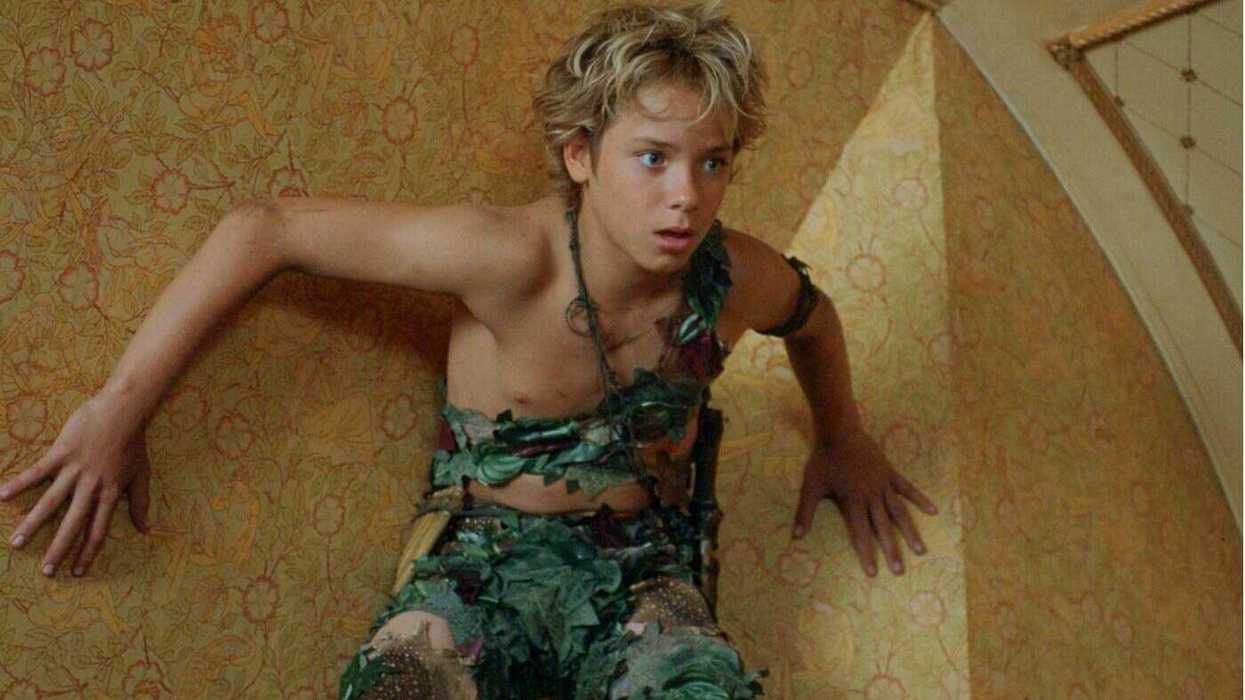
Peter Pan (2003)
J.M. Barrie opens his 1911 novel, Peter and Wendy, with “All children, except one, grow up.”
It sounds like a simple sentence, but just like that, he fits an entire character into it. Yes, Peter Pan stories are about flying kids, innocence, pirate ships, shenanigans, and adventures, but at the heart of it is a (kinda painful) denial. Painful, because you know it, you have felt it, and you have never stopped feeling it: the persistent ache of losing your childhood.
Barrie saw adulthood as a trap that made people lose the ability to see the extraordinary, the wondrous. So he created Peter Pan as a celebration of childhood. Peter became so synonymous with it that we might as well say he is the brand ambassador of childhood.
But being Peter is neither about running away from responsibility nor does it say that adulthood is evil.
It simply asks what it costs.
The Heartbreaking Origin of the Idea
The Tragedy That Froze Time
When Barrie was six, his elder brother, David, died in an ice-skating accident. Apparently, out of 10 children, David was their mother’s favorite. This tragedy devastated her. The only idea she took comfort in was that David would now never grow up, would remain a boy forever, and would never leave her. David served as the first inspiration for Peter Pan. Later, when Barrie befriended the five boys of the Llewelyn Davies family, they deepened his fixation on the idea of a boy who never grew up.
These incidents caused Barrie to associate childhood with permanence and adulthood with loss. So, if you look at it, Peter Pan is the product of fear. When Barrie wrote, “All children, except one, grow up,” he wasn’t being playful; he was being mournful.
Peter Pan: A Reaction or a Fantasy
Peter Pan and the Neverland fantasy are widely believed to be about escaping reality. It’s actually about resisting it. Barrie saw adulthood as a tapering of emotional range. In adulthood, curiosity is replaced by rules, and a sense of immediacy is replaced by memories. Peter doesn’t want the crushing weight of adulthood. He doesn’t want to escape it; he doesn’t want to be in it in the first place.
Peter’s refusal to be a grown-up is his rejection of a compromise. He understands adulthood as a place that demands relentless acceptance of loss, constant suffering, and living with what cannot be undone. Peter opts out before those demands can reach him.
Peter Pan’s Philosophy
Wonder Over Progress
For Peter, the experience of wonder in the present is more valuable than any outcome. He rejects the ideas, such as legacy and achievement, because they don’t matter if all you have is the present. Growth is unnecessary and pointless. And this is why he forgets easily. He doesn’t retain information, as memory would lead to change.
Peter values wonder, but he knows it’s fragile, and “structure” would damage it. So, he safeguards it by refusing to move forward.
The Refusal of Time, Memory, and Change
Growth goes hand-in-hand with evolution. Peter resists emotional growth because it requires time—the ever-passing time. He forgets people easily, but it’s not because he is a “jerk”; it’s his survival mechanism. He cannot afford to be anchored by memories.
This might sound strange to an adult mind: “How shallow!” you might think. But remember, this philosophy is why Peter remains light and free. This “shallowness” keeps him untouched by regret, because he cannot hold on to anything long enough to regret it.
The Cost of Refusing to Grow Up
Emotional Stasis and Detachment
An adult mind might equate Peter with a “social butterfly.” He is well-liked, but his relationships tend to reset constantly. He is averse to responsibility, so that rules out any deep emotional attachment. This makes him charismatic but also unreliable. He doesn’t learn, doesn’t reflect. Even Barrie depicts this side of him as a limitation, not a charm.
Peter avoids pain, but in the process, he also avoids meaningful depth. The result is emotional isolation.
Wendy as the Counterpoint
In most versions, Wendy loves Peter—as in, she is “in love” with him. To her dismay, Peter sees her as a mother figure for himself and the lost boys. Wendy desires a deeper, adult relationship, which Peter rejects because that would require growing up. This is a major disconnect between them.
Wendy understands and craves wonder, just like Peter, but she chooses growth. She isn’t scared like Peter. She doesn’t think that if she grows up, her imagination and sense of wonder will disappear.
And this proves Barrie’s stance: he doesn’t reject adulthood. He rejects adulthood that forgets curiosity. Wendy grows up to be a mature adult without surrendering her inner life, while Peter refuses to grow up and stays alone forever.
Conclusion
Peter Pan is a thought experiment. “What happens when wonder is preserved by refusing growth entirely?”
And the answer is clear. Wonder survives, but connection doesn’t. Growing up is a biological certainty, and you have no choice in it, but becoming a boring conformist is completely optional.
The story doesn’t argue against growing up; it argues against growing up empty.