The Final Line That Made ‘Fight Club’ Immortal
The poetic last line, “You met me at a very strange time in my life,” is a confession, a resolution, and a rebirth all at once.
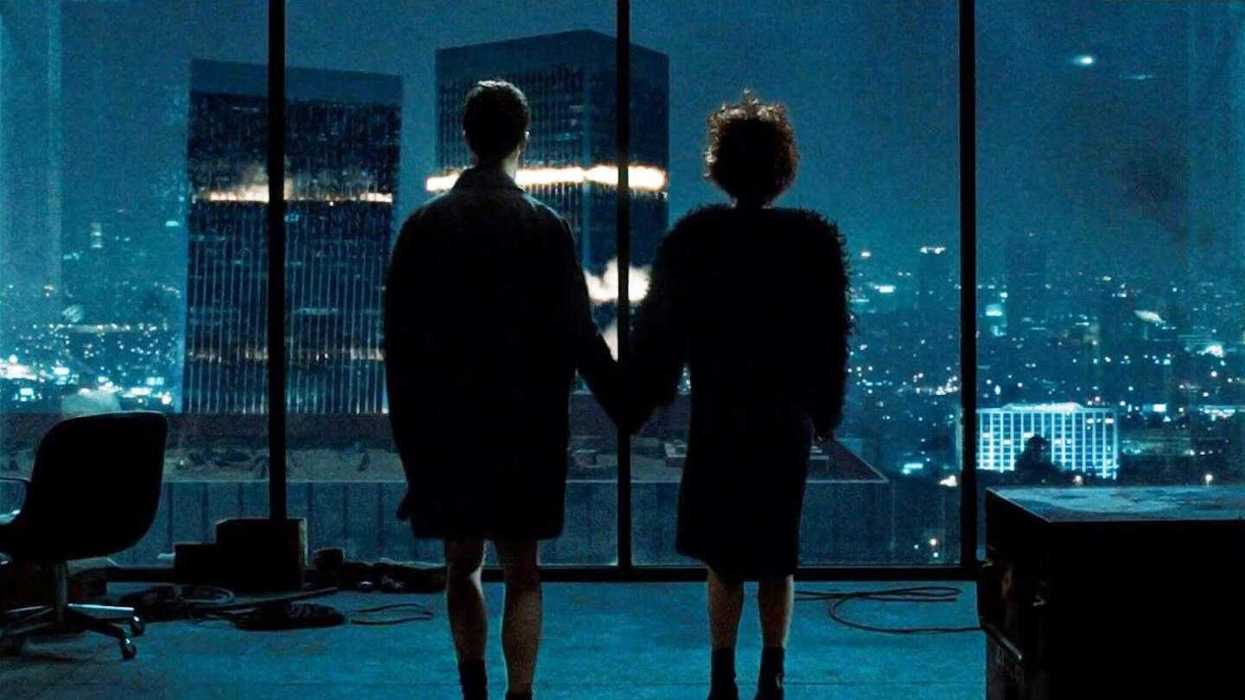
Edward Norton and Helena Bonham Carter in a still from Fight Club (1999)
Few movie endings manage to say a lot with honesty while still maintaining a foggy sense of ambiguity. The final line of David Fincher’s psychological thriller Fight Club (1999), “You met me at a strange time in my life,” is quite like that in a way that it tells everything and yet nothing at the same time.
And the manner in which it is said is similar to its conflicting nature. The protagonist says it in a quiet, strangely genteel way moments after having shot himself in the mouth and as the buildings around him start collapsing according to the plan set by his alter ego.
The quote is memorable because it extracts the insanity of the moment into something relatable. The protagonist, the Narrator (Edward Norton), has always struggled to understand himself amidst all the chaos, operatic mayhem, and nihilism around him. And this last moment is when he succeeds in doing so.
This quote is pretty much the key to the paradoxical center of the movie, which also offers a sympathetic conclusion to the tale of humanity being lost.
The Climax Before the Calm
To understand the line’s impact, we must first understand the madness it is rooted in. Once we do, we can begin to see how it serves as a melting pot between the Narrator’s two worlds.
Project Mayhem
The weak, repressed, and conformist Narrator has a domineering and anarchist alter ego, Tyler Durden (Brad Pitt). Tyler has orchestrated “Project Mayhem,” which aims to destroy all records of debt held by the credit companies. Tyler also plans to die alongside the Narrator as a martyr during the event. The collapse of the surrounding buildings (the credit company headquarters) signifies that Project Mayhem is successful, and consequently, the anarchic victory that Tyler wanted has been achieved.
The Narrator’s Self-Realization
As Tyler’s plan goes through successfully, the Narrator also makes his own breakthrough. After having a brutal fight with Tyler, the Narrator understands he is utterly powerless and can never win against Tyler in a traditional fight. So he puts a gun to his mouth and shoots through his cheek, thereby killing Tyler.
Through this act of self-actualization, the Narrator achieves the spiritual victory and is finally able to take charge of his own life.
The Line: Footnote for “Very Strange Time”
The line is pretty multidimensional and works in different ways, ultimately offering the whole character arc of the Narrator in a single and subtle sentence.
As a Confession: Admitting the Dual Personality
The phrase “at a very strange time” is impactful because it’s vastly understated. The “strange time” the Narrator is referring to is the insomnia-induced psychotic phase he underwent, during which he was entirely controlled by his violent alter ego. The line is basically a confession to his girlfriend, Marla Singer (Helena Bonham Carter), that he was sick. It also has an apologetic tone, expressing his guilt for causing all the chaos.
As a Resolution: The End of the Tyler Era
The Narrator says, “You met me.” Past tense. It signifies that the “strange time” is now over. It also means that Tyler is gone, and the Narrator has regained control. While Project Mayhem is successful, the brain and philosophy behind it are dead. This is the Narrator’s promise to Marla that he is not the harbinger of chaos that he once was and has chosen a different (peaceful) path.
As a Rebirth: A New Identity
Marla has always known the Narrator either as the shy insomniac or the hyper-masculine agitator. This is the first time she meets the completely and wholly integrated person. In a way, this is her first meeting with the Narrator.
The Ultimate Irony
This subdued and intimate conclusion exposes the irony of Tyler’s philosophy.
The Ground Zero
Tyler believed that “something real” could be exposed by destroying the system. He put his philosophy and plan into action and saw it through to its success.
The Narrator, however, has no concrete philosophy in place, but in a small, simple act, he proves himself to be the antithesis of Tyler. That simple act is holding Marla’s hand as they watch the buildings crumble. By doing so, he proves that one true, intimate, and real connection beats an impersonal, theoretical ideology any time.
Redefining Identity
Tyler, a classic anarchist, spans the two hours of the movie, projecting the ideas of toxic masculinity, anarchy, and rejuvenation through annihilation. He sets himself apart from everyone and aims to liberate himself through self-destruction.
However, as soon as the Narrator frees himself from Tyler’s dominating and destructive influence, he rejects everything that Tyler stood for. Yes, he cannot help but watch the destruction of Project Mayhem taking place around him, but he does it by making a meaningful connection with another, also damaged, person. That’s how he finds his true identity.
Also worth noting, with the destruction happening around, it’s yet another “strange” and violent journey—but this time, back to normalcy.
Conclusion
The final line of Fight Club is the stabilizing force that keeps the whirling chaos of the film under control. It turns the film’s critique of the consumer culture into an intimate, almost romantic tale of self-reclamation. It turns the narrative upside down, from an operatic spectacle to a human effort simply to be present and whole.
- 3 Ways David Fincher Uses Color to Completely Mess with Your Head ›
- Why Did David Fincher Compare 'Joker' to 'Fight Club'? | No Film ... ›
- 10 Screenwriting Tips from the Writers of 'Fight Club' | No Film School ›
- 10 Screenwriting Lessons from Fight Club (Free Script Download ... ›
- How Voiceover Saved 'Fight Club' From Being "Sad and Pathetic ... ›
- Why The 'Fight Club' Special Edition DVD Is Almost Better Than the ... ›
- The Unexpected Production Link Between ‘X-Men’ and ‘Fight Club’ ›
- What Does the Penguin Scene Mean in 'Fight Club'? | No Film School ›
- Born 57 Years Ago, the Actor Who Made His Film Debut With a Performance That Shocked Hollywood | No Film School ›