The Hidden Logic Behind the 90-Minute Daily Shooting Window of 'The Revenant'
Alejandro González Iñárritu and Emmanuel Lubezki pushed realism to the edge by relying almost entirely on sunlight and firelight.
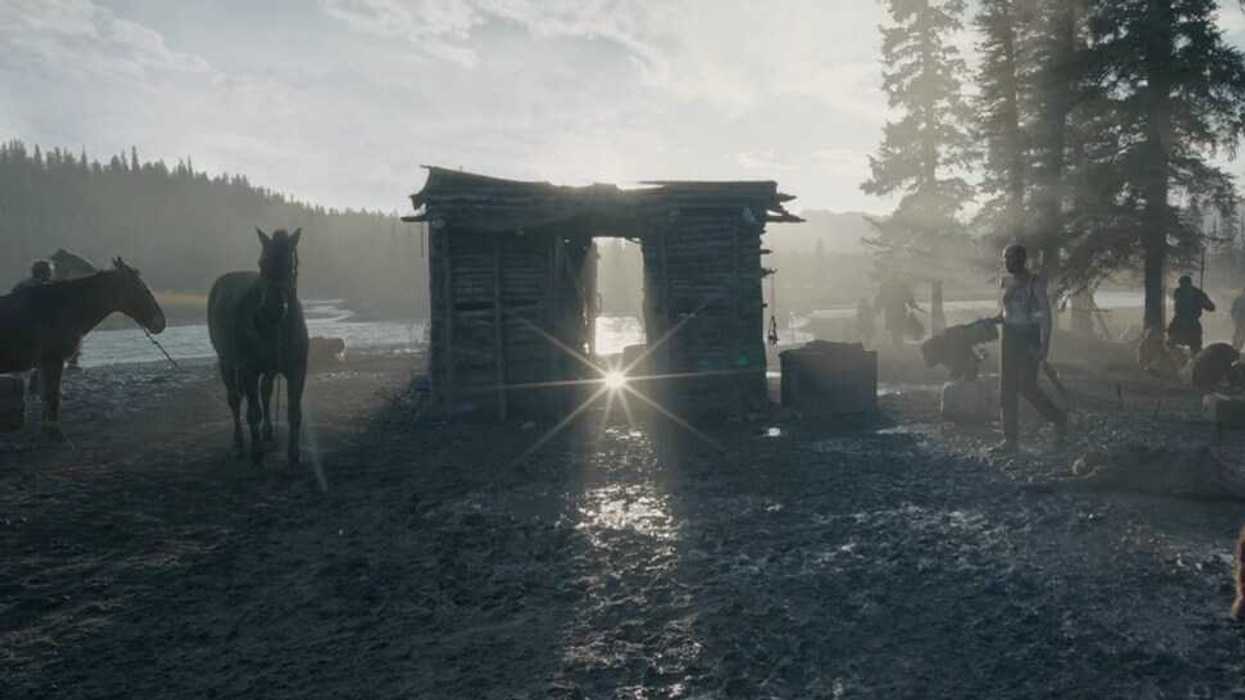
'The Revenant' (2015)
If you are into filmmaking (or have an idea about it), you must know that shooting in natural light is a delicate and challenging affair. You can use studio lights as you wish, whenever you wish, and you can use them in multiple combinations. Things change drastically when you decide to shoot in natural light. Nature doesn’t care about your vision, schedule, need for retakes, or budget. It comes and goes, dims and blows up as it wishes, leaving you scrambling around its tight schedule.
And that’s your situation if you are shooting in sunny places, like Spain, Italy, and Greece. Imagine if your filming locations were the cold deserts in Canada. What then? Quite often, you might find yourself at the mercy of the golden-hour window that gives you natural light ideal for your filming requirements.
This was the daily reality on the sets of The Revenant (2015). Director Alejandro González Iñárritu and cinematographer Emmanuel “Chivo” Lubezki were committed to visceral, raw realism. They wanted their audience to feel the biting cold and the damp earth. This vision ruled out studio lights.
The process of filming in natural light was tiresome and time-sensitive. It pushed the digital camera sensors—even the massive ones of the ARRI ALEXA 65 camera they used—to their limits. But it allowed them to capture a world that was authentic and unforgiving, and we got a visual experience that changed how we think about “epic” filmmaking.
The Logistics of Chasing the Sun
The Golden Hour Hustle
An average big-budget blockbuster takes roughly 4 to 5 months to shoot, with large-scale epic films taking even longer. The Revenant shoot went on for 10 months, from October 2014 to August 2015. One of the contributing factors for the longer filming duration—aside from extreme weather conditions and remote, harsh locations—was the movie’s strict adherence to natural lighting.
The team, more or less, had only 90 minutes of usable light per day. Around 40% of the day would be spent traveling to and fro between the shooting locations and the accommodation. Actors would spend most of the on-location time rehearsing without cameras. This was essential because they were expected to deliver a perfect shot within the small time window when the sun would hit the right angle.
Lubezki preferred the Alexa 65 digital camera because its high dynamic range could handle the subtle gradients of a winter sky without blowing out the highlights.
Firelight and the Darkest Shadows
Natural lighting makes sense during the day, but what about scenes that are set at night?
It’s a fair question. Obviously, for the after-dark scenes, the production didn’t turn on LED panels. They instead relied on actual campfires and torches to illuminate the actors. This choice created deep, messy shadows that reflected the uncertainty of the world, as well as allowed the movie to be a window into that world instead of being just a movie.
Impact on Performance and Atmosphere
Acting Without the Artificial Glow
Nature practically forced method acting on the actors. They didn’t have to imagine a harsh, cold frontier because they were literally living in it. In addition, the absence of bulky lighting rigs and heat-emitting lamps let the atmosphere remain as cold and immersive as it was. This rawness of the situation forced the actors to tap into survivalist mode, and it fit perfectly well into their characters. Every wrinkle, every shiver was honest.
Designing for the Elements
Just like everyone else, the production design crew also had to adapt. They built sets in such a way that would not only allow but also maximize available sunlight.
The same logic was applied in costume designing. Faking the light later was not an option. Every piece of garment, every prop, had to look right under the sun. So, they chose to give every costume and prop a texture that would catch as much glow as possible.
This kind of detailing ensured the authenticity of the world.
Conclusion
The choice to film the entire movie in natural light was definitely a bold decision. There is no doubt that it tested everyone’s patience. But a good thing came out of it, as intended, of course: it removed the barrier between the viewer and the screen. By integrating the sun, the light, and the shadows, Iñárritu and Lubezki veered away from a film that could have looked like a stage production. Instead, we got a documented memory.
Today, the film is renowned for its innovation and is a testament to environmental storytelling. It also teaches us a valuable filmmaking lesson: the best way to capture truth is by not trying to control it.
- 5 Movies Leonardo DiCaprio Would Put on His Cinematic Mount ... ›
- Martin Scorsese and Leonardo DiCaprio Demand Movies With Soul ›
- How Leonardo DiCaprio Was Almost In 'Primal Fear' | No Film School ›
- 10 Best Leonardo DiCaprio Performances | No Film School ›
- Emmanuel Lubezki Is Using the ALEXA 65 on His Next Project ... ›
- The Striking Stillness of 'The Revenant': A Video Essay ›
- Alejandro González Iñárritu on Filming a Difficult Scene in 'The ... ›
- Go Behind the Scenes of 'The Revenant' & Beyond ... - No Film School ›
- Screenwriter Mark L. Smith Reveals How 'The Revenant' Was ... ›
- Crew Calls Production of 'The Revenant' a Living Hell - No Film School ›