Inside Rorschach’s Reveal: The Moment That Split 'Watchmen' Fans in Two
Rorschach’s refusal to compromise in the truth-or-lie dilemma still divides fans and defines the film’s moral chaos.

Rorschach in Watchmen (2009)
Before we get into this, ask yourself a simple question: where do I stand on the idea that the ends justify the means? Because, at the end of this article, you will have to make a choice, and it pretty much hinges on what your answer is to this question.
Imagine you are facing the prospect of world peace, but it depends on telling a huge lie. Or hiding a terrible truth. And what’s more, it also involves murdering millions of people. It’s like sacrificing a sheep so that the divine will grant you something really nice.
On one hand, you have your conscience and morality; on the other, world peace. What do you choose?
This very convoluted dilemma is at the heart of the 2009 movie Watchmen. What you see in it is a villainous scheme; what you take out of it is a philosophical crisis.
So, let’s dig deeper into Rorschach’s uncompromising moral act, Ozymandias’ great deceit, and the game of ethical tug-of-war that still continues today. Because you know it as well as I do, this is not about what happens; it’s about what you think should happen.
The Premise
In a reimagined reality of 1985—where Richard Nixon is serving his fifth term—intelligent and resourceful masked vigilantes have taken to fighting crime. Walter Kovacs, a.k.a. Rorschach (Jackie Earle Haley), one of the masked crime fighters, suspects the vigilantes are under attack. His investigation, however, finds out something far more devastating—and that’s the big reveal we are talking about.
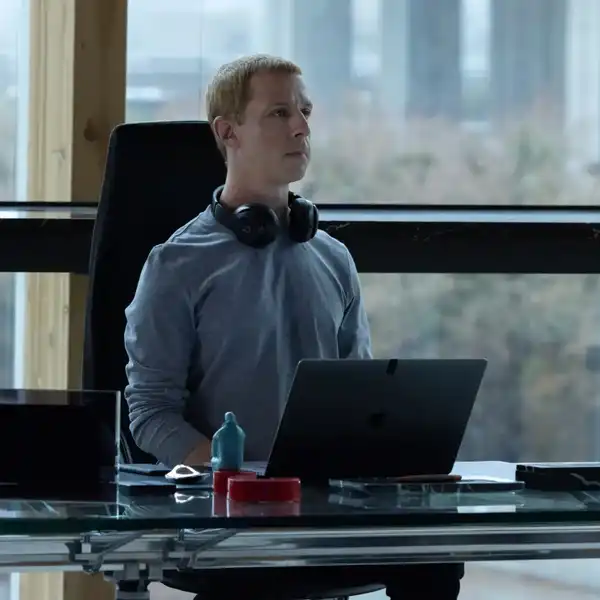
Adrian Veidt, a.k.a. Ozymandias (Matthew Goode), an ex-vigilante turned businessman, is planning to kill 15 million people, framing Jon Osterman, a.k.a. Doctor Manhattan—the only vigilante with superpowers—in order to consolidate global unity against one common enemy.
Ozymandias’ logic in a nutshell: Sacrifice 15 million people and create one single fear/enemy that the global powers can unite against, or let them fight each other and cause billions of deaths.
The plan finally goes through. Other vigilantes, seeing that the world has indeed united against one common—although false—enemy, reluctantly buy into Ozymandias’s logic and agree to keep quiet.
But not Rorschach. He vows to tell the world. Seeing his truthmongering may risk the already fragile world peace, Dr. Manhattan vaporizes him.
In the denouement, unknown to the surviving vigilantes, Rorschach has already mailed his journal, in which he has recounted this whole affair, to a local New York tabloid.
The truth can still come out. But should it?
Ozymandias’ Calculation
A Lie That Can Save the World
Ozymandias, now a businessman, has purely calculative instincts and a utilitarian approach. He sees everything as a numbers game. From his point of view, his logic is simple: millions of lives or billions of lives? For him, it’s not even a choice; it’s a straight-out mathematical solution. Someone like him would never put moral philosophy into this equation. For him, the ends justify the means.
The Illusion of Utopia
His plan works. The world powers lay down their destructive arms and unite. It looks like the world is finally at peace. “It’s like living in a global hippie commune,” as the editor of a local tabloid puts it in the final scene. But not only is this sense of utopia built on mass graves, it’s also very brittle in a world where friendships and rivalries get old real soon. And not to mention, it also depends on the silence of those who know the truth. If they change their mind and the truth comes out, the world is back to square one, and the million deaths were for absolutely nothing.
Rorschach’s Moral Code
“Never Compromise. Not Even in the Face of Armageddon”
This is not something that Rorschach just says; this is ingrained in his central nervous system. If Ozymandias is a utilitarian, Rorschach is an absolutist. Ozymandias doesn’t let his conscience interfere with his pragmatism; Rorschach doesn’t let pragmatism interfere with his conscience. Ozymandias interprets his mass killings as a necessary solution; Rorschach sees murder as murder.
Rorschach doesn’t like puppeteering. He doesn’t approve of playing god. Crime must be exposed, no matter the cost.
The Black-and-White Morality
Keep aside the mass destruction. Keep aside the lie. Dabble in depravity for a moment.
Does Rorschach have a higher moral ground, or is he simply rigid? In a grey world that smooth-sails on compromises, his refusal to do so—is it admirable?
If what Ozymandias says is true—if I don’t kill millions, they will kill billions—won’t Rorschsch’s steadfast commitment to his principles directly lead us to the annihilation of humanity?
Surviving on a lie vs. dying for the truth? Life vs. morality? What’s more important?
The Debate Where Nobody Wins
The debate is valid, but there is no end to it. And the filmmakers knew it. That’s why we don’t see a conclusive statement at the end. What they do instead is hold up two broken mirrors, Ozymandias and Rorschach, and leave it to the audience to look into whichever they approve.
Team Ozymandias
This is the argument for pragmatism. The world is anything but perfect, quite chaotic, actually. Sometimes unfair things must be done to establish wider fairness. Rorschach’s righteousness is a luxury in a world that’s facing extinction. Preservation of life equals a fighting chance. Things can always be improved later.
Team Rorschach
A lie is corruption, and life based on corruption is unsustainable. The ideal world is made of people who know and accept the truth, regardless of how painful it is. The decisions they make based on conscience last longer and have greater value. One single person shouldn’t be allowed to decide the fate of humanity.
Conclusion
In the end, this debate is what Watchmen is all about. It reconditions the idea of a hero—whichever you hold at the moment—and asks you: do you prefer a cold, logical god-king who saves you by taking away your free will, or a resolute, righteous knight who defends your right to the truth, even if it kills you?
- How 'Watchmen: Chapters I and II' Composer Tim Kelly Honors the Legacy of The Book ›
- 'Watchmen': Check Out David Hayter's Original Test Footage From 2003 ›
- How 'Watchmen' Pulled Off That Dr. Manhattan Episode | No Film ... ›
- How the Hell Does 'Watchmen' Shoot Looking Glass' Mask? | No ... ›
- 'Watchmen' DP Greg Middleton on Shooting That Black and White ... ›
- Here's How 'Watchmen' Made That Amazing Black and White ... ›
- Alan Moore Hated HBO's 'Watchmen'—But Not for the Reasons You ... ›
- HBO's 'Watchmen' Delivers a Killing Blow to the Superhero Genre ... ›
- Breaking Down the Philosophy of 'Watchmen' | No Film School ›