Imagine this. You have a great idea for a screenplay. You spend hours maladaptive daydreaming about your characters and their adventures. You might even outline. But when it comes time to sit down in front of Final Draft or whatever your screenwriting software of choice is, you can't get past the first slugline.
You're already stuck, and you're afraid to keep going.
Author and screenwriter Tony DuShane sat down with Film Courage to discuss this fear and what it really means to be a writer.
He's the author of Confessions of a Teenage Jesus Jerk, a semi-autobiographical novel about growing up as a Jehovah's Witness during the Reagan era. DuShane adapted the novel into a screenplay, which was directed by Eric Stoltz and released in 2017.
If you've ever felt paralyzed staring at a blank page or wondered whether you're good enough to call yourself a writer, DuShane can help. Check out his conversation here.
- YouTube www.youtube.com
Most Writers Have Imposter Syndrome
For a long time, I wouldn't call myself a writer, even though my job here is literally writing the words that appear on your screen right now, and after winning awards as a screenwriter. It felt disengenuous to say.
"You know you're a writer if you're scared of writing," DuShane says. "If you have imposter syndrome, I feel like that's part of the game. Any writer who says that they don't have impostor syndrome, I'm like, 'Oh, okay.' And then usually I read their work, and I'm like, 'Oh, yeah. It's not so good.'"
It turns out, most writers do feel that sense of not feeling counted, and it's something we have to get over.
Confidence is important, too, and you shouldn't let imposter syndrome hold you back to the point that you never share your writing or call yourself a writer. We have to find a balance.
But the fear means you care about the work and want it to be good. It keeps you accountable and growing—you want to improve and strengthen your writing.
Overconfidence can lead to cockiness, and sometimes you can get away with that, but most people will find it insufferable. We're of the opinion that your work should speak for itself.
You probably aren't writing enough. If you want to learn what imposter system is and how you can fight it, we've got you.
Train Like an Athlete
You can get better at writing, just like you can get better at anything with practice and dedication.
"I tell my students, we have to train like athletes," DuShane says. "We've just got to do the thing every day, and like in baseball, a guy might not make a catch for three days, four days, and then that one ball comes to him. He's got to make that diving catch, because but he's been training every single day."
Think back to the first thing you wrote, whether it's a novel or a screenplay or a speech. You'll probably cringe. I think back to the fan fiction I was writing in high school. (Gross.) I'm still happy I wrote those pieces, but I wouldn't call them exemplary writing because I know I've gotten better and grown.
As a writer, you need to keep testing yourself and seeing what works and what doesn't, and that only comes through plugging away at your projects. You might write a draft and let it sit for a few months, come back to it, and realize you've got something great on your hands. Or it might suck. So you revise it.
Get something on the page, even if it's not perfect. Make yourself write. If you've hit a wall on one project, pivot to another. Do some writing exercises. Read some inspirational scripts.
Just don't give up. Keep practicing.
Check out our resources, too. We've got 6 Habits of Highly Successful (Screen)writers and insight into Christopher Nolan's writing process. Another example is how Eric Roth reads his script from page one every day to keep going. Finally, learn the psychological trick that turns writer's block into momentum.
Find Your Writing Community
DuShane points out the value of finding a group to write with that will share the joys and trials of the process.
"When I teach my writing workshops at the library, I want to get the energy of the room to kind of like, 'Hey, we're all scumbag writers. It's not easy. It's kind of fun. It's not fun sometimes. It's really hard—but it's kind of easy—but it's not easy. It's gonna hurt.'"
Writing is hard. The process is sometimes a messy struggle. It helps to have a support system, whether in person or online. So many writers will tell you how important it is to have someone who will read your ugly drafts or help you figure out what's blocking you.
Here are ways to start a writing group. Check out resources online to get feedback on your writing.
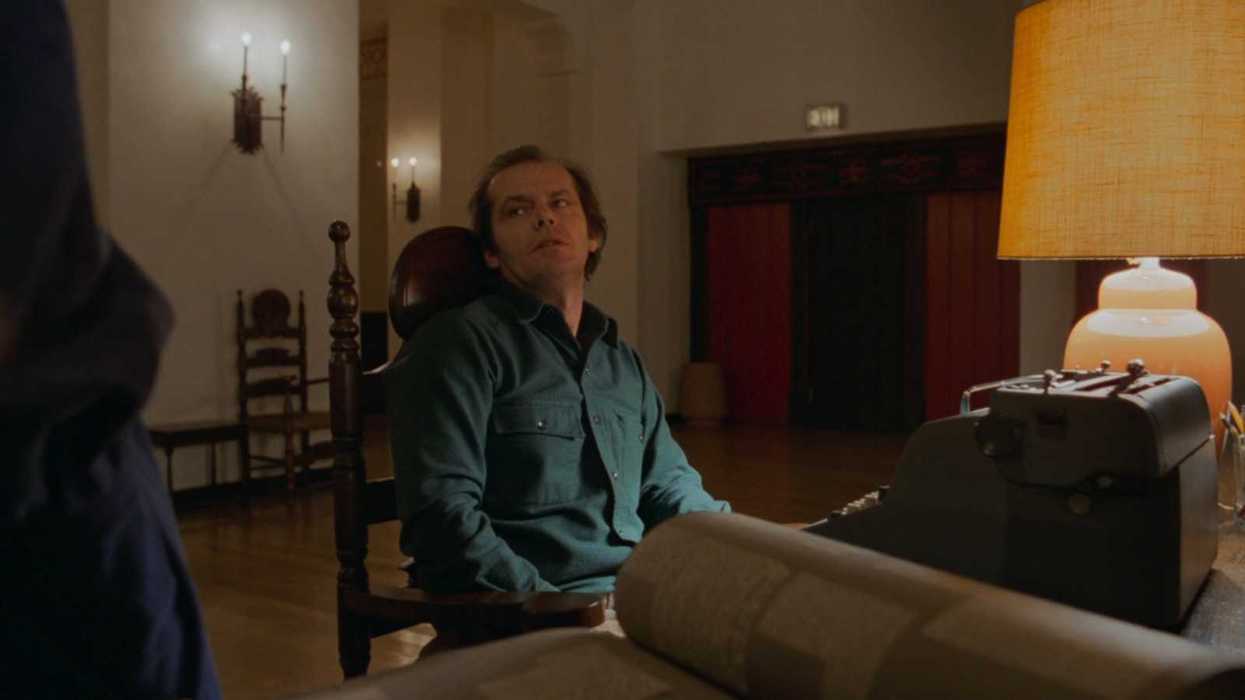
 'The Shining'Credit: Warner Bros.
The Writer's High
There is no better feeling than spending a long day in front of your script and knowing you broke something that really needed breaking, whether it was a story beat or a character, or an important line of dialogue.
"I've walked away from fixing a problem many times ... walking out just like Judd Nelson at the end of Breakfast Club," DuShane says. "Just walking outside and going, 'Yeah!' And it's just like, 'I did it.' And then I'll go get a glass of wine at a happy hour somewhere, and I'll read my book, and I'll just go, 'These people have no idea what I did today.'"
In writing, the victories are solitary and sometimes invisible. You're solving structural or character problems that others might not see.
But reaching that point of satisfaction through persistence creates a "high" that can sustain you. The work is the reward. You're doing something that maybe no one will ever know about, but you're actually doing the thing. Getting started and keeping at it will eventually result in a complete work, while others might give up, so you're farther than a lot of people.
You can't rely on external validation at every step, so learn to appreciate these small victories. And keep going.
Embrace Being a Weirdo
You have a perspective that no one else does. You can tell a story in a way no one else has. And that makes you valuable as a writer.
"I'm looking for my other weirdo writers, because I'm a weirdo writer too, and it's okay to be a weirdo writer," DuShane says.
It's good to know formula and structure. Those things can help you when you get stuck and can make it easy for you to speak the language of storytelling.
But give yourself permission to be yourself, embrace your quirks, and develop your own voice. You don't have to write like everyone else. Your weirdness might be the thing that sets you apart in a stack of monotonous scripts.
Learn from some of the most unique voices today, like Taika Waititi or the late great David Lynch.