You’ve seen a thousand walk-and-talks. Aaron Sorkin’s hallway marches made it a signature move, and we’ve covered how to write one. They're nice as a shot choice and in writing because they automatically give a scene energy. Characters feel like they have a purpose, like they're going somewhere, instead of just standing or sitting and delivering lines.
But they are harder to shoot because of that motion. Usually it means a Steadicam just backpedaling in front of two actors firing off lines, but you also have to light a bigger space and think about coverage from potentially multiple angles. In ye olden days you'd have to get a dolly track involved.
A new essay from Moviewise looks at how Sidney Lumet handled the same basic setup in The Verdict without leaning on a tired formula... but still made things difficult.
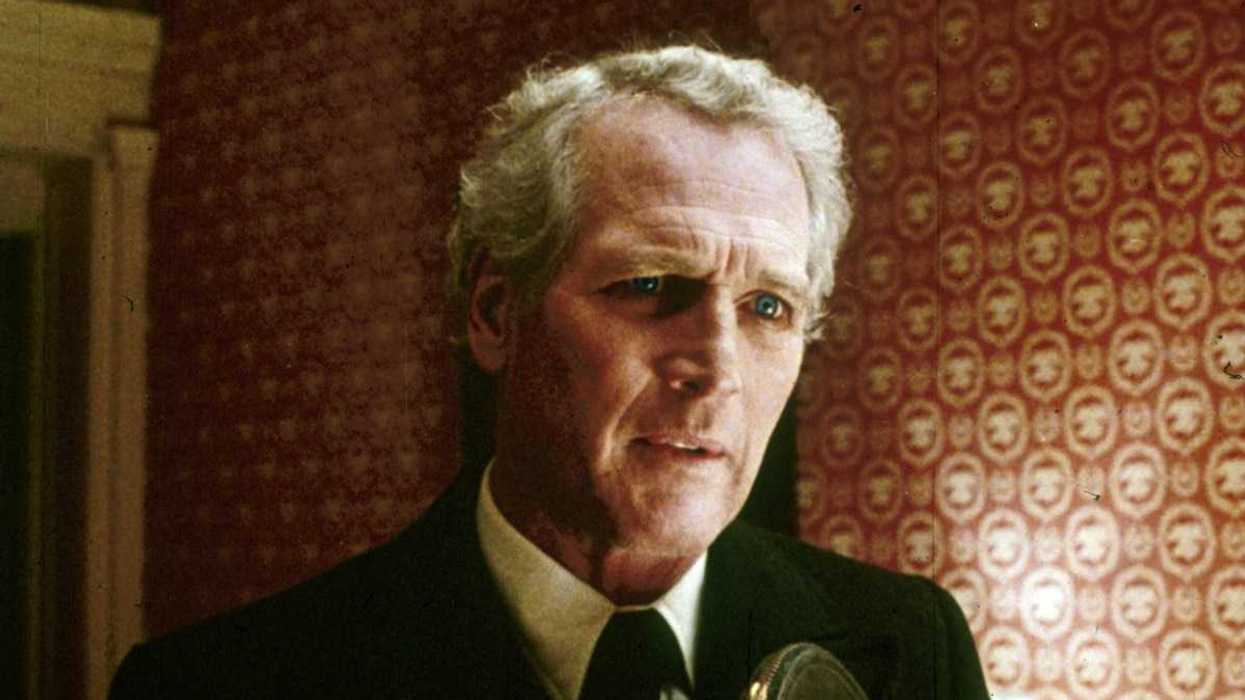
David Mamet adapted the film from Barry Reed's novel. It stars Paul Newman as Frank Galvin, an alcoholic Boston ambulance-chaser. It was nominated for five Academy Awards: Best Picture, Director, Actor (Newman), Supporting Actor (James Mason), and Adapted Screenplay.
Check out the video here. You’ll learn why most walk-and-talk scenes feel mechanical and how Lumet used fixed angles to let actors come to him. You’ll also see why the simpler-looking approach demands more planning, and how to bring that freedom to your own dialogue scenes.
- YouTube www.youtube.com
The Problem with Static Dialogue
We already mentioned this, but if you have blocking that's so static that it just has characters sitting or standing, it's maybe realistic but not that interesting to watch. Most dialogue coverage is two people planted on marks, cut as shot/reverse shot. Moviewise says the walk and talk became the default escape hatch.
"In our age of stand and deliver, with directors shooting dialogue scenes by sticking actors in place and cutting between them, walk and talk is virtually the only solution most of them can find to make characters move during dialogue."
That's not really true if you give your actors blocking and have them do "the business" (or something we like to call "toast"). But the camera will still need to be moving quite a bit to follow the action, which can be challenging. A walk and talk is a good solution, but it can get stale, too.
“The problem is just like any tool, walk and talk can be overdone and used mechanically," Moviewise says. "The question becomes, how do you take an ancient technique nearly as old as cinema itself and make it something new and fresh."
The big thing to remember is that movement should be motivated.
Lumet Directed Like It Was a Different Decade
The Verdict came out in 1982, but Lumet wasn’t going for the slick style of the era. It feels like an older film.
"Sidney ditched the trendy tricks in fashion and gave a lesson on how you could still make a classic-type picture in the age of Star Wars," the video says.
He followed several simple principles to get this across in his work.
Locations were deliberate and character-appropriate. He didn't put people in places just to make them look cool.
Within those spaces, he used harmonious compositions and wide angles that place people in the environment.
But at the same time, scenes opened on details before widening. So we get something specific before something broad.
The blocking is active, to resist stillness. Any camera movements were understated, and long takes were utilized.
Transitions were slow dissolves.
The video calls out a close-up insert of a newspaper, a glass of whiskey, and a donut. This shows the character looking through obituaries for funerals to attend.
"We’re talking about filmmaking so proficient that even an insert like this overflows with information and personality. You see the character’s past through funerals he’s been to, his future by the next funeral he’s underlining to attend."
Inserts are kind of the worst, because you need them, but they eat up a lot of time. This is an example of how worth it they are, just to get these kinds of character details.
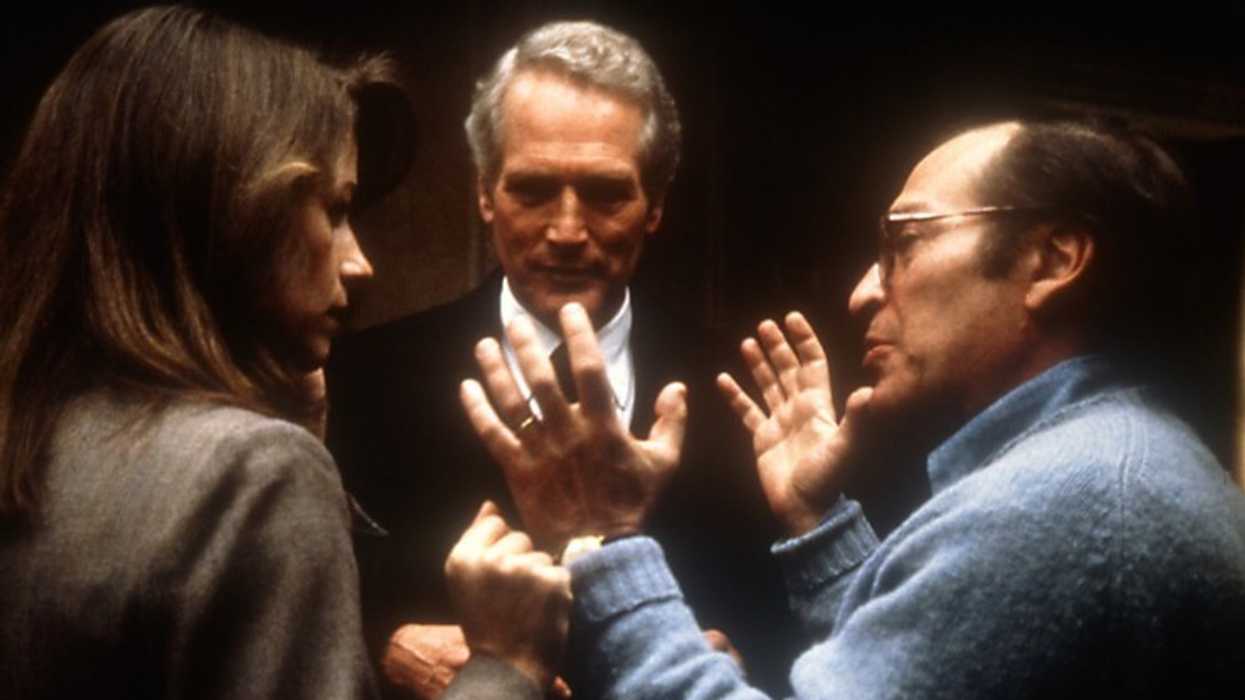 'The Verdict' Credit: Credit: 20th Century Studios
Let the Actors Come to the Camera
The big takeaway on Lumet's filmmaking here is how he shoots the walk and talk in a new way.
"Lumet could follow the actors with the camera as everyone does, and as he does for a few seconds," the video says, "but mostly he chooses the correct angle and lets his actors come to him, or he lets his actors get away from him. Let the sound guys do the hard work. Instead of tracking or Steadicamming along, we are given a fixed position and follow frequently from afar by panning."
The actors’ movement toward the lens does the work a push-in would do.
It's worth pointing out, again, that this creates new challenges. A locked-off pan sounds cheaper than a Steadicam rig. It isn’t necessarily easier.
You have to lav these actors or ADR any dialogue you can't hear. Timing is huge—actors have to walk a greater distance and hit a mark at specific beats, all while delivering their lines perfectly. Background actors also have to be timed, too. Someone has to pull focus on characters in motion. The camera is moving too, either in tilts or pans or zooms.
Lumet was shooting a lot of these in wides, and for any beats that needed tighter coverage, that would require a totally different setup. Meanwhile, a simple Steadicam walk-and-talk might require just one medium shot, and you could call it good.
If you want to try this, remember that wide fixed angles expose your whole set, so budget for background and production design. They also make sound harder. One of our Lumet tips pieces notes he rehearses typically for two weeks, and this kind of staging is why that matters.
It's a big dance, but when it works, it's beautiful. Moviewise’s big idea is that Lumet doesn’t treat the walk and talk as one-shot type. It’s a staging toolkit.
"If you think about it, Lumet is treating walk and talk with the same freedom as ensemble staging. It’s a means of letting characters interact with each other and the location in multiple ways."
For your next dialogue scene, pick the option that serves the beat instead of defaulting to following.