Spaghetti Westerns vs. Samurai Cinema: Twin Legends Across Cultures
The beauty of art lies in the ways it travels across the globe.
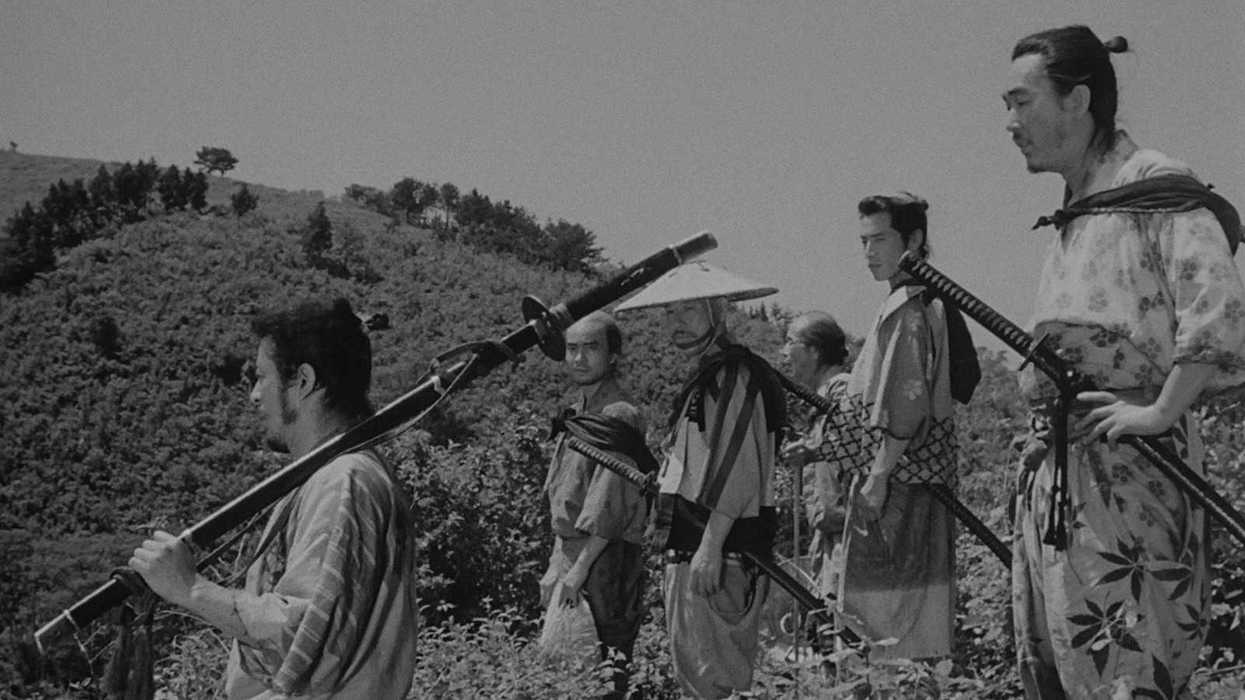
Seven Samurai
Art travels, inspires, and transforms, and the relationship between Western and samurai films is a testament to this.
Emerging from opposite ends of the globe, the two seemingly distinct genres, Western and samurai films, have profoundly influenced one another, yielding cinematic masterpieces such as The Magnificent Seven and The Dirty Dozen.
In this article, we examine how samurai and Western films have influenced one another, becoming twin genres across two cultures.
The Creative Merger of Westerns and Samurai Films
Western movies, centering on cowboys and gun-slingers, have always been wildly popular. However, with the release of Akira Kurosawa’s Seven Samurai and Yojimbo in 1954 and 1961, respectively, a more dynamic hero’s arc attracted both filmmakers and audiences.
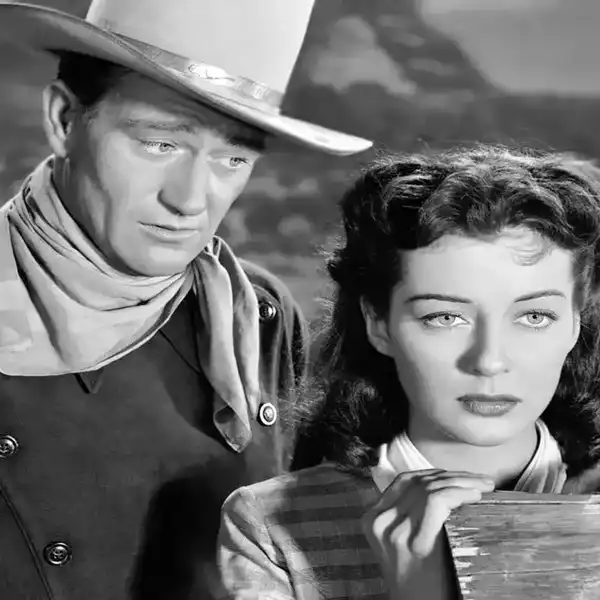
Interestingly, Seven Samurai was heavily influenced by the Westerns directed by John Ford, the man who gave us films like Stagecoach (1939), Fort Apache (1948), and Rio Grande (1950).
John Sturges’ 1960s Western The Magnificent Seven, an adaptation of Kurosawa’s Seven Samurai set in Mexico, demonstrated that a fusion of samurai themes and story structures with Western conventions would not only interest audiences but also be well received.
After that, films such as A Fistful of Dollars (based on Yojimbo), The Good, the Bad and the Ugly, and Once Upon a Time in the West went on to reshape the Hollywood Western film landscape.
The Cinematic Parallels in Spaghetti Westerns and Samurai Films
1. Not Good, but Flawed Lone Warriors
Kurosawa’s Seven Samurai and Yojimbo set a template for samurai films—loner (samurai) protagonists, who find the purpose of their life in protecting the defenseless.
Classic Westerns are based on the same notes, only lacking the moral complexity in the hero’s journey.
Samurai films inspired Western films to abandon their classic good-versus-evil trope and to explore heroism within morally ambiguous societies through a lone warrior, a samurai, or a gunslinger whose beliefs supersede formal law.
2. Heroes Who Are Protectors
Both genres frequently adhere to the traditional hero’s journey, with a major addition: the narratives focus on bringing diverse warriors with distinct personalities together to defend the weak.
This fight is not only about confronting the enemy but also about overcoming personal battles that have held these warriors back in life.
They seek redemption in their roles as protectors.
3. Expansive Visuals
Ford was notable for using the American landscape as the backdrop for his Westerns, using the terrain to also underscore themes of individualism and toughness.
Kurosawa followed his lead in Seven Samurai, setting the movie against the backdrop of rural Japan, inhabited by oppressed simpletons.
Both samurai films and Spaghetti Westerns featured heroes who believed that one saves oneself by saving others.
4. Societal Displacement
Both samurai and Western films grapple with the themes of obsolence, but in their own unique ways, almost approaching the concept from opposite directions, only to meet in the middle.
Samurai films underscore technological transition, posing the samurai as a cultural artifact that’s near extinction. The bandits fighting samurai swords with their firearms in Seven Samurai reminds us how modernity takes over before you realize it.
In the end, many samurai are taken down by bullets, a symbolic representation of traditional martial arts’ weakness to industrial warfare.
In Westerns, the frontier itself is a vanishing entity. These movies focus on how, with the industrial revolution and encroachment of civilization, which is often represented by railroads, churches, settled communities, and government institutions, mankind is losing its wilderness and freedom.
The classical Westerns mourn the loss of open land and unlimited possibilities, whereas Spaghetti Westerns also explore an ambiguous society and flawed warriors alongside quintessential themes, adding layers to traditional Western storytelling.
5. Expressive Visual Language
Kurosawa is known for his deft use of natural elements, particularly the weather, to express the inner turmoil and conflicts of his characters. Both his breakthrough samurai films, Seven Samurai and Yojimbo, reflect this sensibility, as do the traditional Japanese martial arts action sequences.
Inspired by samurai films, filmmakers such as Sergio Leone came up with their signature styles in Westerns that reflect samurai influence: the environment becomes a character itself, close-ups juxtaposed with sweeping landscapes, deliberate pacing to maximize tension, and then rapid cuts that culminate in explosive moments of violence.
Films That Show Mutual Influence
A few of our favorite Westerns are westernized adaptations of Japanese samurai films. Here’s a list.
1. Seven Samurai and The Magnificent Seven
Akira Kurosawa’s Seven Samurai is set against a poor Japanese village, which is regularly oppressed by a group of bandits. To retaliate and defend themselves against their attack, the villagers pool money to hire seven samurai, who agree to take up the job in the name of honor.
John Sturges’ The Magnificent Seven is set in a Mexican village where poor farmers hire seven gunslingers to protect the village from a small army of 30 bandits who regularly ravage the village for food and resources.
Both films focus on human complexity as much as on their iconic samurai hand-to-hand combat and gunfights.
2. Yojimbo and A Fistful of Dollars
Kurosawa’s Yojimbo, released in 1961, follows a nameless ronin who arrives in an unknown land and becomes entangled in its affairs. Eventually, he lands at the center of a conflict between the two rival crime lords, only to strategically reap the benefits by playing them against each other.
Three years later, in 1964, Sergio Leone directed a Spaghetti Western based on Kurosawa's action classic, A Fistful of Dollars, starring Clint Eastwood.
Much like the original film, the Western adaptation follows a wandering gunfighter who arrives in an unknown land and begins playing two rival families against each other for his own gains.
The confluence of Westerns and samurai films demonstrates how closely two cultures can be related, despite their apparent differences.
Let us know which are your favorite Western movies in the comments!
- Watch: What 'Seven Samurai' Teaches Screenwriters About Story and Structure ›
- Is 'The Mandalorian' a Western or a Samurai Show? ›
- What Are Tarantino's Favorite Spaghetti Westerns? ›
- 7 Spaghetti Western Trademarks That Define Sergio Leone's Genius ›
- Spaghetti Westerns ›
- Hang Em High Eastwood ›
- 'For a Few Dollars More' Line That Reveals Colonel Mortimer ›