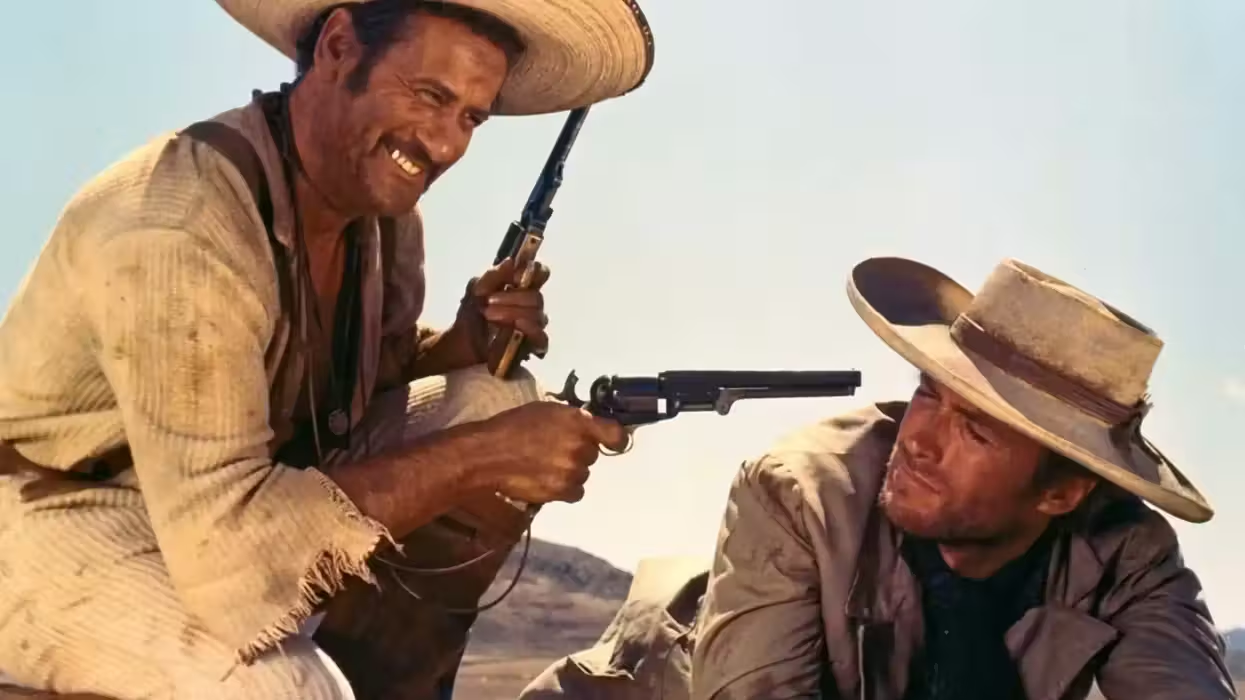
Westerns are seen as a distinct American genre, but what if I told you, at the height of their power, they actually had some of the best leave our borders and show in another country.
What's more, these wrestlers came back and were sme of the most beloved of all time?
Today, going to go over the subgenre we call the Spaghetti Western. We'll examine where that name actually comes from, why it was originally an insult, and how it changed filmmaking forever.
Let's dive in.
- YouTubewww.youtube.com
What Is A 'Spagetti Western'?
The term "Spaghetti Western" was first uttered by Spanish journalist Alfonso Sánchez Martínez in 1966.
He was talking about the rise in the idea that Westerns were being made by people outside of America, specifically by Italian productions. For example, the big one at the time was made by the relatively unknown director Sergio Leone's A Fistful of Dollars, starring an American TV actor named Clint Eastwood.
They shot that movie in Spain with a primarily Italian crew, backed by Italian production money. The cast was international, and everyone spoke their own language; then they dubbed the whole thing in English after the fact.
These movies were looked down on by critics as knockoffs of the traditionally American genre. So they were named after the common Italian food, spaghetti.
Originally, the idea was that this name was an insult, almost like saying this is not a true Western but a spaghetti one.
But a funny thing happened on the way to the box office... the audience didn't care. They loved these movies and didn't care that they were dubbed. The movies were good, and the characters, particularly the Man With No Name, played by Eastwood, were easy to root for and popular.
This changed the term from a pejorative into just a regular classification.
The 'Spaghetti' Formula: What Set Them Apart?
Like a lot of genres, the Western had gotten predictable in America. We sort of knew the formula coming from these movies, especially as studios churned them out.
But the cool thing about Hollywood is that people from all over can see a genre and think about how they would meld it to different sensibilities or ideas.
The Spaghetti Western stripped away the myth of the "noble frontier" for something that felt worldly.
It was way more of a character examination. It wasn't really about America, even if it theoretically took place there, but more about universal themes and moral grey areas of humanity.
Take a look at this comparison of the typical John Wayne-type Western with the ones that started popping up in Italy.
| Feature | Classic Hollywood Western | Spaghetti Western |
| Morality | Strictly black and white. Clear heroes vs. villains. | Pure gray. Everyone is cynical, greedy, and morally corrupt. |
| Cinematography | Wide shots, eye-level framing, classic composition. | Extreme close-ups (eyes) contrasted with massive wide vistas. |
| Violence | Bloodless, heroic, and sanitized. | Gritty, sweaty, and operatic in its brutality. |
| The Music | Sweeping brass, orchestral, and traditional. | Avant-garde: whistling, electric guitars, howling, gunshots. |
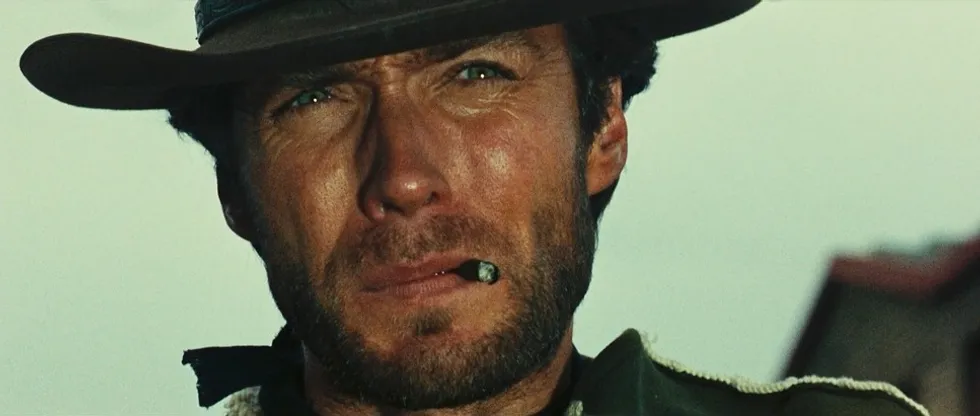 The Lethal “Mule” Gag: How ‘A Fistful of Dollars’ Introduced a Legend Credit: Constantin Film
The Technical Ingenuity of the Italian Wave
The crazy part of these movies was that they were incredibly cheap to make, even if they didn't look like it.
They had an innovative nature born of saving money and of different techniques that emerged when world cinema came back to the forefront after years of war.
Here are a few of the cool things they were doing that Americans then picked up on:
- The Post-Audio Save: Because the casts spoke a mix of Italian, Spanish, German, and English, the films were shot, and then the English dialogue was dubbed entirely in post-production. It was like the early days of ADR, and also, you could weave stuff in because you were just building the story visually.
- The Ennio Morricone Factor: Because they couldn't afford a full Hollywood orchestra, composer Ennio Morricone used cheap, found sounds. That creativity brought this visceral quality that we had never experienced before. He used whistles, laughs, the jaw harp, and the newly invented Fender Stratocaster electric guitar to add to the soundscape.
- The Techniscope Crop: To save money on expensive Anamorphic widescreen lenses, Italian filmmakers used Techniscope. This process used a standard spherical lens but modified the camera to pull only two perforations of film per frame instead of four. You got these massive widescreen shots for half the cost.
Summing It All Up
What I love about the Spaghetti Western is that it showed how much film is a communal experience that tracks the hearts and minds of people across the globe. We saw how important it was to riff and spin things with your own voice and personality, and it inspired peoplel ike Quentin Tarantino, Robert Rodriguez, George Miller, and many others to try their hand at subverting genres themselves.
The next time you see an extreme close-up of a character's eyes before a standoff, or hear an electric guitar swell over a dusty landscape, you're watching the DNA of a cheap Italian import that people once thought would be a unicorn.
Instead, it was a revolution.
Let me know what you think in the comments.