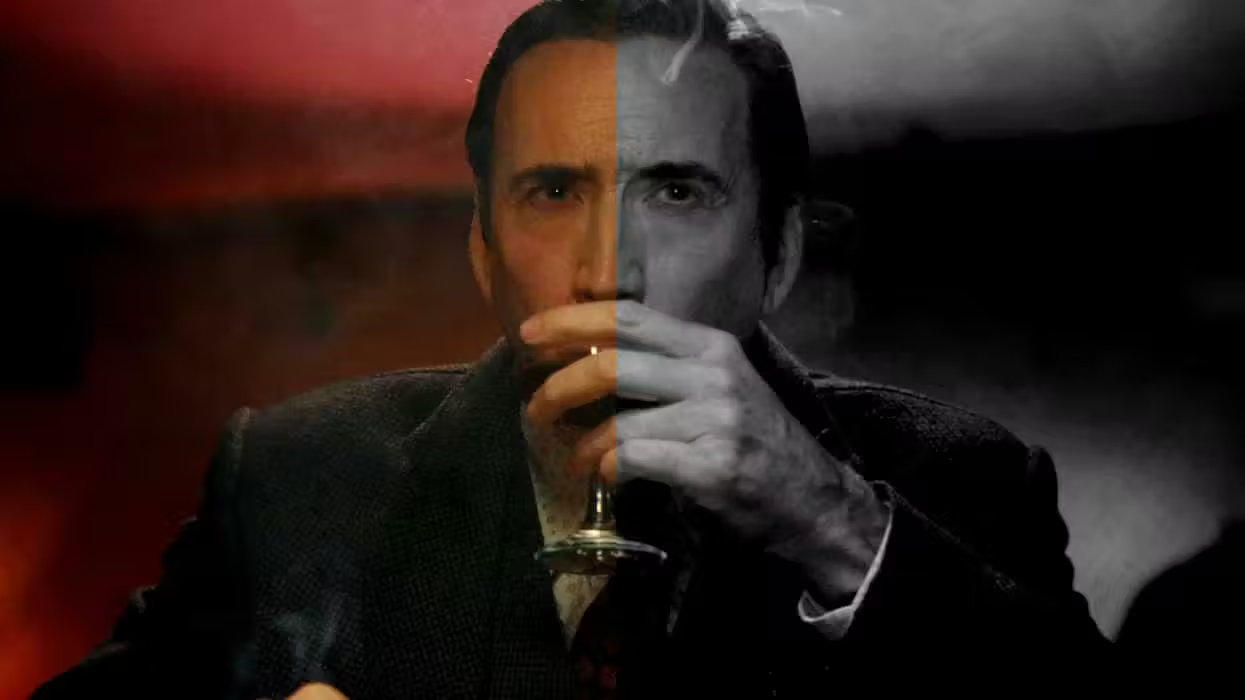
Sony’s Spider-Man Universe is set to expand even more on May 25 with the release of Spider-Noir. The MGM+ and Prime Video series, which sees Oscar winner Nicolas Cage taking on his first lead television role, follows private investigator Ben Reilly navigating his double life as the superhero, The Spider, in 1930s New York City. The show will be experimental in more ways than one. In addition to having Cage step away from the big screen, Spider-Noir is making the nearly unprecedented move: It will be made available in both color and black-and-white when it premieres.
While black-and-white movies have become less and less common since color was first introduced in mainstream cinemas almost a century ago, some modern titles have adopted the format, including Best Picture winner The Artist, Alfonso Cuarón’s Roma, and Robert Eggers’ The Lighthouse. Still more films have been post-converted to black-and-white for re-releases, including Logan, Parasite, Mad Max: Fury Road, and Godzilla Minus One.
However, it is still uncommon for any project, let alone an entire eight-episode series, to be presented in both formats right off the bat. This raises the question: Which format is the best way to watch the series?
Why Is Spider-Noir Being Presented in Two Formats?
While the behind-the-scenes reason for Spider-Noir being presented both in color and black-and-white has not been officially revealed, it seems likely that creator Oren Uziel originally wanted the show to be presented in black-and-white in order to capture the look of the iconic film noir titles, of which the series is a pastiche. However, either he, the studio, or both likely had misgivings about presenting a superhero project entirely in black-and-white, fearing that doing so would alienate modern viewers, who are used to seeing television and movies in color only.
Cage specifically referenced teenage viewers being the core demographic for the color version in a February 2026 interview with Esquire, adding that “If they want to experience the concept in black and white, maybe that would instill some interest in them to look at earlier movies and enjoy that as an art form as well.”
The fact that the show is being presented in both formats also evokes the multiverse that has been at the core of the Spider-Verse movies that inspired this new series. The world of Spider-Man has been presented via many different aesthetics in the pages of comic books, so this is yet another way to evoke the plethora of vibrant characters and worlds that have been invented by comic writers and artists over the years.
Should You Watch Spider-Noir in Color?
While the fact that film noir is typically presented in black-and-white might make it seem like black-and-white would be the natural choice for a first viewing of Spider-Noir, the color version of the series makes a strong argument for itself.
A common complaint about color-grading in modern cinema and television is that, in addition to low-contrast lighting being popular in digital productions, the palette tends to be desaturated, resulting in images looking murky and underlit, lacking vibrance overall.
However, that is not the case with Spider-Noir. While the color palette does not evoke what audiences would expect a fully saturated modern movie to look like (Uziel told Esquire that it was intentionally made to look like “a black-and-white film that's been kind of colorized”), the footage is nonetheless vibrant and colorful, evoking the vibrance of classic comic strips like Dick Tracy.
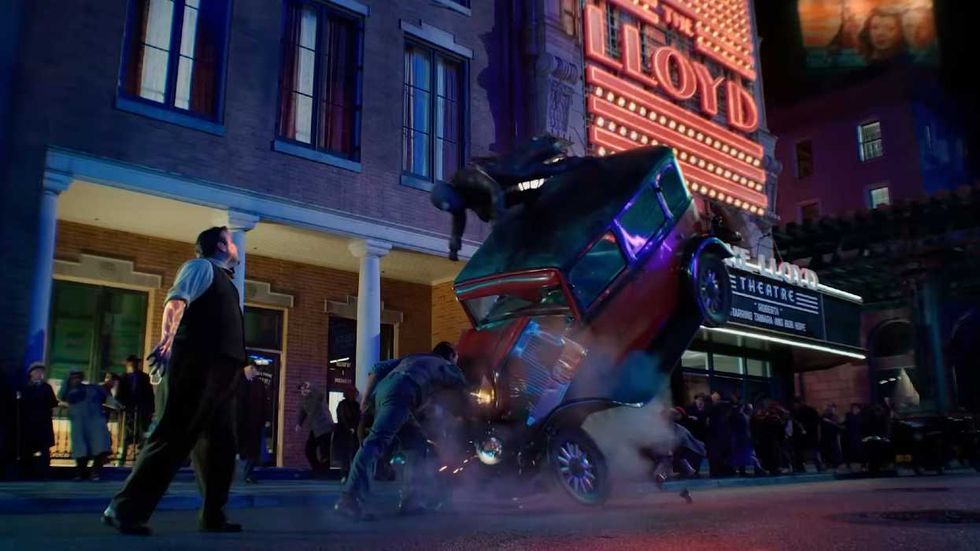 ‘Spider-Noir’ (2026)Credit: Sony Pictures Television
The digital footage could have just been flatly presented in color in order to appeal to younger audiences, without the cinematographers and directors putting much thought into it. However, that is not the case here, as the ways that Spider-Noir wields color are very intentional. Therefore, the color version still represents a specific vision that could appeal to fans of classic comics.
Should You Watch Spider-Noir in Black-and-White?
Another reason why black-and-white isn’t the be-all end-all version of Spider-Noir is the fact that the show wasn’t shot with black-and-white cameras and then colorized later. Instead, the digital footage was split immediately after being shot, so it could be processed into both formats. This means that the black-and-white footage isn’t necessarily the “true” version of the series.
However, the fact that the show’s creators knew that they were crafting a black-and-white version when they were shooting Spider-Noir means that the footage they captured was specifically designed to result in a crisp black-and-white image, rather than merely being post-converted into black-and-white later on.
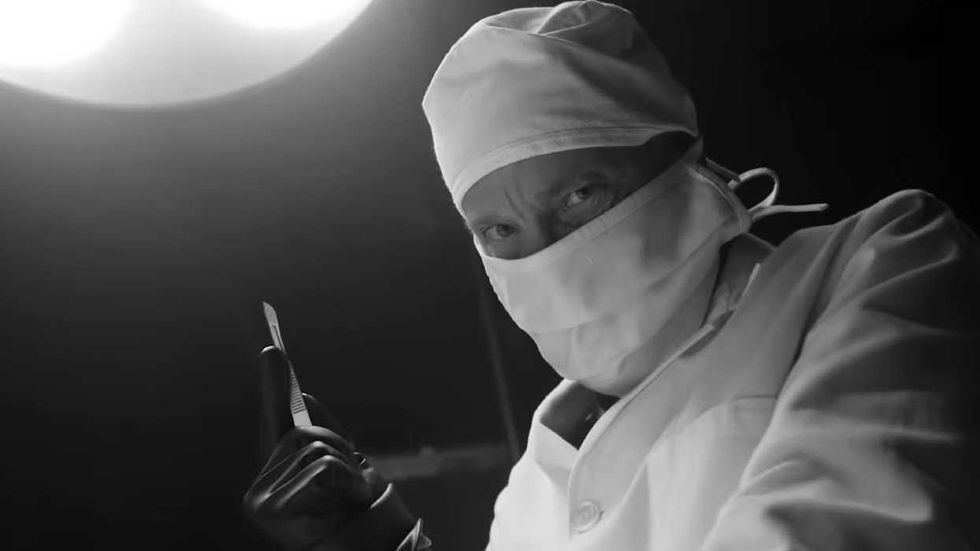 ‘Spider-Noir’ (2026)Credit: Sony Pictures Television
This approach has resulted in the show featuring a series of strong cinematic choices when it comes to contrast and lighting, which make it stand out among many modern streaming series just as much as it does by being in black-and-white in the first place. This allows it to evoke the original film noir movies as faithfully as possible, making the juxtaposition of the classic film genre and Spider-Noir’s modern superhero story even more striking.
Which Version of Spider-Noir is Better?
Ultimately, there is a multitude of ways for a discerning viewer to experience the show. This includes watching it first in color and then in black-and-white, vice versa, only picking one to watch and ignoring the other, or even switching formats with every episode. Really, any approach to the Nicolas Cage series seems rewarding in one way or another.
In a way, the superhero series is just as innovative and experimental as Netflix’s Kaleidoscope, a 2023 heist thriller miniseries that was designed for viewers to be able to watch its episodes in any order. However, if just one version of the series must be chosen, the answer is very clear.
While the color version looks appealing and is a throwback in its own right, preventing there from being a version that is truly “better,” in order for the film noir elements to truly sink in, you still might want to watch Spider-Noir in black-and-white. While it’s not like noir has never been shot in color, the most iconic examples of the genre (including Stranger on the Third Floor, Double Indemnity, The Postman Always Rings Twice, and The Maltese Falcon) were all in black-and-white.
The fact that black-and-white is the right way to approach the series is even reflected by the names of the two formats. While the color version has the lively title “True Hue Full Color,” the other version is called “Authentic Black & White,” underscoring the fact that the latter is really the “correct” version of Spider-Noir. However, it is ultimately up to the viewers to decide which format is best. Which way do you plan on watching it, and why?
- What The Best Film Noir Movies Can Teach Every Filmmaker | No Film School ›
- 9 Best Modern Black & White Movies ›
- Here's Some of the Best Black & White Cinematography in Film History ›
- How Do Modern Movies Use Black & White? ›
- 4 Lighting Tips for Shooting Beautiful Black and White ›
- Constructing the Emmy-Nominated Title Sequences of 'Spider-Noir and Smoke' | No Film School ›