The Story Behind ‘Godzilla’: It Was Never Meant To Be A “Fun” Monster Movie
Ishirō Honda’s film was an allegory shaped by Japan’s nuclear trauma.
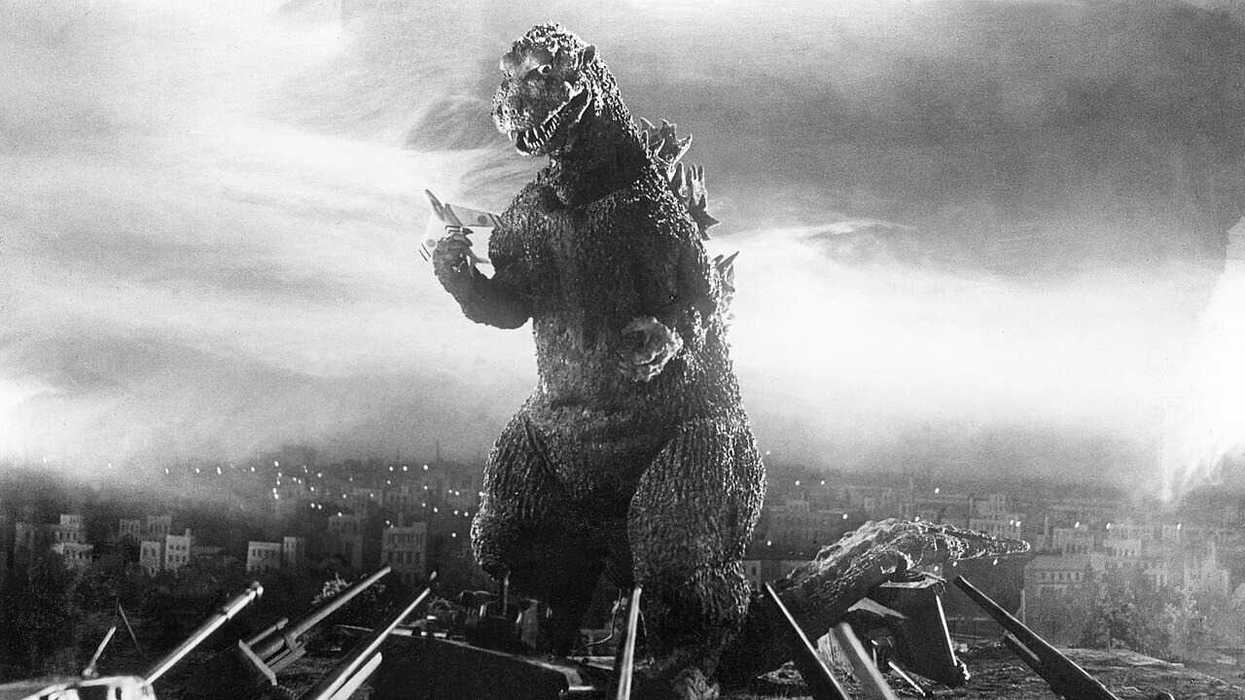
'Godzilla' (1954)
When we think of Godzilla today, we are likely to think about epic, larger-than-life battles and a blockbuster spectacle of incredible scale. The original 1954 film, however, directed by Ishirō Honda, was never intended to be a “fun” monster movie. Released less than a decade after the atomic bombings of Hiroshima and Nagasaki, the film was a somber response to nuclear trauma.
While even modern adaptations have dark themes, the essence of their ideas lies more in the concept of entertainment than in being an allegory for real, terrifying “human darkness.” Today, monster movies have cemented themselves as a solid, undeniable sub-genre, but we cannot undermine the level of influence Honda’s 1954 film had on most, if not all, of them.
Honda’s original Godzilla movie had a ruthless honesty and authenticity that made it endure decades after its initial release.
Let’s jump right in and explore the real intentions behind the 1954 film and what it can teach us about how “time” has the power to rewrite a story.
Godzilla As A Metaphor For Nuclear Destruction
In the 1954 “monster movie” Godzilla, the titular creature was an allegory for nuclear weapons and their devastating effects on living beings and the environment. Ishirō Honda’s film made this clear from the very beginning.
The movie’s “fishing vessel” destruction scene is believed to be a metaphor for the real-life Lucky Dragon 5 incident in which Japanese fishermen were exposed to a U.S. hydrogen bomb test at Bikini Atoll. Godzilla itself is described as a prehistoric creature awakened by the testing of a hydrogen bomb.
As a creature, Godzilla is masterfully written to embody the disastrous aftermath of nuclear war. The genius of the film’s writing is perhaps in this allegory itself. Nuclear destruction, just like the devastation caused by Godzilla, is rampant, chaotic, and unpredictable. It seems impossible to tame or compete with. It takes the world and its people by immediate surprise.
When we get into the imagery of Honda’s film, this allegory is reinforced even further. Tokyo is reduced to ashes, hospitals are filled with radiation victims, and relentless destruction is spread all over, with no clear sense of how it could be limited or stopped altogether.
While adaptations today continue to portray similar themes, they are incorporated in a “this comes with the territory” manner as opposed to being rooted in a horrifying chapter from human history.
How A Nuclear Allegory Became A Monster Franchise
The profound nuclear allegory of the 1954 original film quickly evolved into a sprawling franchise. Perhaps this began with Toho Studios capitalizing on what became a commercial success, but what moviemakers of the future saw was the potential for an entertaining spectacle of a project that could be rebooted multiple times.
While Ishirō Honda’s 1954 epic served as a warning about nuclear peril, the movie’s widespread appeal fueled its transformation into a monster movie franchise. Over time, the name Godzilla became synonymous with a fun monster film that was likely to deliver a strong theatrical experience.
This is normal in the movie business, of course, but what I find interesting and a little bit off-putting is how the film’s powerful allegories did not evolve as the franchise grew and attracted global audiences. In many ways, the franchise became such a powerhouse entertainer that perhaps filmmakers did not deem it necessary to layer it with deeper meanings.
We must also consider the context of the times. When the 1954 film was being filmed, the nuclear disaster of Hiroshima and Nagasaki was so recent that it strongly influenced the production of this film and many others of the era that addressed haunting nuclear war themes.
What filmmakers took from Godzilla in their future franchises was the monster and the spectacle. Modern films became centered around epic battles, light humor, and all-out entertainment, mostly diluting the original’s gravity and meaning.
How Time Rewrites The Essence Of A Story
This is the most interesting aspect of the Godzilla franchise, at least in my opinion. I think it’s quite fascinating that the core meaning of an original movie evolved through countless reboots to a point where it wasn’t even associated with the newer films.
When we really think about it, it is “time” that has rewritten the essence of Godzilla.
It is not to say that modern Godzilla films did not address political issues at all. Shin Godzilla (2016), for example, addressed climate change and the possibility of environmental destruction. On the other hand, films like King Kong vs. Godzilla (1962) leaned into the spectacle and the box-office appeal.
Over time, the anti-nuclear metaphor softened, and the franchise became lighter and more entertainment-focused. However, it's important to remind ourselves that the original movie wasn’t intended as a mass entertainment device but as a real warning against nuclear destruction that served as a direct threat to humanity and nature.
Summing It Up
The original 1954 Godzilla wasn’t a playful monster movie but a somber film shaped by war, radiation anxiety, and moral reckoning. Its deeper meanings focus on real-world trauma and fear that feel inescapable and unparalleled. This is not to say that modern Godzilla films must also find real-world allegories to shape their stories. Every film is born out of a different impulse and a different intention, and that’s what makes movies beautiful.
Which is your favorite Godzilla movie of all time, and why? Tell us in the comments below.- The 11 Smartest Satire Films Ever Made | No Film School ›
- The 10 Most Politically Explosive Docs of the Year | No Film School ›
- 15 Political Thrillers That Stand the Test of Time | No Film School ›
- The Biggest Differences Between ‘Godzilla Minus One’ and Hollywood's MonsterVerse | No Film School ›
- You Can Sell Kaiju Scale Without a Blockbuster Budget | No Film School ›