Avery Dohrmann is a filmmaker who wrote for us back in 2023 about making his debut feature, Our Final Days in Paradise, at 20. He's back with a video essay on visual literacy, and it's a useful and inspirational watch. A lot of us probably saw The Odyssey over the weekend, so if you'd like to be able to talk about it on the visual side, this can be a great refresher for you.
The tl;dr of it all is that he hasn't cracked the code, but the truth is that nobody has. His central idea is that literacy comes in two phases, and most of us get stuck in the first one. Understanding that split might help you be thoughtful about your own shot choices, so let's walk through it.
- YouTubewww.youtube.com
The How and the Why
The first phase Dohrmann describes is the "how." You look at a film and understand how the composition holds together and how the light is shaped. Basically, you know how the cake was made because you know the ingredients. This camera, this particular cut, this sound effect.
The second phase is the "why," and this is the one he says no director may ever fully solve. Why this lens at this focus? Why create depth this specific way, right here? Why that bit of foley, instead of another? You can answer every one of those questions, he argues, and still be wrong.
Dohrmann's claim is that your choices will never be perfect. They might be right, they might be wrong, but they'll never be flat-out correct, and literacy is the pursuit of getting closer anyway. You also just can't understand or justify every single frame of your work. You don't have the time, and when you're making a film, there are always compromises.
He reaches for Akira Kurosawa to make the point. Kurosawa wrote in his autobiography that he always wanted to die at work, collapsing on a film set (per Donald Richie's The Films of Akira Kurosawa, via Hektoen International). He never got the chance. A stroke took him while he was bedridden, mid-prep on his next film.
The pursuit was supposed to never finish. For Dohrmann, that's the point of the whole thing.
Composition Is the Cake
Dohrmann says the frame is the first ingredient, and everything else (lighting, color, blocking, all of it) is additive. It's the frosting.
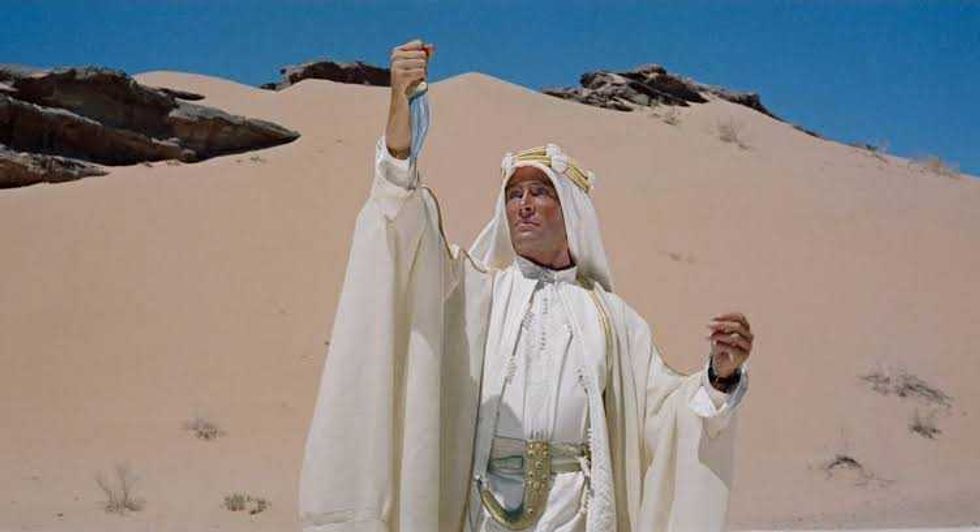
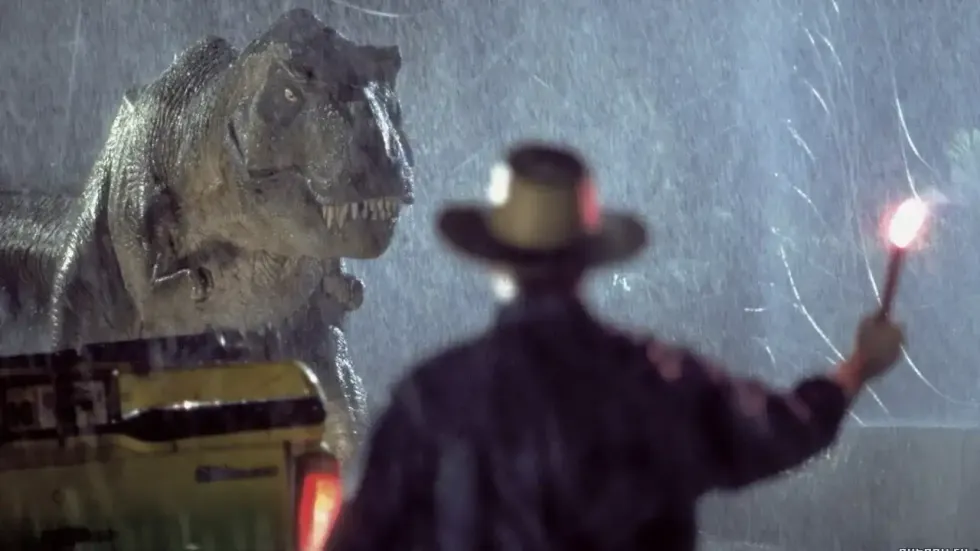
A frame is either a composition or a subject shot. A composition, in his definition, has three distinct layers of depth: foreground, midground, background. A subject shot forgoes all that to isolate one thing, like a close-up or a medium close-up. (Learn more about close-ups here.)
He sticks with food to make another point. Compositions are the meal. Subject shots are hot sauce. You can't build a meal out of hot sauce alone, but a meal is probably pretty bland without it. (If you don't like hot sauce, think of it as salt or seasoning.)
The takeaway for your own work is that if you're leaning entirely on tight singles, you've got no plate to put the spice on. This in particular is something my creative partner are being intentional about in our own work, as the last thing we made was shot pretty tight almost the whole time.
 'Lawrence of Arabia' Credit: Columbia Pictures
Lighting Should Support the Frame
This is Dohrmann's hardest claim, and one a working DP might argue with—let us know what you think. He says lighting is a function of composition, never the reverse. Composition is what makes an image cinematic, not light. Shoot a man flat in a corner, he says, and it won't matter how you light it, because there's no depth or composition.
His line is that composition can exist cinematically without light, but light can't exist cinematically without composition.
I'd push back a little. Plenty of cinematographers build depth with light. (A rim to pull a subject off a dark background is exactly that.) But Dohrmann's underlying warning is a good one. If you're relying on light to manufacture depth your frame doesn't have, you've stopped lighting for story and started lighting to compensate.
Fill or the absence of fill in your foreground and background to shape depth, a key defining your midground subject, a backlight to carve that subject out. If you need a primer, our breakdown of backlighting covers where it sits in a three-point setup.
Camera Movement Is Math
A camera move, Dohrmann says, is just going from Frame A to Frame B. You apply every rule you just learned about the frame to the shot you start on, the shot you end on, and whatever you pass through in between. Frame A plus Frame B equals a complete shot. The move itself is arithmetic, and the story decides the numbers.
Variables include speed and type of movement. A slow dolly and a fast dolly are obviously tonally different, with variants of their own (slow to fast, fast to slow). He points to Paul Thomas Anderson, who rarely runs the same kind of movement in back-to-back scenes, giving each its own signature.
Our guide to camera movement is a good place to build your vocabulary, and our look at PTA's cinematic style shows the approach in practice. Dohrmann also name-checks Rudolf Laban's movement theory, which is a rabbit hole worth falling into even if you aren't a performer.
 'Jurassic Park' Credit: Universal Pictures
Storyboard Everything, Badly
Dohrmann has no patience for reference boards or vibe sheets. What he means by storyboarding is a pencil, a notebook, and every single frame drawn by hand. Two stick figures in a hallway is a fine place to start. The point isn't the quality of the art; it's that the image is alive somewhere before you try to shoot it.
Show up, frame it how you drew it, shoot, move on. If you've avoided this because you can't draw, our storyboarding tips make the case that stick figures do the job.
The Pieces Form a Whole
Dohrmann says your framing and lens choices should trace their emotional path all on their own. If every shot looks the same and relies on the same coverage, all you have are interchangeable pieces that don't add up to anything. Each scene should carry its own visual language, distinct from the one before and the one after, and those languages stack into the film's whole.
Which brings him back to his thesis. Visual literacy isn't about making cool shots. It's about telling a story.