When you ask the greatest living filmmakers who the greatest filmmaker of all time is, a lot of them include Stanley Kubrick in their top contenders. Not only are his films deeply important historically, but their indescribably rich artistic merit is impossible to ignore or replicate.
Let’s talk about why some of the greatest filmmakers of all time cite Kubrick as the best to ever do it.
His Versatility Across Genre
For having a relatively consistent filmmaking style and emotional through lines for his films, Kubrick is arguably the ultimate master in genre versatility. When examining his filmography, the genre that he tends to include the most throughout his body of work is war, but even then, they are so distinct from one another. Paths of Glory, Dr. Strangelove, and Full Metal Jacket all deal with war and its consequences in some capacity, but their thematics and tone feel staunchly different from one another, while maintaining Kubrick’s significant presence.
Furthermore, despite having a relatively small filmography compared to the other greats, he still has a masterpiece in nearly every genre. Science fiction with 2001: A Space Odyssey, dystopian drama with A Clockwork Orange, period piece with Barry Lyndon, horror with The Shining, action with Full Metal Jacket, and cerebral thriller with Eyes Wide Shut. Where many of our favorite filmmakers tend to have a niche that they stick to in terms of genre and theme, Kubrick seemed to do it all flawlessly.
His Ability to Frame Life Differently
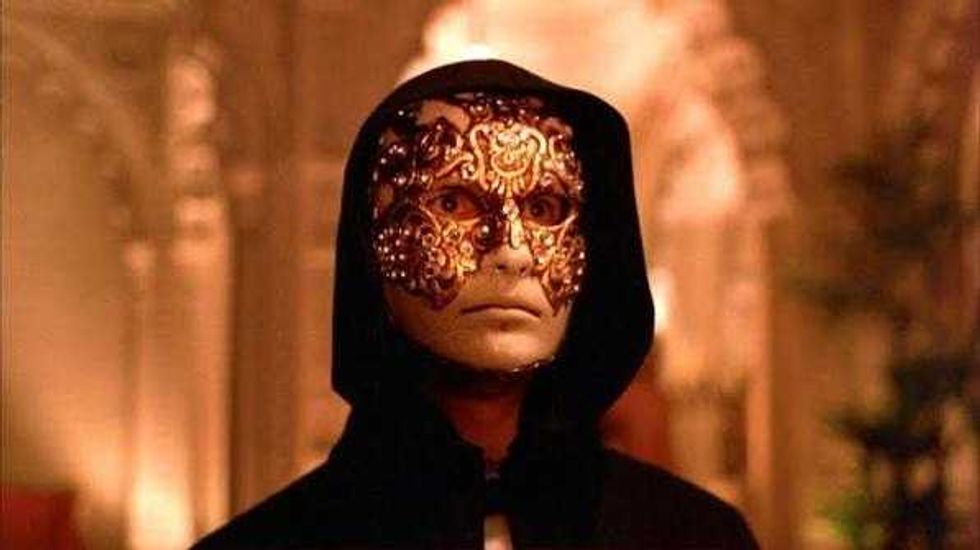 ‘Eyes Wide Shut’Credit: Warner Bros. Pictures
It’s difficult to forget your first time watching any Kubrick movie in any environment. Whether it be in the theater, at home, or with a group of friends in some other setting, his films are impossible to shake. Sometimes even when you aren’t necessarily a fan of them on your first viewing.
I can remember being so frustrated with myself after my first couple of viewings of 2001 because, not only did I feel like I was missing out on some phenomenal secret club of people who love that movie that I just can’t bring myself to enjoy, but I also could not stop watching it. Not because I was trying to force myself to enjoy it, but because I truly was utterly fascinated by it. It’s a feeling that no other film has ever given me, and to this day, it remains one of my favorite films of all time. A cliché thing to say, but it’s true.
Moreover, his films are often dark. Really dark. His films aren’t known for their happy endings that tie character arcs up into tight Christmas bows. They are often bleak, thought-provoking, and morally ambiguous. And yet, somehow, you feel totally invigorated by them every time, even when you feel like your heart has dropped into your stomach. You learn so much, not only from a filmmaking perspective, but about life, history, and how humans behave. Kubrick was known in private to be of genius-level mathematical intelligence, and while he was often cited as a challenge to work with, his intellect speaks for itself on the screen.
His Ability to Challenge His Fellow Artists
Steven Spielberg has been very vocal over the years about the impact that Kubrick had on his life and career. The pair famously were creatively collaborating before Kubrick’s untimely death on what would ultimately become Spielberg’s film, A.I.: Artificial Intelligence.
Spielberg famously didn’t care for The Shining on his first watch, as he felt Jack Nicholson’s performance was too over the top. However, after sitting down with Kubrick and listening to his process and justification for Nicholson’s insanity, he was able to examine the film from a different perspective and grow to revere it like so many others have since.
Furthermore, on a creative level, Spielberg has shared how much Kubrick would challenge him in private to be the absolute best version of a storyteller that he could hope to be. If Kubrick didn’t like an idea, he’d say it. If he felt something could have been shot better, he would say it. The trust that he was able to build up from his fellow artists was grand, not only because of his own body of work, but because his fellow artists trusted that he had their best interests at heart at all times.
His Breaking of Structural Rules
To illustrate this point sufficiently, let’s examine Full Metal Jacket. That film sets itself up in its first half as a relatively lower-scale drama about the torture of military training at the basic level in Vietnam. Famously, halfway through, the film aggressively pivots with Vincent D’Onofrio’s chilling performance as a man finally pushed to the brink of violence. From there, the film is an unflinching portrait of boots-on-the-ground warfare during one of the darkest times in American military history.
This drastic switch in story structure not only allowed Kubrick to maximize his thematic explorations through that film, but it proved that breaking storytelling rules cemented in specific genres is not only okay to do; it sometimes puts your work into the hall of fame.