'The Lord of the Rings' Moment That Made Audiences Cry — and Why It Works
This article breaks down the moment when Aragorn honors the hobbits and explains why it remains one of cinema’s most emotionally resonant moments.
The Lord of the Rings: The Return of the King (2003)
The coronation scene, the denouement of not only The Lord of the Rings: The Return of the King (2003) but of the entire trilogy, feels earned and satisfying after the epic and truly arduous journey of everyone involved. It’s as much a breath of fresh air as it is a moment of triumph.
But the truly standout moment in this scene is not the actual coronation of the king, the fanfare, or even the return of the peace.
Instead, it’s a simple bow.
This moment has the power to shift the entire energy of the scene. It feels like a gigantic emotional payoff when a well-deserved respect and recognition are given to those who, despite being the weakest and the smallest, changed the world for the better. It’s also a feel-good moment because someone with power is conscientious and humble enough to acknowledge the mighty heart beating inside a small chest.
Let’s dive deeper and explore the true weight of the line, “My friends, you bow to no one.”
The Road to the Coronation Scene
The Journey of the Fellowship to Its Final Stage
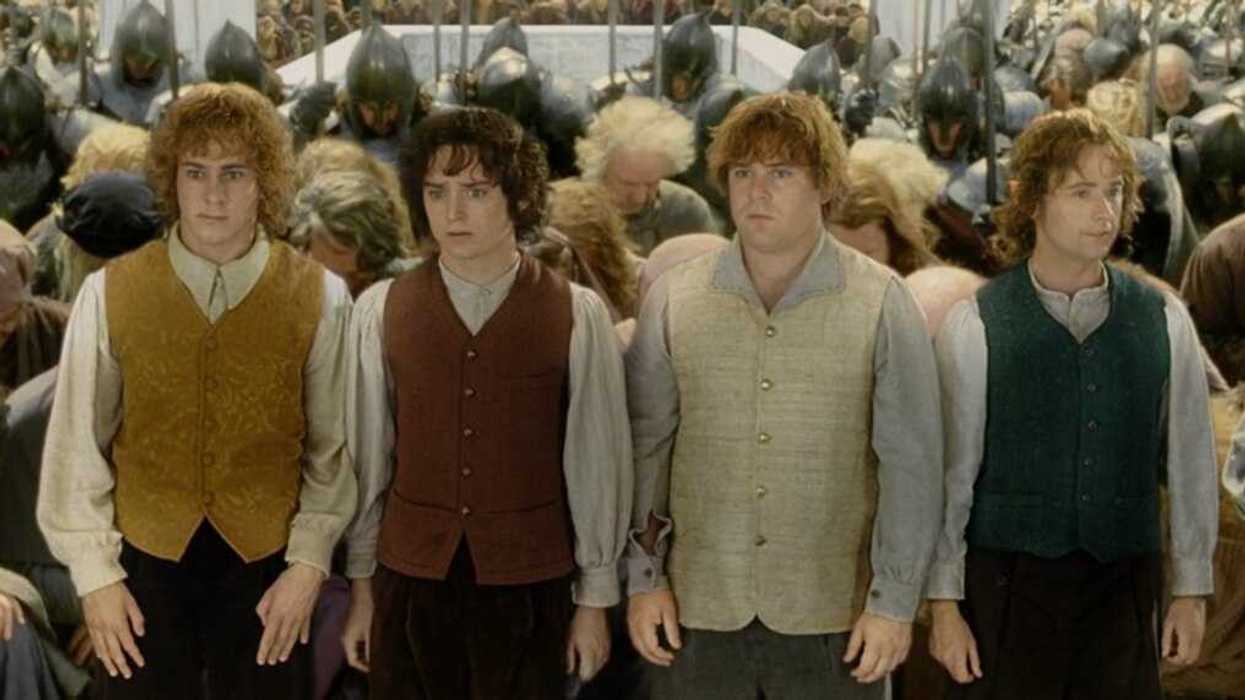
Sauron is defeated, the soul-crushing journey and the war are over, the city is rebuilt, and Middle-earth is beginning to heal. On Minas Tirith, Aragorn (Viggo Mortensen) is crowned as the king. The crowd rejoices in the happy moment, and so do the little hobbits—Frodo (Elijah Wood), Samwise (Sean Astin), Merry (Dominic Monaghan), and Pippin (Billy Boyd)—as they wait for their turn to greet the new king.
Why This Moment Needs the Hobbits
The crowning would be incomplete without the hobbits' presence because, not only were they the key members of the Fellowship, but their contribution, much inordinate to their small stature, drove the story’s ultimate victory. Everything they encountered and fought on their epic journey to Mount Doom, their every decision, every mistake, every moment of weakness, their endurance, and unconditional loyalty to the cause made Sauron’s defeat possible. Everyone else’s struggle would be pointless if the hobbits had not succeeded. The glorious triumph of the kings and armies that fought in the great war was balanced on the persistence of these four tiny figures.
Not only did this moment need the hobbits, but the hobbits were the heart and soul of this moment. The scene is pivotal in the narrative arc because it shifts focus from the traditional glory to the quieter bravery that saved Middle-earth.
The Line: “My Friends, You Bow to No One”
Context, Purpose, and How the Line Reframes Power
Aragorn approaches the hobbits, who are unobtrusively merged with the crowd. When they instinctively bow to their newly crowned king, Aragorn, with genuine conscience, he stops them and tells them that they need not bow to anyone.
The moment reframes power in the sense that a king who leads through humility. It rejects formal hierarchy in favor of fair recognition and mutual respect. This is an upward shift of honor, not downward. The line also brings out Aragorn’s understanding that actions matter more than titles.
The Emotional Weight of the Gesture and What It Says About Aragorn
Aragorn tells the hobbits that their actions have put them above everyone else, and they should not bow, but should be bowed to. He leads by example and bows to the hobbits. Seeing the king bow, the rest of the gathering bows in unison.
The small hobbits, much like the weakest section of our society, represent those who are deemed trivial in the much larger sense of the world. When they are put on a pedestal, it marks a significant shift in their sense of identity. It’s a formal recognition of their worth and their importance to society. The hobbits, before embarking on the perilous journey, spent their life frolicking, merrymaking, and having shenanigans. So, this journey was as much about their self-discovery as it was about fighting the evil. This is a definitive coming-of-age moment for them. And that’s why it carries so much emotional weight.
And, as for Aragorn, this moment marks his character growth, too. Throughout the story, as a member of the Fellowship, he proved himself as a more-than-capable leader, ranger, warrior, and friend. His coronation as the king is the perfect tribute to his contribution.
The scene serves as a true test of his kinghood, and the moment he recognizes the hobbits as the rightful heroes of the war and unhesitatingly bows to them, he passes the test. Like an ideal king, he shows that true leadership is not about claiming the glory but recognizing the strength in others. The moment blends respect, gratitude, and acknowledgment into a single kingly action.
Conclusion
The coronation scene feels powerful because of its mix of grandeur and humility. The moment that stands tall in this scene is when Aragorn, despite becoming the king, doesn’t elevate himself but elevates those who made it possible.
This moment truly marks the end of evil. Sauron, who signified pride, ego, and absolute dominance, is now defeated. The king, who takes control, has begun to acknowledge the smallest elements of the world that can bring about change.
“You bow to no one” is not only the trilogy’s clearest statement about courage and recognition, but also a simple, yet unforgettable, way of saying that real honor belongs to those who carry the heaviest burdens. And in that sense, we can perceive it as an empowering statement for each one of us who makes any small or big contribution towards making this world a better place.
- How to Pull off the Forced Perspective Effect Used in 'The Lord of the ... ›
- You Have To Listen to Tolkien's Advice on Worldbuilding | No Film ... ›
- 8 Great Filmmaking Lessons from 'The Lord of the Rings: The ... ›
- Why You Should Watch 'The Lord of the Rings' This Holiday Season ... ›
- Peter Jackson Left This Iconic Villain Out Of His 'Hobbit' Movies | No ... ›
- What Gandalf Teaches Us About Choice In ‘The Lord Of The Rings’ ›
- Gandalf’s Famous Head Bump in ‘The Lord Of The Rings’: Was It Accidental Or Intentional? ›
- The Deeper Meaning Behind Samwise Gamgee's Most Inspiring Line In ‘The Lord Of The Rings’ ›
- The Best ‘The Lord of the Rings’ Theories and Hidden Details Explained ›
- The Line from 'LOTR' That Changed How We Think About Grief ›
- Pain and guilt can't be taken away with a wave of a magic wand. ›