I remember the first time I read The Return of the King and how emotionally devastating but narratively perfect it was. And when I saw the end of the Oscar-winning film adaptation a few years later, I knew the gut-punch was coming, but still sobbed anyway. To this day, I hear the opening strains of that Howard Shore score, and I'm ready to slip immediately into depression.
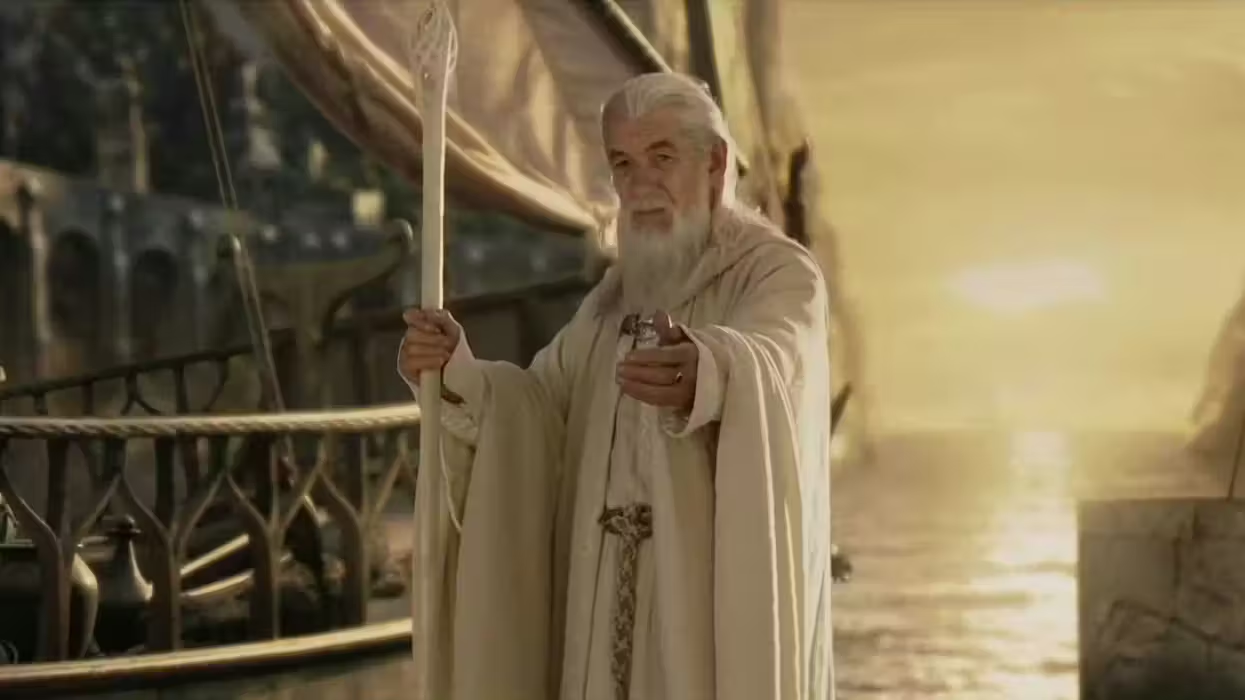
There's a line in the scene that is so tender and beautiful that it just makes things worse. Gandalf tells the Hobbits, "I will not say, 'do not weep,' for not all tears are an evil."
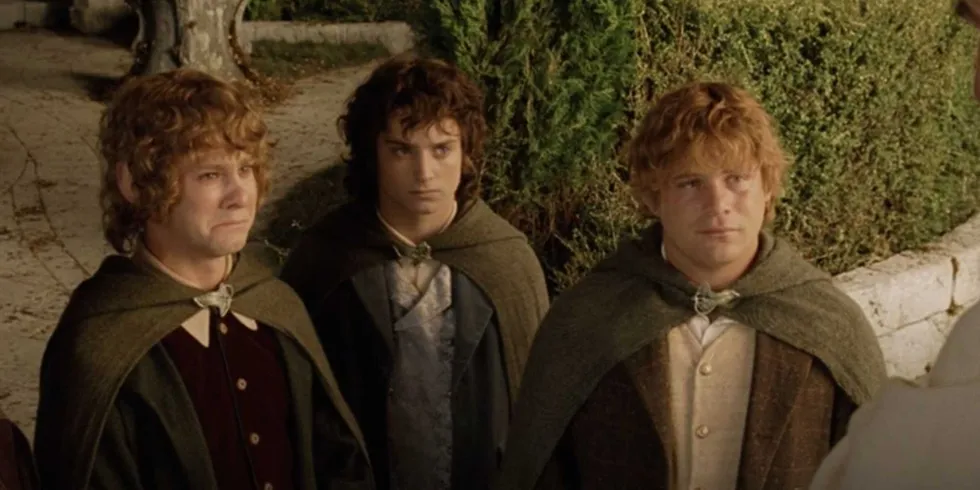
He's speaking to Sam, Merry, Pippin, and Frodo as he boards the ship to leave Middle-earth forever.
Understanding the source material helps us see why this ending works so well, and why so many screenwriters get grief wrong.
- YouTube www.youtube.com
The Scene
At the end of The Return of the King, the dark lord Sauron has been defeated, and the Hobbits have returned to the Shire. But with the end of the age comes change, including the departure of the last Elves of Middle-earth. Bilbo Baggins, aging now without the Ring, decides to go with them, so the Hobbits accompany him to the Grey Havens so they can sail to the Undying Lands across the sea.
Elrond, Galadriel, and Gandalf bid the Hobbits farewell on the dock.
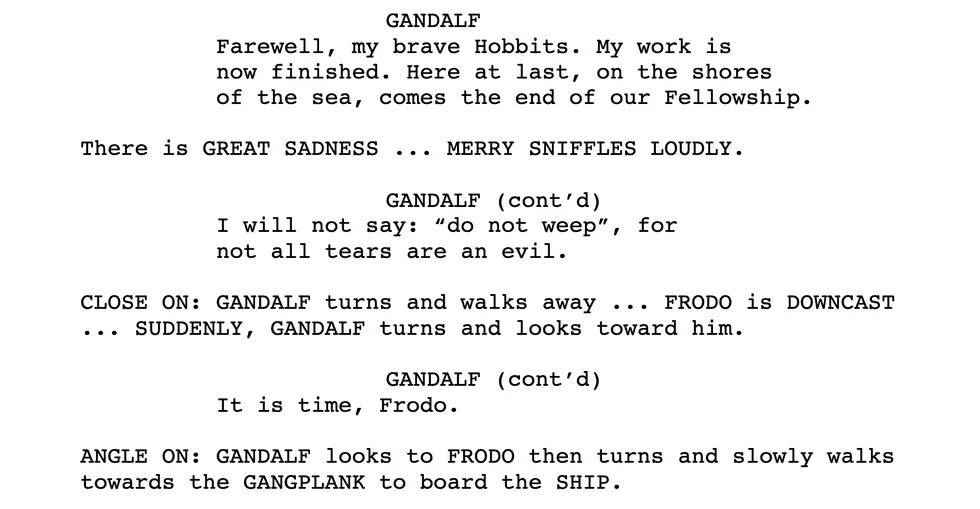
Gandalf says, "Farewell, my brave Hobbits. My work is now finished."
The hobbits begin to cry at the loss of their friends.
"Here at last, on the shores of the sea, comes the end of our Fellowship," Gandalf continues. "I will not say, do not weep, for not all tears are an evil."
He makes to depart, but then turns back and invites Frodo to join them on the ship.
The scene is one of the most emotional goodbyes in film history.
What Tolkien Carried
The author of the source material, J.R.R. Tolkien, was a soldier in World War I. He fought at the Battle of the Somme in 1916, one of the deadliest battles in military history. The Somme claimed nearly 60,000 British casualties on the first day (July 1), including his close friends G.B. Smith and Rob Gilson.
His battalion was mostly wiped out in the weeks after he came off the lines. He survived when most didn't, a wound called survivor's guilt. He returned home with shell shock, what we now call PTSD, and it never fully resolved.
He wrote in his Foreword to the Second Edition of The Lord of the Rings, “To be caught in youth by 1914 was no less hideous an experience than in 1939 ... by 1918 all but one of my close friends were dead."
The Dead Marshes and the Desolation of Mordor were based on the scarred landscapes of Flanders. Tolkien wrote the bombed-out wasteland of trench warfare into his fantasy world and attempted to process what he lived through in his fiction.
This reality worked its way into the ending he wrote for Frodo, too.
 The Lord of the Rings: The Return of the King Credit: New Line Cinema
Frodo Baggins' Real Ending
Upon returning to the Shire, Frodo exhibits the classic symptoms of PTSD. He’s tired and aimless, and he withdraws emotionally. He’s unhappy.
He can't engage in ordinary life. He can’t be carefree the way he was before.
Frodo suffers "anniversary illnesses" that flare up on the dates of his worst wounds, including the day he was stabbed at Weathertop, and the day Shelob bit him. This mirrors how Tolkien held July 1 as sacred.
Frodo can't be at home anymore because Tolkien understood that you don’t go home after war. The place is the same. But you're not. And no amount of time or friendship can fix that fundamental change.
Historian Michael Livingston notes that Tolkien depicted PTSD "in a nuanced and sympathetic way" at a time when shell shock was misunderstood and widely stigmatized.
Soldiers who couldn't quickly "shake it off" and return to normal life were called cowards or “malingerers.” Tolkien refused that lie. He let Frodo's wounds remain open and untreated.
Meanwhile, the other Hobbits move on. Innocent, sweet Sam marries Rosie, has children, sees the Shire restored and thriving. But Frodo can't. Not because he's weak, but because he's damaged in ways the Shire can't fix.
What Gandalf's Line Does
"I will not say, ‘do not weep,’ for not all tears are an evil," Gandalf tells the Hobbits.
The wizard understands that these Hobbits have been through trauma, and an emotional release is the very thing they might need. Especially because, a moment later, Frodo decides to leave them behind too.
Gandalf isn't saying "you'll feel better soon," or "time heals all wounds," or "at least you saved everyone." He's not minimizing grief or trying to reframe it as something positive.
He's saying that tears aren't shameful. Their grief is legitimate. Their love is deep enough to break over losing their friends.
"Not all tears are an evil" is one of the most truthful things a story can say about loss.
In screenwriting, it can be tempting to tie up your storylines in neat little bows. Or give your protagonist a perfect, happy ending.
But what if the character has to leave the story world entirely because they can't function in it?
Many writers see that as a plot hole or a failure of the narrative. But it might be your most realistic and honest ending you can write.
 The Return of the King screenplayCredit: New Line Cinema
How Peter Jackson Understood This
The screenplay by Peter Jackson, Fran Walsh, and Philippa Boyens kept Gandalf's line from the novel and emphasized Frodo's emotional wound as the reason for his departure.
In the book, the scene is fairly brief, and the beat passes quickly. The screenplay breathes and allows that grief to expand.
The cast found it so emotionally devastating that they had to shoot the scene three times due to costume and technical issues, via GameRant. Dominic Monaghan and the other Hobbit actors said afterward they would have chosen that day as one they never wanted to repeat.
Yet that genuine, unmanaged emotional exhaustion is what makes the scene unforgettable. The characters take Gandalf’s advice to hear and cry openly as they embrace Frodo.
What This Means for Your Script
If you're writing about trauma, loss, or survival, understand that the audience might not need resolution. Honesty might be the better option.
Don't rush past the cost of victory to get to the happy ending. Let the character carry their real wounds.
Tolkien wrote an autobiography through fantasy because he had to process his real trauma somehow. He gave Frodo what he couldn't give himself… an escape to somewhere he might find healing.
Some endings have a loss you can't fix. And in certain cases, it’s the most truthful thing a story can say.