What the Final Dinner Scene Means in ‘A History of Violence’
The film’s final scene says more in silence than most movies do in dialogue.
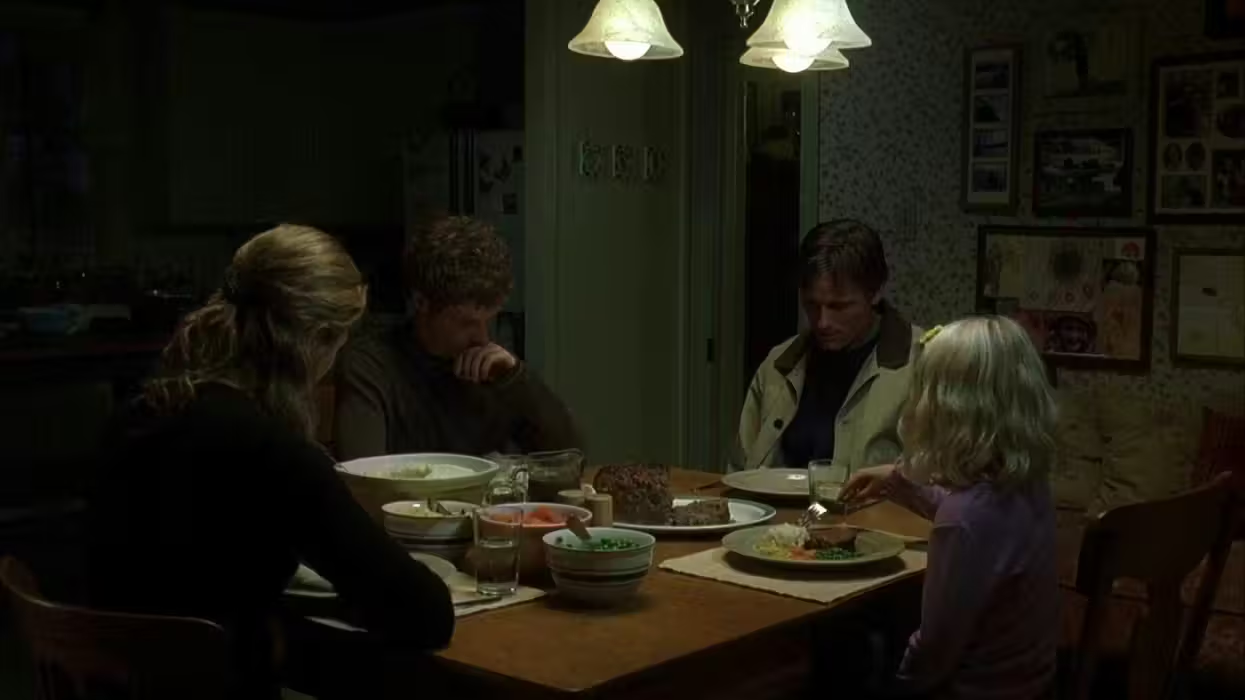
'A History of Violence' (2005)
When a chaotic and dramatic story comes to an end, we expect quieter and more reflective moments. We don’t feel the need for more dialogue. We don’t need more explanation.
David Cronenberg’s A History of Violence (2005) ends with a denouement that follows this path perfectly. Instead of ending the violent story expectedly—with despair and redemption—it ends on a gloomy note, but with a flicker of reconciliation. There are no words spoken; only action and the diegetic sounds of cutlery. And yet, the silence is more deadening than all the gunshots that came before.
The scene is basically a psychological standoff masquerading as dinner. It’s peaceful and quiet on the outside, but you can see the mayhem of confusion, uncertainty, questions, and doubts erupting inside the characters.
And this is what the movie’s central message is about: once you realize who you are, normalcy will never be what it used to be.
The Scene
Tom Stall (Viggo Mortensen), after having won the violent conflict by the skin of his teeth, returns home to a steely silence. He has changed, and with him, everything else. His idyllic small-town life is shattered. The dinner table, where the Stall family once laughed and shared stories, has become a broken relic of their happy past.
When Tom enters, with a bloodied soul and looking like the ghost of his past happy self, a sudden feeling of discomfort blankets everyone. Tom’s wife, Edie (Maria Bello), doesn’t rush to hug him; his kids look on with confusion. No one says anything because they don’t know what to say or how. Cronenberg lets this awkwardness linger, forcing the audience to endure the Stall family’s discomfort.
Sarah (Heidi Hyes), Tom’s daughter and the youngest member of the family, is the first one to overcome this awkwardness. She quietly puts a clean plate in front of Tom, inviting him to join the table. A younger mind is simpler, much less complicated. It’s easier for the young to look past the faults and misery and start afresh. Sarah’s act is the ice-breaker towards Tom’s acceptance. She is followed by Jack (Ashton Holmes), Tom’s teenage son, who is more uncertain, more conflicted than Sarah. He looks at his mom, expecting a cue. He gets none. He still puts a bowl of food in front of his dad—another welcome.
Edie, however, is the most affected and conflicted among the three. She is struggling the most to put behind her the truth that has exploded in the family. This dinner is not quite the “return to peace” for her. Not yet. Not saying anything is as far as she can go.
Silence as the Real Dialogue
Cronenberg definitely deserves the credit for the scene’s impact. He understood perfectly that silence can speak volumes. Instead of impairing the scene’s foreboding quality with dialogue, he loaded it with purposeful, heavy, and almost oppressive silence.
What the Silence Reveals
Each family member is made to speak through body language and expressions. Sarah looks at Tom, trying to figure out if he is the same man she knew as her dad. Jack’s avoiding eye contact is indicative of the fact that he is processing trauma in real time. Edie's change of expression from grim to painful is most nuanced. These gestures and expressions are not cinematic; they are real, and they are delicate.
The Language of Forgiveness
The food on the table, or in the bowl that Jack slides towards Tom, is not just food. It’s the central question that the movie poses: Is Tom forgiven and his past forgotten? Or is he just being processed?
Cronenberg doesn’t try to answer the question. Meaningful forgiveness is never immediate. It needs to sit and brew. So he allows the ambiguity to breathe.
Similarly, the silence that lingers is not just the absence of noise. It’s the pandemonium of people trying to figure out how to continue living together, now that the truth has snatched away their comforter.
Conclusion
The dinner scene concludes the movie, but it’s not a resolution to the story. It’s not a closure for the Stall family. They have only started eating at the same table; they haven’t started healing. The scene implies that the process of living with the unfixable has started. How does it pan out? Your guess is as good as anyone else’s.
The air is thick with everything unsaid. It’s going to be this way for a while. The only thing that pierces through is eyes meeting across the table. It feels genuine because it’s eerie, painfully real, and most importantly, unresolved—just like how it is in real life.
- The Logline for the New David Cronenberg Movie Is Bananas | No ... ›
- Trailer Alert: David Cronenberg Is Bringing Body Horror Back to ... ›
- How Gender-Swapping a Character Helped David Cronenberg ... ›
- Watch: Vintage Carpenter, Landis and Cronenberg Discuss ... ›
- Behind the Scenes of David Cronenberg's 1983 Bizarre Classic ... ›
- David Cronenberg on Directing: 'Get Good Actors and Let Them Be ... ›
- What Are the Most Violent Movie Scenes of All Time? | No Film School ›
- Cronenberg Takes on America: 'A History of Violence' 15 Years ... ›
- 9 Best Movies by David Cronenberg: Ranked ›