“Burnin’ Daylight!”: The Wisdom Behind John Wayne’s Most Famous Line in ‘The Cowboys’
Wil Anderson’s blunt breakfast order captures the tough discipline, frontier urgency, and leadership style that define the cattle drive.
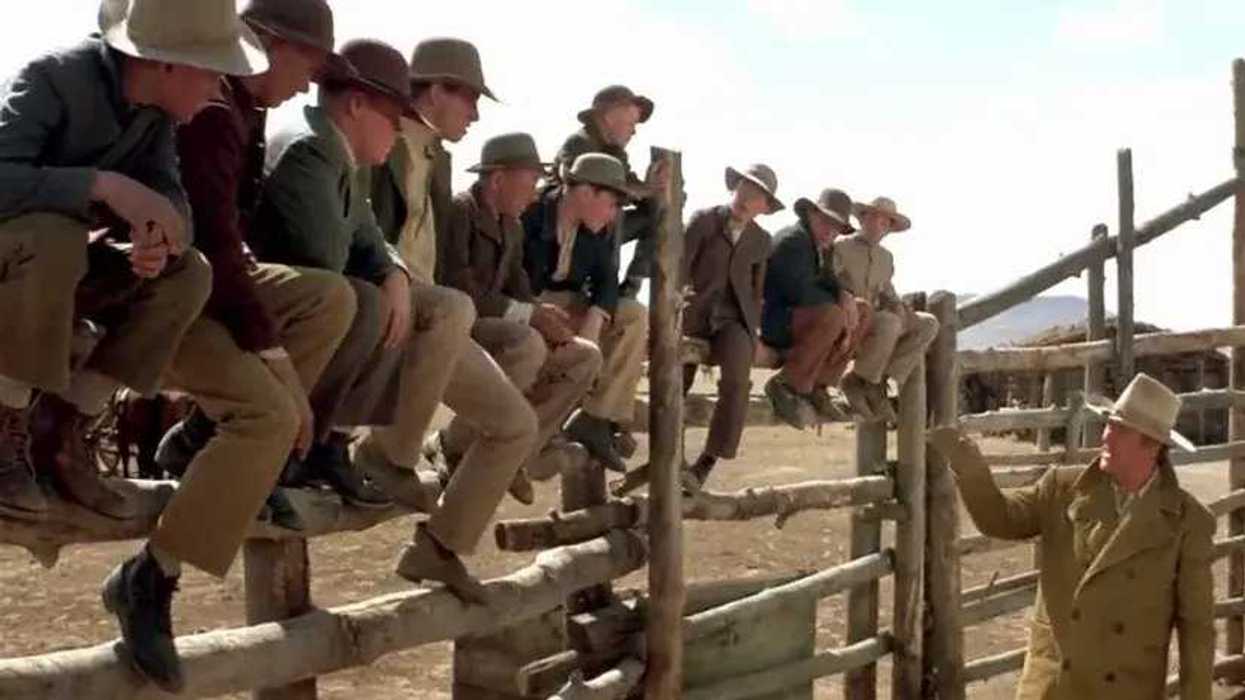
‘The Cowboys’ (1972)
When we think of Westerns, or more specifically, a Western hero, Hollywood has taught us to imagine a person who carries a relaxed reserve with an indomitable vibe. He may be in the midst of violent, trigger-hungry outlaws, but he stands chewing a cigar as if he has all the time in the world to throw menacing glances and savage one-liners. If you are thinking Clint Eastwood, you’re thinking right.
In The Cowboys (1972), we meet a different kind of Western hero. This one ain’t lookin’ daggers, he ain’t carryin’ a hogleg, and he definitely ain’t moseyin’ around. And also, to be fair, instead of eyepatch-wearing bad boys, he is surrounded by schoolboys.
Here, the hero is not a lone ranger; he is a seasoned rancher mentoring a group of schoolboys as drovers for a cattle drive. Efficiency is the only way to survive the trail. When the morning light starts to break on the horizon, the military regimen and “chop-chop” spirit take over, and he decides there is no time for a “soul-nourishing” breakfast.
That’s the kind of cowboy he is. And one particular line captures that spirit beautifully. And it also tells a lot more about him, as well as the Old West life that we truly know so little about.
Background
The year is 1878. An aging rancher, Wil Anderson (John Wayne), has lost all his handymen to the Gold Rush mania. He is looking to hire replacement ranch hands for a 400-mile cattle drive, but almost everyone has left to find gold. His friend suggests that he hire a group of local schoolboys instead. Anderson is reluctant but has no other choice. He hires 11 schoolboys, ranging from 9 to 17 years old.
The rest of the movie, in general, follows the crew’s journey, exploring their interpersonal relationships; Anderson teaching the boys how to rope, brand, and herd livestock; and (since a Western needs a villain) a group of cattle rustlers, led by Asa Watts (Bruce Dern), harassing and antagonizing them.
The scene in context is set at 03:00 in the morning. The crew’s cook, Jebediah Nighlinger (Roscoe Lee Browne), wakes the sleeping boys up. As Nighlinger gears up to make breakfast, Anderson appears, already saddled up on his horse, and asks, “What’s for breakfast?” When Nighlinger replies, “Stewed apples, bacon, and biscuits,” Anderson commands, “Well, forget the apples. Slap some bacon on a biscuit and let’s go. We’re burnin’ daylight.”
One of the kids remarks, “Burning daylight? All I see is stars.”
What the Line Reveals About Anderson
Leadership Through Directness
Anderson may be just an old rancher, but he carries the spirit of a military general. He values efficiency and discipline over comfort. He doesn’t discuss; he commands and expects to be obeyed. In short, he takes his leadership seriously.
You might wonder, “Why?” Clearly, you don’t know about cattle drives. A cattle drive means herding livestock of hundreds of animals to market over a long distance; in this case, 400 miles or 640 kilometres. That’s a massive task and a huge responsibility. Cattle are cattle, not humans; they don’t understand orders. They are loose cannons all the time while they are on the road. Every delay exposes you to an increased risk of losing time and cattle.
Of course, Anderson doesn’t give a lecture about the risks involved. He cuts that lesson down to a simple instruction.
A Lesson for the Boys
Obviously, right now, the boys are “seeing nothing but stars” at 3 o’clock in the morning. But it’s going to change. They are going to learn that Anderson’s strict approach has a purpose. He is preparing them for responsibility. They must cook, ride, herd cattle, handle danger, and be ready to eat biscuits and bacon on the go.
Also, the occasion and the time of this moment tell us that Anderson is the kind of guy whose training never stops. It’s literally at 03:00 a.m., and the first thing he has to say is a lesson in discipline and time management.
“Burnin’ Daylight”
What does it mean?
For Anderson, the daylight—as in, the “working hours”—is already present at 3 o’clock in the morning. And since the boys are still sleeping, instead of being saddled up on their horses, they are burning these valuable working hours away.
Since then, this catchphrase, “Burnin’ daylight,” has become a shorthand for wasting time. It’s basically a 19th-century way of telling someone to stop doomscrolling and start working.
The phrase has the quaint feel of the Victorian period, and yet, it feels relatable today. It’s also the “get up and go” attitude you might expect from a Hollywood cowboy.
Conclusion
Usually, when we like a movie line, it’s because of how dramatic it is or how much swagger or even philosophy it's packing. This one is loved because of its practicality. It also works as a reminder that gigantic goals are achieved through multiple small but disciplined moments.
Life’s trail starts at dawn, not when it feels convenient. So, all you have to do is grab a biscuit and get going.
- 14 Iconic Mexican Standoffs in Cinema ›
- Story of the Rise, Fall & Wild Comeback of the Western Genre ›
- The 8 Best Westerns of the ‘80s: Ranked ›
- 10 Best Westerns of the 1970s: Ranked ›
- The John Wayne Quote From a 1976 Western That Still Resonates Today ›
- The 1969 Western That Won John Wayne His Only Oscar ›
- Best John Wayne Quotes ›
- How an Improvised John Wayne Line in ‘The Searchers’ Changed Rock n' Roll History Forever ›
- The John Wayne Quote From a 1968 War Movie Classic That Redefined the War Genre (In a Bad Way) ›
- John Wayne’s Most Human Quote From the 1965 War Classic 'In Harm's Way', Explained ›