The Reluctant Mentor Trope, Explained: Why Hollywood Uses It Again and Again
This article dives into the storytelling power behind mentors who resist the call.
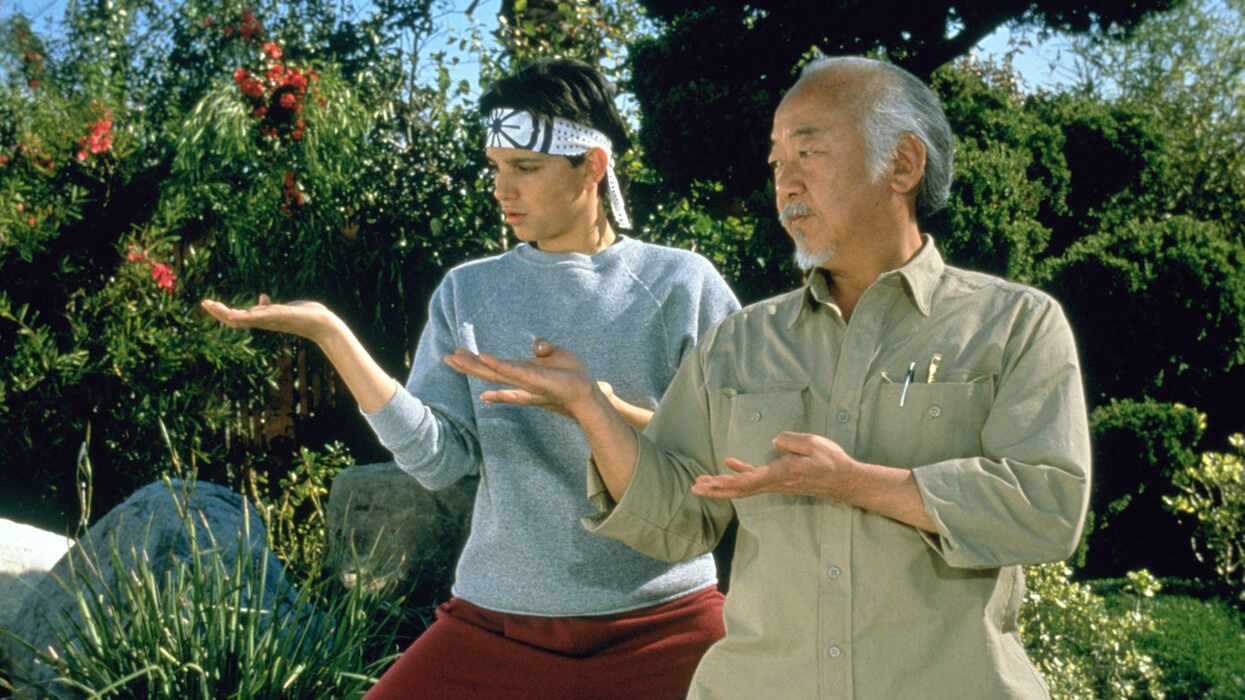
The Karate Kid (1984)
There is a strange satisfaction in watching two star-crossed people working towards a shared goal. And when one of those people is meant to guide the other, the dynamic gets even more interesting. This keeps the “reluctant mentor” character trope fresh through the ages.
The idea behind a mentor who is less than willing to offer mentorship is simple: emotional payoff that emerges from friction. The mentor, aside from the obvious knowledge he holds, is more or less as imperfect as his mentee. Their union is seldom proud or enthusiastic. The foundation on which they come together is usually guilt, duty, accident, or timing. The lack of organic willingness is what creates breathing space for the narrative.
Their imperfections, especially the mentor’s imperfections and flaws, keep the stakes (and resultantly, the audience’s curiosity) high. This dynamic is such that it forces, not only the student, but also the teacher to grow.
And that same dynamic is what keeps writers coming back to this narrative trope, because it’s simple, and effective, it works, it entertains, and it rarely feels old.
The Trope’s Historical Roots
Early Cinema’s First Reluctant Guides
During the early Hollywood period, the character trope of a reluctant mentor wasn’t as evolved and defined as it is today. However, one could interpret the characters of the gruff, world-weary gangsters in noir films, or older, seasoned gunslingers in Westerns, as having similar hallmarks. They often avoided leadership until the situation forced them into it.
Aside from these crime and action films, some dramas were most likely to have a character that would come close to this trope. For example, Atticus Finch (Gregory Peck) in To Kill a Mockingbird (1962), who, in the role of their father, becomes a quiet mentor to his children, Scout (Mary Badham) and Jem (Phillip Alford). He is not a “reluctant” mentor per se, but he avoids putting himself in the spotlight.
In The Searchers (1956), Ethan Edwards (John Wayne), the Civil War veteran, teaches Martin Pauley (Jeffrey Hunter) the harsh realities of frontier life.
Even though these characters are not directly and more prominently involved in their role as a mentor, or go so far as to take the responsibility of shaping their protégées, they come close to being one.
The Shift During the Blockbuster Era
During the ‘70s and ‘80s, action, adventure, and sci-fi movies were on the rise. It felt like a pressing priority to ground this physical drama in emotion to give these films some sort of spiritual weight. This is when the idea of a mentor character emerged and started gaining traction.
In Star Wars (1977), Obi-Wan Kenobi (Alec Guinness) steps into the mentor role after years of isolation. Because of his past failures, he hesitates to take on the role at first, but later comes around and settles into the idea.
Similarly, in Rocky (1976), Michael “Mickey” Goldmill (Burgess Meredith) initially not only avoids training Rocky (Sylvester Stallone) but also dismisses his ambitions. So, when he agrees to train him, their dynamic feels weighted with genuine connection.
What Makes a Mentor Reluctant
The Core Traits
Their reluctance is rooted in their personal failures, bitter worldview, emotional weight of their personal tragedies and regrets, as well as the fear of repeating old mistakes. Since these characters are usually past their prime, they lack confidence in being good enough or being fit enough to coach life lessons to another person. They are settled in their routines, which makes them want to avoid taking on any new responsibilities.
But these are the same traits that keep them real and grounded, something their students (being young and hot-blooded) lack. And ironically, that’s what makes them the perfect mentor.
How Their Resistance Makes Them Interesting
It may look nice, even a bit satisfying, when a character is wise and has a clever answer to every question and doubt. Maybe because the character feels like God. But that’s not really interesting, is it? There is no drama, there is no journey as such.
When a mentor is broken, confused, or unsure—much like the one who needs his help—suddenly there are more dimensions to his character. He has to teach and train, and at the same time must confront his own limitations. It adds more nuance, complexity, and unpredictability to the teacher-student relationship.
This is why writers make their mentor characters reluctant and use their reluctance to build narrative tension.
How Their Reluctance Shapes the Story’s Stakes
Their reluctance delays them from starting their guidance, and even when they do, it’s still unsure and struggling. This slows down the hero’s progress, creating a sense of uncertainty and raising the stakes; in short, it builds tension. The audience wonders if help will ever come. Well, since we are a modern audience and have been dipping into film narratives for quite a while, we know the help will come, but how much damage will it cause before it does?
After the mentor has dealt with his hesitation and decides to finally commit, the decision feels more dynamic and heroic than it would have felt had it come earlier, without much resistance.
How Writers Use the Trope
Contentious Dynamic With the Protagonist
To create the perfect contentious dynamic between the mentor and the mentee, writers stage scenes where they will have enough ground to squabble over values, priorities, opinions, and tone. This friction, which initially looks problematic, eventually proves to be the backbone of their relationship. Why? Because these contentious moments reveal who they both are as a person. Also, this dynamic keeps the plot moving and never lets it settle into a motionless void.
Backstory
Since their backstories, often marked by grief, regret, fear, and failure, are key to their reluctance, writers plant these revealing moments without slowing down the narrative. This is important because the central focus must stay on the protagonist. Small hints, brief conversations, symbolic moments, and rarely flashbacks help the audience understand why the mentor is the way he is.
The Key Scene That Pushes The Mentor to Finally Commit
There must come a moment in the narrative when the protagonist causes a change of heart in the mentor. The moment doesn’t always have to feel cathartic, even less so dramatic in a larger-than-life manner, but it must be meaningful. Something that the hero does that breaks through the mentor’s resistance. This moment usually comes midway through the story, the point where the initial, preliminary struggle is over, and from here on, they both move forward together to face the main conflict.
Well-Known Examples
Mr. Miyagi (The Karate Kid, 1984)
Daniel (Ralph Macchio) meets Mr. Miyagi (Pat Morita) as a quiet, withdrawn neighbour who is unwilling to step out of his personal space. He steps out only when he deems Daniel’s needs truly warrant his attention. His unperturbed and patient character carries both pride and pain. His reluctance plays an important role in his relationship with Daniel because the guidance is never guaranteed, and yet when he offers it, it comes from a place of genuine care.
Master Shifu (Kung Fu Panda, 2008)
In this case, the mentee, Po (Jack Black), is thrust upon the (truly) reluctant mentor, Master Shifu (Dustin Hoffman), to learn Kung Fu. Shifu knows in his gut that Po is an absolutely inept, clumsy, and inefficient “fatso.” He believes Po can never be the Dragon Warrior, let alone beat Tai Lung (Ian McShane), Shifu’s protégée, who, if it wasn’t for his evilness, would have been Shifu’s preferred choice. Ironically, Tai Lung’s descent into villainy is also the reason why Shifu is so bitter, dismissive, and reluctant to accept Po as a student. However, as Po grows, Shifu confronts his own demons and prejudices. This shift transforms his relationship with Po into the story’s emotional high point.
Conclusion
Reluctant mentors are relatable and relevant because they mirror the real-life complexity of stepping into a responsibility that we all feel from time to time. It adds warmth to the story as vehemently as it initially creates tension.
- 8 Most Iconic Mentors to Ever Grace the Screen | No Film School ›
- Why Writers Love A Mentor Character | No Film School ›
- Reinterpreting 'The Karate Kid' with Daniel As the Real Villain | No ... ›
- “Wax On, Wax Off”: The Meaning Behind ‘The Karate Kid’ Quote ›
- 8 Greatest Movie Mentor Quotes Of All Time ›
- Yoda’s "Failure" In The Prequels Is The Most Important Lesson In ‘Star Wars.’ ›
- This Deleted Yoda Line About Obi-Wan’s Lie Would Have Changed The Jedi Order Forever ›
- “When In Doubt, Follow Your Nose.” — The Subtle Genius Of Gandalf’s Understated Line ›
- “There Is No Such Thing As Luck” - Meaning Behind Obi-Wan’s Iconic ‘Star Wars’ Line ›