How a Single Line Captures Bilbo Baggins’ Philosophy in ‘The Lord of the Rings’
A true example of meaning without excess.
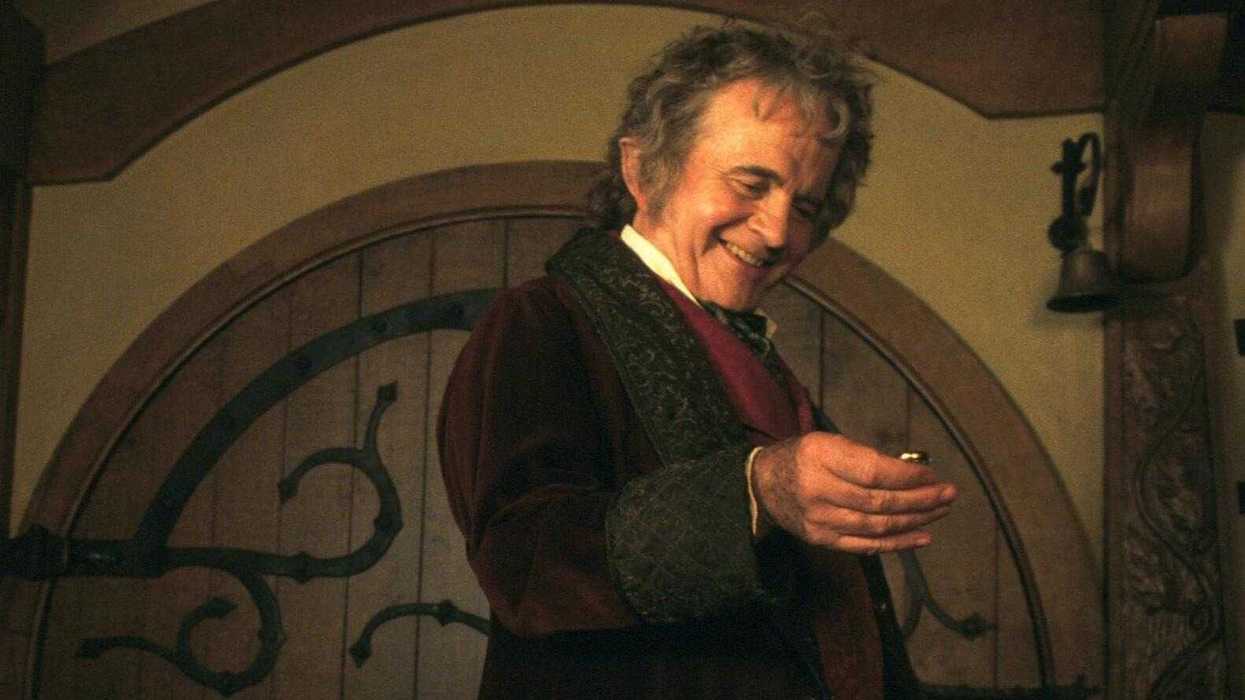
'The Lord of the Rings: The Fellowship of the Ring' (2001)
In Peter Jackson’s The Lord of the Rings: The Fellowship of the Ring (2001), a quiet Bilbo Baggins quote early in the film lands with gentleness and precision. The iconic trilogy does not begin with the brutality of war or with emphasis on the darkness of the world; it opens with warmth and the yearning for peaceful normalcy.
“It is no bad thing to celebrate a peaceful life,” is said with quietness and ease by Ian Holm’s Bilbo Baggins, long before we are drawn into the opening film’s rising stakes and deepening story.
Peter Jackson lets us into a world defined by comfort, routine, and quiet satisfaction with the little things. It is this very simplicity that Bilbo talks about, and we see, while he, quite enjoyably, writes in his book.
What makes this line so crucial in the larger context of the trilogy? What can we learn from it?
Let’s jump right in and explore.
A Life Philosophy Hidden In Plain Sight
If you go back to the first time you watched The Lord of the Rings: The Fellowship of the Ring, you are most likely to have enjoyed its charmingly peaceful opening that centers on the Hobbit lifestyle, Frodo (Elijah Wood), Bilbo Baggins (Ian Holm), and others.
Bilbo’s words capture his grounded, unpretentious worldview, which shapes not just his adventures, but his idea of a great life. He, and he believes he speaks for all Hobbits when he says so, values the everyday joys of life - good food, pipe-weed, gardens, games, and the steady, enjoyable rhythm of normalcy in the Shire.
This unapologetically comfortable idea of life is both ever-present and aspirational, and perfectly sums up Bilbo Baggins’ life philosophy. He does not wish for much to change, does he? He only wishes for life to go on the way it has so far, joyously.
Having tasted danger in the dark alleys of the world, Bilbo chooses contentment over furthering his adventurousness. It’s not about rejecting excitement or thrill; it's about finding those emotions in regular life.
The Lord of the Rings intentionally gives us a quiet idea of what a peaceful, jolly life actually looks like before it takes us into a cinematic universe of light against darkness. If we don’t know what Frodo Baggins left behind, how would we understand the weight of his responsibilities and the simplicity that he could have chosen instead? Through Bilbo Baggins’s early words, we learn everything we have to know about peace, celebration, and a good life in the Shire.
Creating A Contrast With The World Outside
Peter Jackson’s first film in The Lord of the Rings trilogy opens in the sun-dappled Shire, where Hobbits find joy in little things such as growing crops, playing games, and sharing meals. They tend gardens, gossip over fences, and throw extravagant parties with fireworks because for them, celebration of everyday life is, in itself, a way of life.
Bilbo’s reflective voiceover anchors in a life he has lived and a life that he continues to wish for. A few moments later, as we all know, the story steps beyond the Shire’s borders and into the shadows. The movie then becomes about the One Ring’s corrupting influence, Saruman’s betrayal, and a mammoth challenge The Fellowship faces that only comes full circle in the final part of the trilogy.
It is this contrast that the film captures masterfully. Even in the political chaos of The Two Towers or the amplifying darkness of The Return of the King, we are not likely to forget the peaceful normalcy of the Shire. This isn’t just about aesthetics; it is about an intentional differentiation that exemplifies the story’s deeper truths about the power of hope. By starting with peace, the trilogy makes every later moment of danger feel like a loss of something beautiful, and only victory can bring back those emotions again.
Writing Lessons From A Powerful Quote
Here are three important lessons from Bilbo Baggins’ quote, “It is no bad thing to celebrate a peaceful life.”
Big Stories And Small Truths
Few can debate the size of the saga’s exceptional cinematic canvas, but the reason it always feels rooted is because of moments like this. A single understated line reveals not just Bilbo Baggins’ character depth but that of the Hobbits’ lifestyle and yearning for peace. This establishes a clear idea of “light” early on so that the darkness later can carry more weight.
Contrast Is Unmissable
When you watch the entire trilogy, the contrast between the opening of The Fellowship of the Ring and the rest of the saga is absolutely unmissable. As discussed, this is, of course, intentional. When we pair moments of warmth and normalcy with rising conflict, we can perceive, quite literally, the differences between the two.
Lived Philosophy Vs Declared Philosophy
While it isn’t exactly wrong for characters to “declare” their life philosophy, what specifically makes this line work is how we actually see what Bilbo is talking about. The Hobbit’s voiceover is layered with imagery of the Shire and of Hobbits living precisely the kind of life Bilbo Baggins talks about. Not only this, whatever we know about Bilbo in this scene and those that follow tells us one thing, Bilbo’s life perfectly reflects his life philosophy.
Summing It Up
“It is no bad thing to celebrate a peaceful life,” is a gentle reminder that quietly serves as an anchor for The Lord of the Rings trilogy. Through every dark corridor, we are unlikely to forget Bilbo Baggins’ words, his life, and the lives of all the Hobbits in the Shire.
Which is your favorite quote from The Fellowship of the Ring? Tell us in the comments below.