Peter Jackson Erased Gandalf’s Most Important ‘The Lord Of The Rings’ Line
A profound Gandalf moment from the book did not make it into the movie.
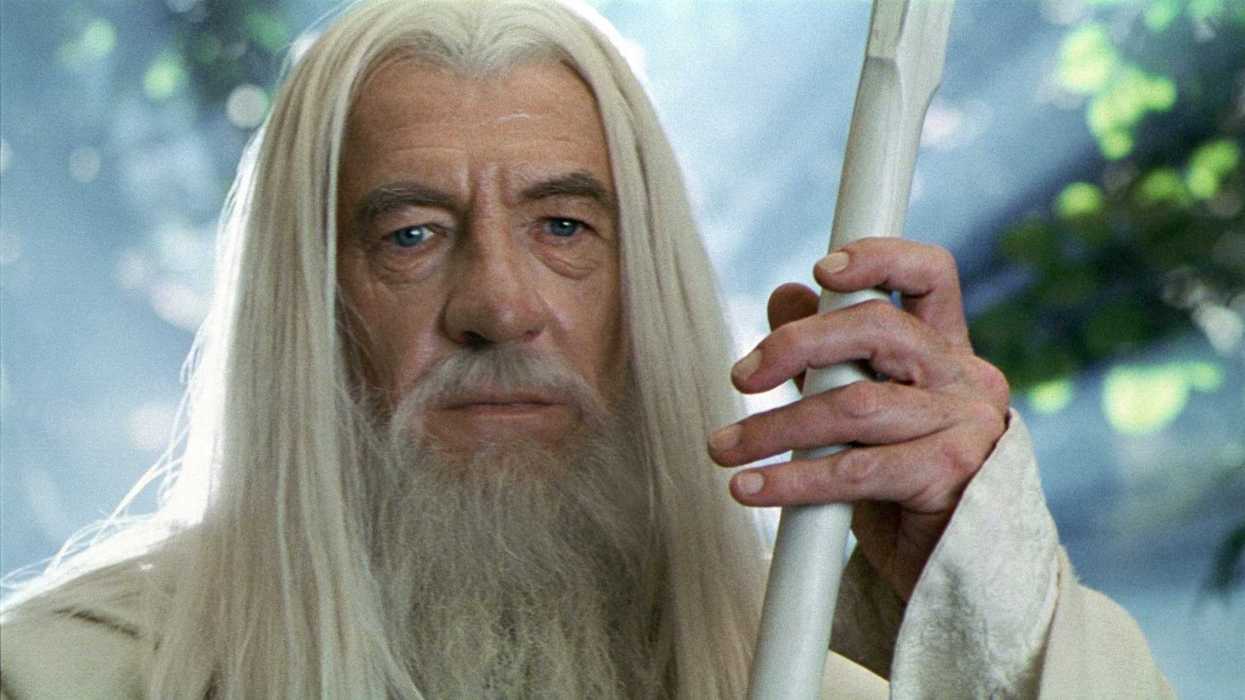
The Lord of the Rings: The Two Towers (2002)
Adapting books to the screen is an art in itself. Every writer and filmmaker who adapts a book engages in a ruthless negotiation with the material. What makes it to the screenplay and what doesn’t? What makes it to the screenplay but not the final film? These are critical decisions.
Filmmakers like Peter Jackson have a deep understanding of the material they adapt, as seen from The Lord of the Rings Trilogy. However, that does not make their decisions any easier.
There is one line in The Lord of the Rings books that Jackson carefully omits from the final film. Why did he do that? And what can this teach us about film adaptation?
Let’s jump right in and explore.
Gandalf’s Profound Moment
In J.R.R. Tolkien’s The Two Towers, one of Gandalf’s (Ian McKellen) most brilliantly philosophical lines is said when he reunites with Aragorn (Viggo Mortensen), Legolas (Orlando Bloom), and Gimli (Brett Beattie) in the Fangorn Forest. At this moment, the three men presume Gandalf is dead and least expect him to make an appearance, let alone as the White Wizard.
Initially, all three men mistake Gandalf for Saruman and prepare to attack him. Gandalf reveals himself and says, “Indeed, I am Saruman, one might almost say, Saruman as he should have been.” Peter Jackson deliberately leaves out this line in the second part of his The Lord of the Rings Trilogy.
In Tolkien’s book, the scene explains Gandalf’s return from the dead, and calmly but philosophically, it speaks about the symbolic nature of Gandalf’s transformation. To understand that a little better, we must know that the five Wizards were Maiar spirits sent to Middle-earth in mortal form by the Valar to aid against Sauron. Saruman was originally their leader, and he wore white to signify his wisdom and purity.
Gandalf’s line, “Saruman as he should have been,” tells us about the real duties of Saruman and how, by engaging in corruption, he was no longer as he should have been. After Gandalf’s resurrection, he embodies the true nature of Saruman, a man who would uphold his responsibilities without being attracted to dark activities.
The line is metaphorical in nature. It speaks to the idea of what the leader of the five Wizards was meant to represent. It is symbolic and not literal. Gandalf’s own understanding of purity and the duties that come with it underlines this iconic line.
Why then did Peter Jackson not keep the line in the movie?
- YouTube www.youtube.com
Well, because a philosophical line could result in literal misunderstandings. As symbolic and powerful as the line feels in the book, it had the potential to mislead audiences into believing that Gandalf had indeed become Saruman. A misinterpretation of that level could prove lethal for this movie and the final one after it.
Peter Jackson carefully condensed Gandalf’s return into a powerful moment that gives us precisely what we need: proof of his return, a hint about his transformation, and the belief that he is here to stay, without the confusion of Gandalf’s character. All of this was true for the original cut of the movie. But Jackson put Gandalf’s line into the extended cut, which makes sense because extended cuts are more likely to be rewatch experiences for those who’ve already seen the original cut.
Peter Jackson’s keen understanding of the material and its characters ensured that Gandalf’s return felt profound even without his metaphorical dialogue. What can writers and filmmakers learn from this?
What This Can Teach Us About Film Adaptation
Peter Jackson’s decision to cut out this line from the original version of the film shows bravery and exceptional artistic temperament. Here’s what we can learn from it.
Clarity is Paramount
Deep character moments can elevate a story, but they shouldn’t come at the expense of clarity. First and foremost, movie audiences should clearly understand what is being conveyed to them, and writers must find depth in those moments as opposed to prioritizing metaphors and symbols by rejecting simple clarity.
Choosing Your Battles
No adaptation can contain every single aspect of a book. It is impossible, simply because literature and film are two very different art forms. A filmmaker has to choose which battles are worth fighting for, by which I mean, which scenes require an accommodation in a movie because they are so utterly important. If they are important, filmmakers can always move things around to find a place for them. It all boils down to choosing our battles.
Focus on the Emotion
Emotions come through to us differently in a book and in a film. Ian McKellen’s exceptional performance, combined with incredible visuals and a beautiful, soulful background score, enhances the core emotion of the scene. This ensures that the scene serves its purpose and Gandalf’s return feels like the profound moment that it is in the book.
Avoid Overcomplication
If you are adapting a book to screen, let’s assume that your understanding of the material is already on a higher level than the average audience that will watch the final film. Let’s presume you’ve read it through and through, researched as much as you can, and made notes for a long time before you put pen to paper. If this is all true, you hold a lot of knowledge regarding the book you plan to adapt. That knowledge is a weapon. How you use that weapon is up to you. Just because you know every last detail of every scene does not mean you put it into the screenplay. You have to play with the elements and see what’s crucial to your story. Whenever possible, avoid overcomplication and focus on the heart of the story.
Final Thoughts
Peter Jackson’s decision to omit Gandalf’s profound declaration, “Saruman as he should have been,” from the theatrical cut of The Two Towers is a masterclass in film adaptation. While it is possible that many who loved the book could find this omission troubling, the majority of the movie’s audience felt the power of the scene in a universally accessible manner.
What is your favorite moment from The Two Towers? Tell us in the comments.
- 'The Lord of the Rings' Teaches You How to Create the Perfect Prologue ›
- How 'The Lord of the Rings' Used Forced Perspective to Create Movie Magic ›
- How to Pull off the Forced Perspective Effect Used in 'The Lord of the Rings' ›
- You Have To Listen to Tolkien's Advice on Worldbuilding ›
- How 'The Lord of the Rings' Was Adapted for the Big Screen ›
- 8 Great Filmmaking Lessons from 'The Lord of the Rings: The Fellowship of the Ring' ›
- The Fantasy Genre in Film and TV | No Film School ›
- Gandalf’s “Fool’s Hope”: A Profound Truth in ‘The Lord of the Rings’ ›
- What Gandalf Teaches Us About Choice In ‘The Lord Of The Rings’ ›
- Gandalf’s Famous Head Bump in ‘The Lord Of The Rings’: Was It Accidental Or Intentional? ›
- “A Wizard Is Never Late, Nor Is He Early.” - Wisdom Behind Gandalf’s Powerful Line In ‘The Lord Of The Rings’ ›
- “Fly, You Fools” - The Bold Choice Behind Gandalf’s Final Words ›
- The Best ‘The Lord of the Rings’ Theories and Hidden Details Explained ›