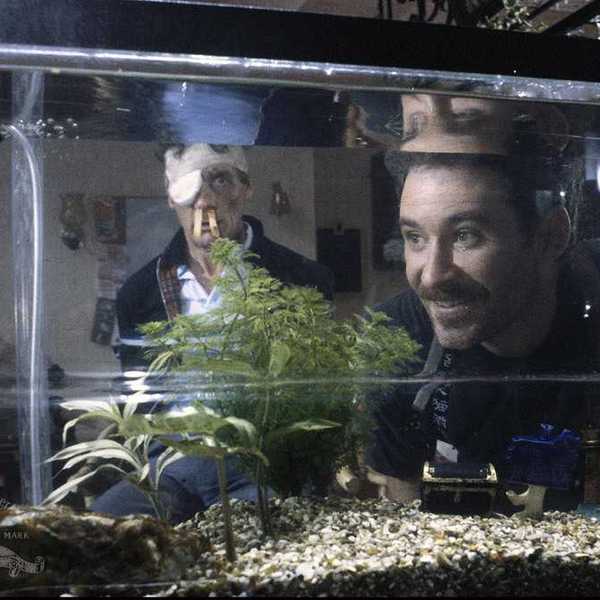
Digger Ending Explained
There will be some serious spoilers for the movie so only click if you want to know the shocking twists.
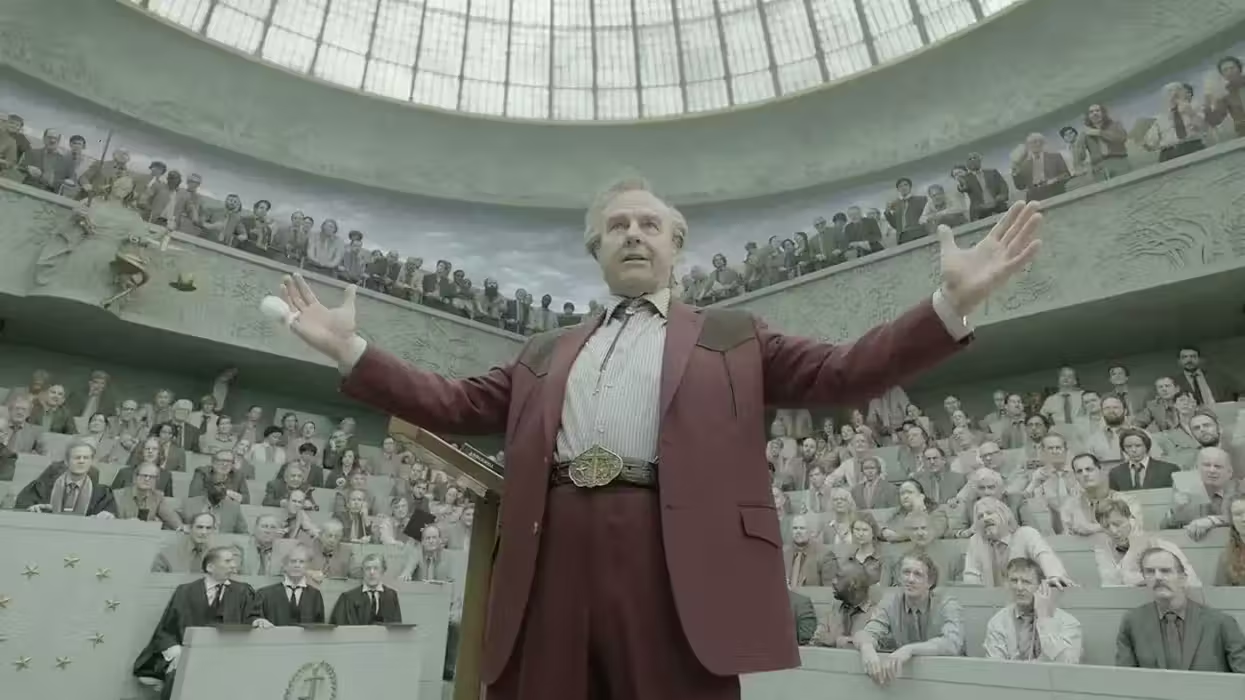
'Digger'
Despite not having a strong opening box office weekend, Alejandro Iñárritu's Digger is still the talk of the town and online. The social satire about how our obsession with fossil fuels will end the world as we know it pulls the rug out from under the audience early on.
And then its moral twists and turns keep coming until we're left in a dystopian daze that takes a conversation in them obby and a long drive home to talk it out.
Today, I want to go into what the ending of Digger really means.
To do this, we're going to spoil most of Digger. So if you haven't seen the movie, now is the time to stop reading.
Let's dive in.
- YouTubewww.youtube.com
Digger Synopsis
The first 30 minutes of the film introduce the audience to Digger Rockwell (Tom Cruise in an over-the-top, caricature-like performance). He's a bombastic oil tycoon residing in a luxury estate surrounded by taxidermied animals and one very close-to-death cat, who sleeps in his bed with him and who he feeds with one finger.
Inside this estate, Digger takes calls about a crack in Iceland that has formed due to his excessive oil drilling. The crack, which used to be only five feet, becomes thirty feet, then releases methane, which eventually blows up and sends an iceberg toward Europe.
That iceberg is so big it threatens to destroy almost everything in its path and raise the water levels in the whole world.
Now, Digger doesn't want his company associated with this issue, so he manipulates politicians, keeps the President of the United States (John Goodman) under his thumb, and begs people to completely ignore the catastrophe that's coming for them until they have a plan that stops it and absolves him.
While they're figuring this out, we get the big twist in Digger: someone off-screen yells "Cut," and we realize everything we've seen so far is actually a theater set, and Digger himself is a fictional character.
Tom Cruise is actually playing a guy named Curtis Markson, who is playing Digger as this over-the-top tycoon.
The story we're actually watching is a play, put on in the future.
The play is called Fossil Fools, which satirizes real human history in a future world where the environmental collapse caused by the actual Digger and his contemporaries occurred 20+ years earlier.
As Markson rehearses the play, he copes with real-world dread as his daughter is trapped on a commercial flight grounded or threatened by a severe hurricane. He's not sure if it crashed or made it through because her phone died.
Meanwhile, a mysterious producer funding the production (Jesse Plemons) lurks in every corridor, trying to help Markon out and watching every beat of the play.
The Ending of Digger
In the play’s climax, the fictionalized Digger Rockwell meets his end by taking a dramatic suicidal swan dive off an offshore oil rig named "Deep Water Doom."
On stage, the audience jeers and applauds the death of history's ultimate environmental villain.
But in the real world of this play, we learn that the producer is Digger's nephew, and he runs a security company. He helps Markson find his daughter and learn she's all right.
As the play ends, an intercom announcement warns the theater patrons that "Level Four" ambient air conditions are in effect outside.
The lights go up, and everyone in the audience puts on these industrial gas masks to clean the air they breathe before they exit the theater into a dystopia of flooded streets, armed guards, and other people wearing masks.
There are robots patrolling, cars struggling to make it through the broken streets, and the silhouettes of skyscrapers in the distance.
Everything seems industrial and dirty.
- YouTubewww.youtube.com
What Does the End of Digger Mean?
There's been a lot of debate online about what the ending of Digger means. Now, I'll be the first to say all interpretations here are subjective.
I can only give you what seeing it once and analyzing it at home meant to me. So take this as it comes and formulate your own opinions.
For me, the central theme of the movie is the illusion of moral superiority.
This is a movie marketed as an environmental disaster film where we get to see Tom Cruise's character blamed for what he's done to the earth.
At the beginning, before the twist, you're frothing at the mouth to hate this guy who mistreats his staff, cares more about a cat than humans, and who taxidermies life because the only thing he values is how own.
Then, even after the twist, we see it highlighted that Fossil Fools, the play, allows the future audience to laugh at the greed and absurdity of the very people who put them in this position of surviving mass death and tragedy.
It's like their 9/11 comedy or COVID comedy.
For them, turning Digger Rockwell into a cartoonish supervillain is a cathartic outlet.
And yet, laughing cannot change their current reality, which is so bleak by the end of the movie.
Even Curtis Markson, who is starring in the play, thinks it's a kind of bad play. And while he compliments other people in it, he doesn't get the story at all.
That's when Plemmon's producer gives a valiant speech, rallying everyone to give their best and telling them the play is what the people need right now.
And yet, what they really need is for people like Digger Rockwell, his uncle, to not be killing society for profit.
For what it's worth, the actors in Fossil Fuels actually come around to loving the play as soon as they hear the audience applause and revel in it as the show comes to a close.
Any qualms they had during rehearsal have dissipated.
There's this central irony that in a capitalist society, these people in the audience are paying good money to laugh at a satire about their own doom. One that was produced by the Rockwell family, with money they now make off people's desire to breathe clean air.
Plemmons' character seems to admit his uncle is a monster, without at all acknowledging that he's profiting greatly off the disaster he caused.
This relationship is highlighted in Plemmons ' patron helping Markson accept help to find his daughter, being grateful that she's a survivor of the disaster Plemmons' family caused.
So you get this notion that art in capitalism is funded by monsters and the elite who are responsible for the terrible lives of the lower class.
And that the rich will always control the narrative because they have all the money.
Summing It All Up
Digger is a multilayered story that transitions from a Kubrickian comedy about corporate greed into one about complicity in a global disaster. And also some anticapitalist stuff that goes along with those endeavors.
If it sounds like there's a lot in this movie, you're right; there is.
Iñárritu forces the audience to reflect on their own reliance on the very systems driving climate change, as well as the idea that the art made about these situations may very well be funded by corporations, and the people involved in them might be complicit and there because they solely care about the survival of their own kids, and not the children of the world.
Again, very bleak!
This was my takeaway, but I hope this post starts more conversations in your own world.
And I guess... maybe all we can do is recycle?