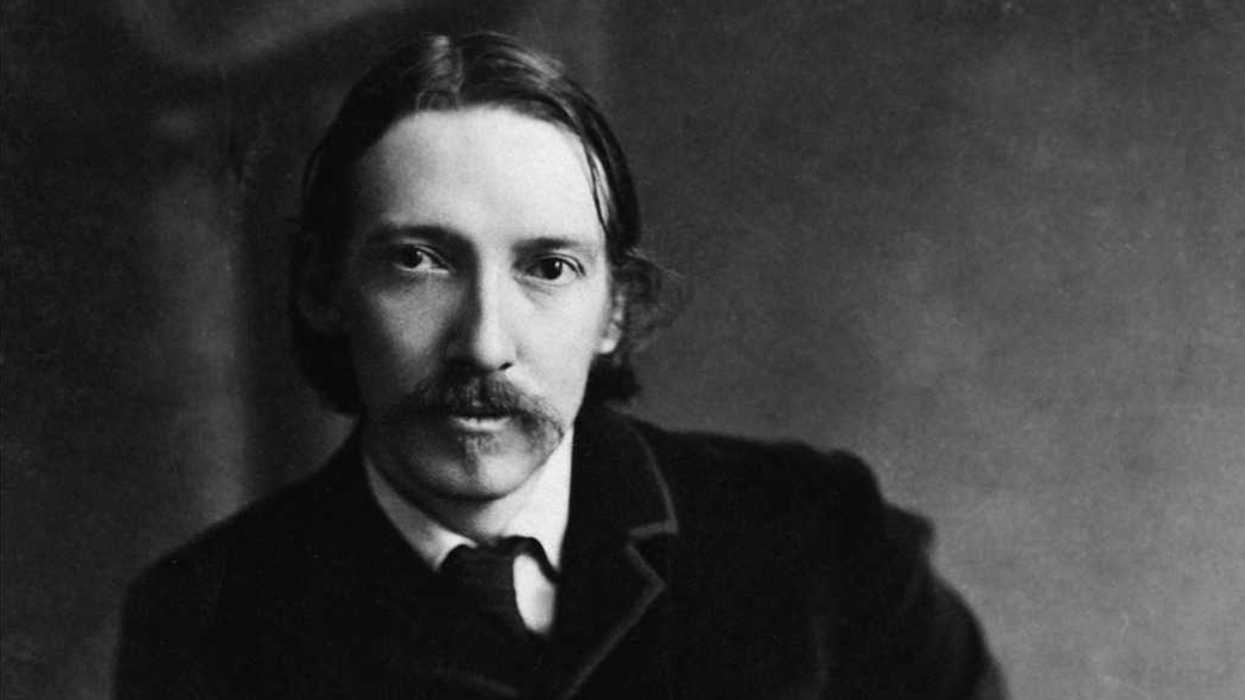
On May 21st, 1908, what is scholarly cited as the first American horror film, Dr. Jekyll and Mr. Hyde, premiered in Chicago. The film was roughly 16 minutes long, and split up into either four or five (various sources dispute) acts to mimic that adaptation of the stage play it was based on. There were some disagreements amongst the filmmakers about whether they were adapting the film from Robert Louis Stevenson’s original novel, or the play that had been making its rounds across theaters in recent years. It was eventually deduced to be the latter, with key book changes to the stage play being implemented into the film.
What remains most unfortunate is that there isn’t a person alive today who has seen the film. It remains one of thousands of lost films of the early silent era, with only a couple of key blurry promotional stills remaining as proof it even existed at all. There remains record of the proposed plot, including details such as the transformation of Dr. Jekyll, the murder of Alice’s father, and Dr. Jekyll’s eventual suicide. There is also an additional record of critics at the time praising the practical effect work done to depict Dr. Jekyll’s transformation into Mr. Hyde in a single, continuous shot.
The film was produced at the former Selig Polyscope Studios in Chicago, Illinois. The studio was a main rival at the time to the Edison company, and was searching for a potential win to propel its credibility further ahead. Filmmaker Otis Turner, who was most well known for adapting the oldest surviving adaptation of The Wonderful Wizard of Oz, came on to direct the picture. They utilized many of the original actors from the stage play, including Hobart Bosworth, who plays both Dr. Jekyll and Mr. Hyde.
Bosworth was exactly what the filmmakers felt they needed to get the project seen by a wide audience, because at the time, cinema was still seen as a lower form of art than the theater and other fine arts. Acquiring a stage actor in a film adaptation of the play he originally starred in seemed to be the perfect counter to these concerns. The film played incredibly well with its audience, and since its release, there have been over 100 other adaptations of Dr. Jekyll and Mr. Hyde across various forms of media.
Where Horror Headed Next
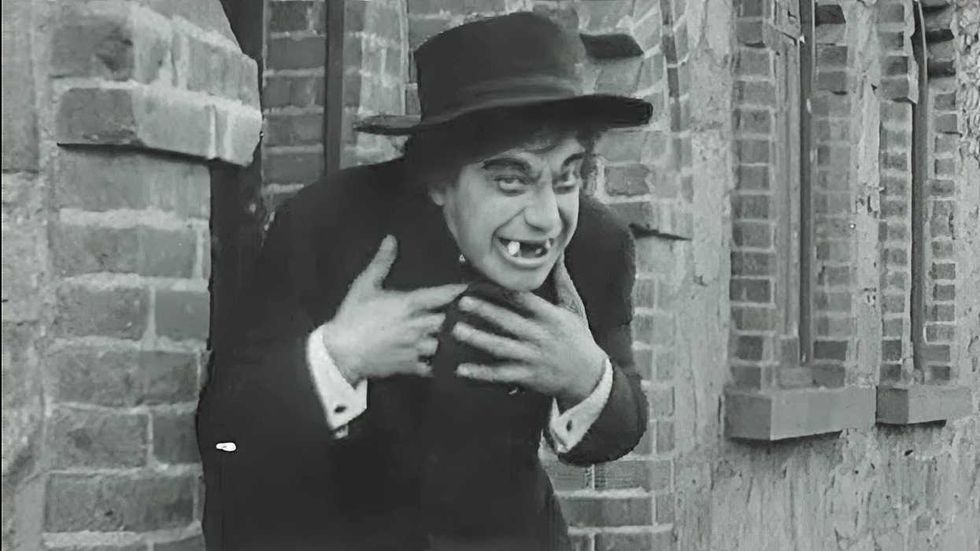 ‘Dr. Jekyll and Mr. Hyde’ (1912)Credit: Motion Picture Distributing and Sales Company
The oldest surviving version of Dr. Jekyll and Mr. Hyde was released four years later in 1912, and is currently available on YouTube, clocking in at just under 14 minutes. In an apparent difference to the original version, the 1912 adaptation uses match cut and fade techniques to depict the transformation into Mr. Hyde and reversion back into Dr. Jekyll, respectively. In a time where editing itself as an art form in the medium was still being tinkered with and made up as artists went along, the effect itself remains a groundbreaking one. Additionally, the plot progression very closely mimics the timing and supposed progression of the original 1908 version, so it will likely provide a very similar experience.
The now-coined “Universal Classic Monster” series began one year later in 1913 with you guessed it…an adaptation of Dr. Jekyll and Mr. Hyde. The vast majority of these films stand on their own without much connection to other instalments in the franchise. However, there are a couple of noteworthy crossovers in the mix, including Frankenstein Meets the Wolf Man (1943), as well as various Abbott and Costello run-ins with characters like The Mummy, The Invisible Man, and of course, Dr. Jekyll and Mr. Hyde. The classic era of these films concluded in 1956 with the release of The Creature Walks Among Us. But the vast majority of the characters introduced through these films are still getting films made today.
Infamously, Universal attempted in the late 2010s to capitalize on the success of the MCU with their proposed “Dark Universe” series of films designed to connect these classic monsters and their films. After a disastrous critical and financial turnout with Tom Cruise’s starring version of The Mummy (2017), which also featured Russel Crowe as Dr. Jekyll, the universe was eventually shelved.
That hasn’t stopped production on other works with these monsters, though. Since then, we’ve had adaptations of The Invisible Man (2020), Wolf Man (2025), Frankenstein (2025), and most recently, Lee Cronin’s The Mummy (2026). The American horror film, and American monster film in particular, remains alive and well today, and it’s all thanks to the little silent film that could, 118 years ago today.