17 Best International Horror Films for True Genre Fans
From silent-era classics to modern psychological nightmares, these international titles represent the pinnacle of cinematic dread.
'Martyrs' (2008)
Horror stories are like bacteria that mutate as they enter new microbial cultures. It is one feeling, but it has no distinct language. Its face changes depending on where it's manifesting. We can find out how that’s true if we throw a glance at its cinematic history.
Hollywood horrors have a distinct American flavor, and they reflect those cultural, societal, and political anxieties that are unique to the U.S. For example, elements like haunted suburban grounds, domestic disruption, the “final girl” trope, Cold War fears, race and class, consumerism, and reality horror are the intrinsic parts of American horror.
In contrast, international horror, particularly from Asia and Europe, emphasizes atmospheric dread, psychological tension, and culturally specific folklore. Going deeper, European horror is often grimmer, more nihilistic, and focused on stoic characters with endings where the protagonist may not survive. Asian horror, on the other hand, relies more on a slower “haunting” atmosphere, focuses on deep emotional trauma and existential dread, and its ghosts are unsettlingly patient. All this sharply contrasts with Hollywood’s reliance on jump scares, high-octane violence, and formulaic narratives.
Now, as the world keeps getting smaller and merging into itself, these boundaries may be getting dimmer and dimmer, but their distinguishing souls still stand out. This list is our attempt to explore some of the international flavors of the macabre.
17 Must-Watch Foreign Language Horror Films
1. The Cabinet of Dr. Caligari (1920)
Country: Germany | Written by: Carl Mayer, Hans Janowitz | Directed by: Robert Wiene
A sinister hypnotist, Dr. Caligari (Werner Krauss), uses a sleepwalker, Cesare (Conrad Veidt), to commit a series of murders in a small town. The movie can be identified by its jagged, distorted sets, which, in reality, represent Cesare’s fractured psyche. This movie, in addition to being considered the birth of German expressionism, also established twist endings and “mad doctor” tropes.
2. Nosferatu (1922)
Country: Germany | Written by: Henrik Galeen | Directed by: F. W. Murnau
This movie is basically an unofficial and unauthorized adaptation of Bram Stoker’s 1897 novel Dracula. It follows an estate agent, Thomas Hutter (Gustav von Wangenheim), who is sent to Transylvania to sell a house to the mysterious Count Orlok (Max Schreck), who is secretly a vampire. Orlok’s rat-like appearance for a vampire was disturbingly realistic for that time and is still haunting. Its use of shadows and eerie pacing creates a ghostly atmosphere. This is the ultimate foundational pillar of creature-based horror.
3. Les Diaboliques (1955)
Country: France | Written by: Henri-Georges Clouzot, Jérôme Géronimi | Directed by: Henri-Georges Clouzot
The wife and mistress of a tyrannical headmaster team up to kill him and stage it as an accidental drowning, but his body mysteriously disappears from the swimming pool. The movie is famous for its “triple-cross” plot. And its finale was known to have caused an actual heart attack or two during its theatrical run in the ‘50s. The film uses domestic paranoia to build suspense and tension. It also ends with a title card urging the audience not to spoil the ending for those who haven’t yet watched the film.
4. Black Sunday (1960)
Country: Italy | Written by: Mario Bava, Ennio De Concini, Marcello Coscia | Directed by: Mario Bava
A vengeful witch, Princess Asa/Katia (Barbara Steele), who was brutally put to death by her brother, returns from the grave 200 years later to exact revenge on his descendants. Highlighted by its vibrant, high-contrast cinematography and the opening scene involving spiked masks, the film put Italian Gothic horror on the map. It’s an interesting mix of high-art sensibilities and pulp violence, which creates a fever-dream-like experience.
5. Onibaba (1964)
Country: Japan | Written by: Kaneto Shindo | Directed by: Kaneto Shindo
In 14th-century Japan, an older woman (Nobuko Otowa) and her daughter-in-law (Jitsuko Yoshimura), desperate for survival during the civil war, kill stranded samurai and sell their armor. Soon after, a mysterious hole and a demon mask tear them apart and send them into a supernatural downward spiral. Rather than typical ghosts, the real scare in the film arises from situational desperation and primal survival. The tall grass is smartly used to create a constant, claustrophobic soundscape. The moral takeaway the film offers is that human nature is far more monstrous than any ghost.
6. Suspiria (1977)
Country: Italy | Written by: Dario Argento, Daria Nicolodi | Directed by: Dario Argento
Suzy Bannion (Jessica Harper), an American ballet student, enrolls in a prestigious dance school in Germany. Soon after, she discovers that this school is but a front for a murderous coven of witches. With its neon-soaked lighting and progressively pounding rock score, the film is literally a sensory overload. It ditches logical narrative and prioritizes mood and “death is art” sentiment. What we get as a result is a surreal, kaleidoscopic nightmare—or a fairytale gone horribly wrong.
7. The Vanishing (1988)
Country: Netherlands | Written by: Tim Krabbé | Directed by: George Sluizer
The film traces Rex Hofman (Gene Bervoets) as he spends years looking for his girlfriend, who vanished from the French countryside, until he comes face to face with her kidnappers. There are no supernatural elements in this film, not even gory violence. What makes it a horror is its cold, clinical approach to evil. That should be enough to kill your spirit. It bypasses the typical slasher tropes and instead focuses on the terrifying banality of a sociopath. The film’s ending is revered (or feared) for delivering one of the most claustrophobic and haunting reveals in cinema.
8. Ringu (1998)
Country: Japan | Written by: Hiroshi Takahashi | Directed by: Hideo Nakata
Reiko Asakawa (Nanako Matsushima), a journalist, has one week to solve the mystery of a murderous videotape that gives its viewer only seven days to live. Leave it to the Japanese to merge folklore with technology. The movie’s ingenious plot and execution sparked the “J-horror” mania of the early 2000s. It also gave us one of the most haunting and chilling visuals of horror cinema—a deadly girl crawling out of a television set. The movie relied on slow-burning mystery and a heavy atmosphere of impending doom, and was an instant cultural icon.
9. Audition (1999)
Country: Japan | Written by: Daisuke Tengan | Directed by: Takashi Miike
Seven years after his wife died, Shigeharu Aoyama (Ryo Ishibashi) holds make-believe auditions for a role in a TV series, which, in reality, are his interviews to select a new wife. He falls for Asami Yamazaki (Eihi Shiina), but she is hiding a dark, sadistic past that turns his romantic fantasies into a nightmare of obsession and torture. The movie famously starts as a slow, sentimental drama, but midway pivots into one of the most disturbing final acts ever filmed on screen.
10. The Devil's Backbone (2001)
Country: Spain | Written by: Guillermo del Toro, Antonio Trashorras, David Muñoz | Directed by: Guillermo del Toro
Set during the final days of the Spanish Civil War, the film follows Carlos (Fernando Tielve), an orphan. As he survives the brutal caretaker and bullies, the ghost of a murdered former student starts haunting him. The movie feels poetic as it portrays the living as the scarier ones compared to the dead in a war-torn world. Even the supernatural elements in the movie are nothing but a lens to look at the trauma of war and lost innocence.
11. Ju‑on: The Grudge (2002)
Country: Japan | Written by: Takashi Shimizu | Directed by: Takashi Shimizu
Rika Nishina (Megumi Okina), a social worker, is sent to a house in Tokyo to look after an elderly, bedridden woman. However, unknown to her, when she enters the house, she steps into an inescapable curse born from a brutal murder. Ju-on uses a nonlinear story structure to show how the “grudge” spreads like a virus. The pale, croaking ghosts of Toshio (Yuya Ozeki) and Kayako (Takako Fuji) instantly became international phenomena and symbols of supernatural terror.
12. A Tale of Two Sisters (2003)
Country: South Korea | Written by: Kim Jee-woon | Directed by: Kim Jee-woon
Su-mi (Im Soo-jung) comes home from a mental hospital to her father, stepmother, and a younger sister, Su-yeon (Moon Geun-young). The relief of her return is cut short by her stepmother’s cruel behaviour and a supernatural force haunting the house. The film is inspired by folklore. Visually gorgeous and mentally taxing, it craftfully layers family drama with the scares from the beyond. It’s a complex narrative and might need multiple viewings.
13. High Tension (2003)
Country: France | Written by: Alexandre Aja, Grégory Levasseur | Directed by: Alexandre Aja
This French slasher follows Marie (Cécile de France) and Alex (Maïwenn), whose quiet weekend at a secluded farmhouse turns into a nightmare when a sadistic truck driver kills Alex’s family and kidnaps her. This is a key entry in the New French Extremity movement and is absolutely unhinged in its fast-paced depiction of gore and violence. It strips down the genre to its rawest, most visceral elements. The audience is divided on the plot twist, but its relentless energy and technical execution hit the spot.
14. The Orphanage (2007)
Country: Spain | Written by: Sergio G. Sánchez | Directed by: J. A. Bayona
Laura (Belén Rueda) returns to her childhood orphanage with her husband and 7-year-old son, planning to reopen the facility for the disabled. However, when her son befriends an “imaginary” friend and soon after goes missing, the frantic Laura discovers the site’s dark history. This is a classical Gothic thriller that utilises suspense and emotional stakes rather than gore. Do watch the “Knock, Knock” scene—it’s a masterpiece of simple, effective tension.
15. Let the Right One In (2008)
Country: Sweden | Written by: John Ajvide Lindqvist | Directed by: Tomas Alfredson
A lonely 12-year-old boy, Oskar (Kåre Hedebrant), becomes good friends with Eli (Lina Leandersson), a mysterious girl who moves in next door and happens to be a vampire. The first commendable thing about the movie is that it avoids almost all the glamorous tropes of the genre. For example, the violence in it is random and kind of clumsy. The tender yet dark bond between the two leads makes it a unique horror film of the 21st century.
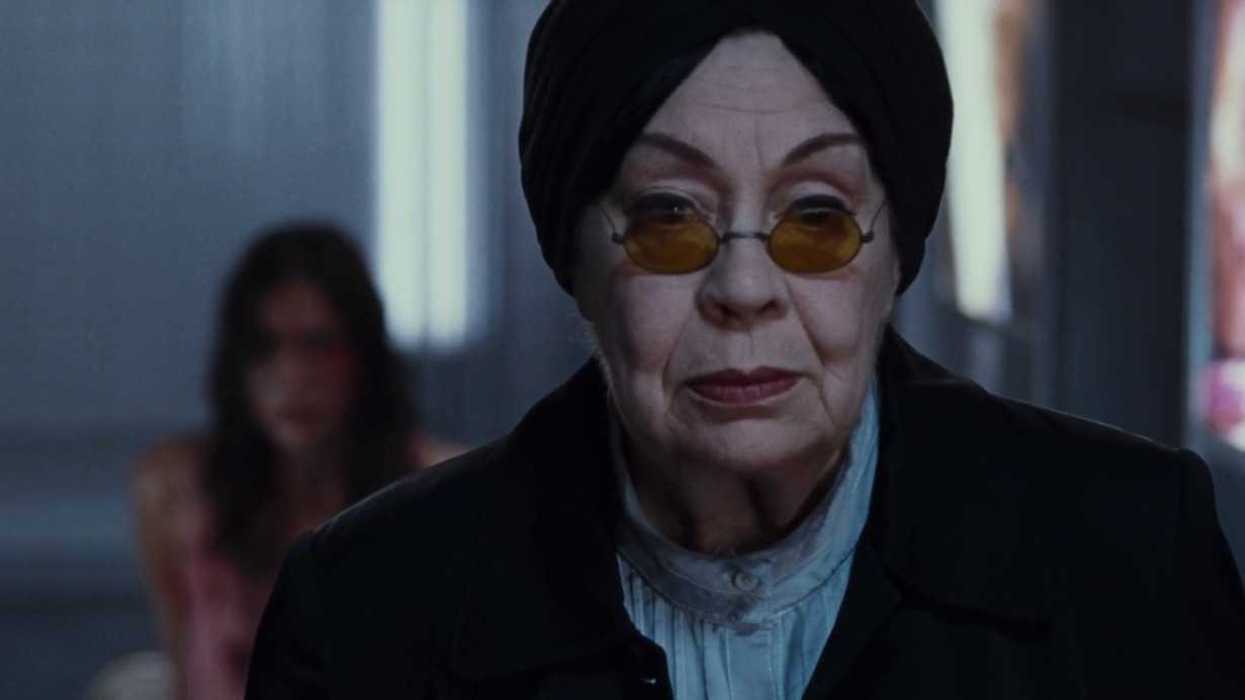
16. Martyrs (2008)
Country: France | Written by: Pascal Laugier | Directed by: Pascal Laugier
Anna (Morjana Alaoui) helps her friend, Lucie (Myléne Jampanoï), exact revenge on the family that tortured her. However, she instead uncovers a sinister, fantastic organization that subjects its victims to systematic abuse to induce a transcendental, near-death state to uncover the secrets of the afterlife. This movie is not for the faint of heart. This challenging watch moves from a home-invasion thriller into a philosophical exploration of pain and the afterlife. What helped it gain its legendary status is its audacious bravery and disturbingly bleak vision.
17. The Wailing (2016)
Country: South Korea | Written by: Na Hong-jin | Directed by: Na Hong-jin
Jong-goo (Kwak Do-won), an incompetent policeman, investigates a series of mysterious sicknesses and gruesome murders, and they are all linked to a new enigmatic Japanese resident. The film expertly blends police procedural elements with folk horror, shamanism, and demonic possessions. It absorbs you into its narrative and keeps you guessing about who is truly evil until the very end. Its blend of dark humour and overwhelming dread makes for an absolutely unsettling viewing experience.
- Top 9 Gothic Horror Movies That Defined the Genre’s Darkest Traditions | No Film School ›
- 9 Classic Noir Horror Films That Invented Psychological Terror | No Film School ›
- 11 Cozy Horror Movies to Curl Up on the Couch with Tonight | No Film School ›
- What Are The Highest-Grossing Horror Movies of All Time? | No Film School ›
- Defining the Horror Genre in Movies and TV | No Film School ›
- 10 Most Creative Deaths In Horror Movies | No Film School ›
- The Beast Within: 9 Horror Movies Where the Monster is Actually Grief ›
- 7 Movies That Turned Children’s Rhymes Into Nightmares ›
- 9 Foreign Films That Influenced Popular American Movies ›
- The First American Horror Film Premiered 118 Years Ago Today ›
- 4 Horror Movie Quotes and Taglines That Fans Never Forgot ›
- 5 Most Chilling Horror Documentaries About American History ›
- The 1973 Horror Classic Overshadowed by ‘The Exorcist’ ›