Furiosa’s Scream in 'Mad Max: Fury Road': A Grief-Filled Action Moment
By removing her prosthetic arm, Charlize Theron attained vulnerability that turned a scripted scene into a legendary performance.
'Mad Max: Fury Road' (2015)
Imagine being taken away from your beautiful home and kept captive in a dystopian wasteland for 19 years. And, after that 19 years' worth of resolve and hope, not to mention tremendous personal risk, you escape your nightmare and reach your home only to realize it was destroyed.
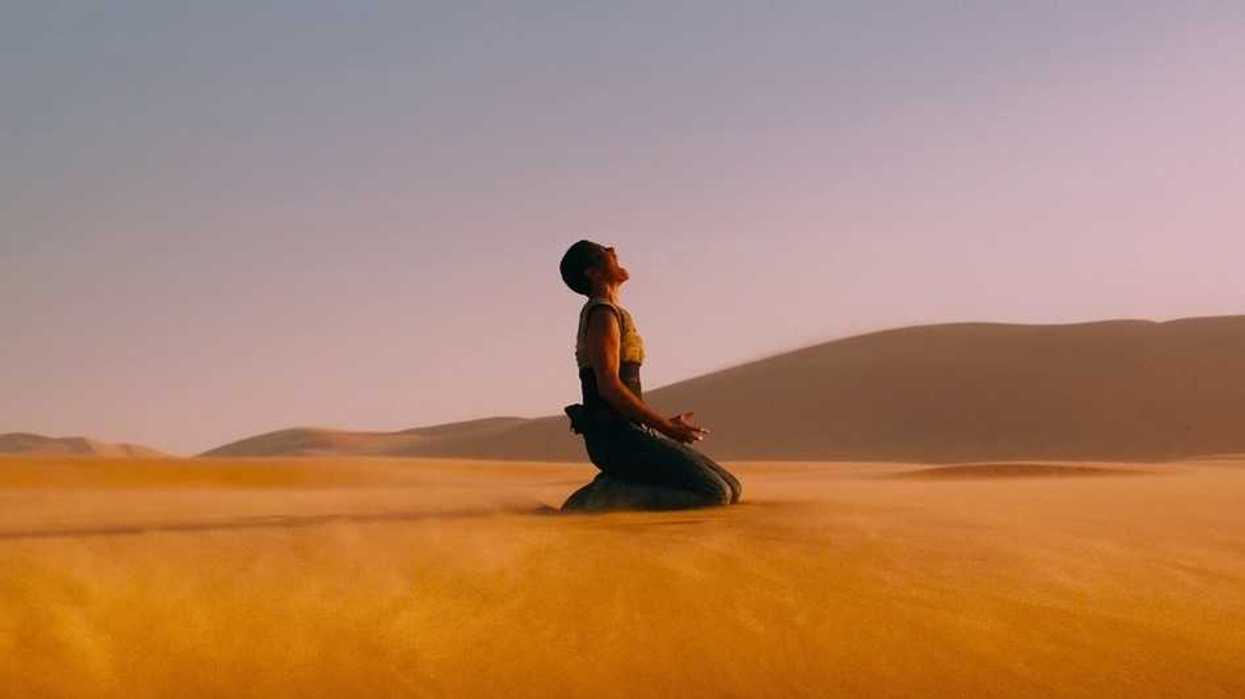
If you can fully grasp the devastation in this scenario, I will say you have understood the gravity of this scene and the anguish of this scream. This is pretty much the vibe in Mad Max: Fury Road (2015), and this, in particular, is the moment when raucous, steely Imperator Furiosa (Charlize Theron) hits her limit. The moment where a warrior’s hope—the sole reason for her to go on—disintegrates into the sand.
The scene, as it seems, wasn’t so much directed as it was engineered to let the emotions breathe. Quite perceptively so, because it shows a valiant Imperator breaking down and becoming a human.
The Scene That Changes Everything
The Background
The post-apocalyptic Australia, which is basically a dry, radioactive wasteland, is dominated by three symbiotic fortresses: the Citadel (controlled by Immorten Joe), the Gas Town (controlled by People Eater in Immorten Joe’s name), and the Bullet Farm (controlled by the Bullet Farmer). Each fortress produces something the others don’t have. The Citadel is a man-made stronghold that has a limited reserve of water and vegetation; Gas Town controls the fuel supply, and the Bullet Farm manufactures ammunition. None of them is aware of the self-sustaining paradise called the Green Place, which is the last remaining fertile oasis in Australia, also the birthplace and home of Furiosa.
Dementus’s biker gang finds out about the Green Place and ambushes it. They kidnap the 10-year-old Furiosa and take her to Dementus. Later, when Dementus attacks the Gas Town and takes control of it, Immorten Joe is forced to acknowledge his authority, but he does so in exchange for Furiosa, among other things.
It’s been 19 years since. Furiosa has had several ups and downs (mostly downs), has lost her arm, and has missed multiple opportunities to escape. She has now become Immortan Joe’s “Imperator,” the high-ranking military commander, and is in charge of his massive war rig. And yet, the dreams and plans to escape are still as alive as they were 19 years ago.
In the present, when one such opportunity presents itself, Furiosa escapes along with Immortan Joe’s captive wives. After surviving the violent pursuit of Joe’s war boys, a massive sandstorm, and a hazardous journey across the unforgiving desert, she is finally reunited with the last surviving Vuvalinis, the matriarchal clan that raised her as a child.
And this is when, right at the doorstep of her dream, the Vuvalinis tell her that the Green Place, her home, was destroyed in the intense fight with the war boys.
Furiosa, completely devastated, takes her prosthetic arm off and drops it before falling to her knees and letting out a scream of despair.
The Prosthetic Arm
What It Represents
When Furiosa is kidnapped as a girl, she tattoos a celestial map of the night sky (star chart) on her left arm. The idea is that she can use it to trace her way back home when she escapes her captivity. However, during the difficult, conflict-filled years, she loses that arm.
Then comes the prosthetic arm. Technically, it restores her mobility, but, in essence, this “steely” contraption represents her resilience and never-say-die attitude. The fake arm becomes the symbol of her warrior side. She may have lost the way to her home with the loss of her actual arm (and the star map on it), but the steel arm means her resolve, her determination, is still alive.
Taking the Arm Off
Now, usually the steel arm added value to Furiosa’s character, but in this moment, it conflicted with the tone and mood of the scene. Furiosa was meant to look broken, but the arm didn’t stop making her look capable and ready to fight on.
So, the director, George Miller, thought the prosthetic hand should go. It would also serve to indicate that she has finally lost the purpose and hope of finding home again. But the hand wasn’t going to fall off just like that. Furiosa would have to do it herself. But how?
Miller left it entirely to Theron. His directorial instruction was only this: “Walk away from the camera and remove the prosthetic arm.”
Theron could have interpreted it differently, more aggressively. She could have just snatched it off in anger and thrown it away. After all, she is “Furiosa.” 19 years of built-up anger finally exploded. It makes perfect sense. It’s quite logical.
However, regardless of how logical, that interpretation would have failed to give the scene (and her character) a human touch. For any character, what is authenticity if not breaking out of the character once in a while? Before Furiosa, she was a human. She is allowed to be vulnerable. And that’s how Theron interpreted the scene and played it.
As a result, what we see on screen is Furiosa, who is let down by her fate. The 10-year-old girl who finally lost her home, her world, for real and forever. There is no anger, no fight left in her. When she takes her arm off and drops it, she is saying that she is done. It’s all over.
Conclusion
When we think of an action hero, we think of fury, fight, and energy. But in this scene, when we see her—someone who has “fury” in her name—getting leveled, we don’t feel disappointed. Would we have loved to see her getting charged up and descending on the bad boys like fire? Sure. We are nurtured on Rambo, Hulk, Wick, and McClane; we like to see rage materialize on screen.
But we also like to see the human side of heroes who otherwise look bionic. Just because they are action heroes doesn’t mean they have to be emotionless robots. That’s what Furiosa’s broken and beaten scream gives us.
But is that all this scream is? Her despair and defeat? Absolutely not. This is also the moment when Furiosa stops running away from Immortan Joe. This is where she turns around, this time to fight for something bigger. Much bigger than the Green Place.
- ‘Mad Max’ Director George Miller Thinks Art Needs to Evolve With AI | No Film School ›
- What Has George Miller Learned After Making 5 'Mad Max' Films? | No Film School ›
- How George Miller Teaches Us to Watch 'Mad Max: Fury Road' | No Film School ›
- Behind the Scenes of Conan's Hilarious New 'Mad Max' Parody (Which Was Shot Practically) | No Film School ›
- The Ending of 'Furiosa: A Mad Max Saga' Explained | No Film School ›
- Watch: All of the Incredible Practical Effects in 'Mad Max: Fury Road' | No Film School ›
- Check Out This Massive Oral History of 'Mad Max: Fury Road' | No Film School ›